
Jesus’ teachings raise some difficult questions that even devoted Christians struggle to answer.
Can rich people truly follow Jesus?

When Jesus spoke with a wealthy young man, he instructed him to sell all his goods, distribute the proceeds to the needy and then follow him. Further, he stated that it is easier for a camel to pass through the eye of a needle than for a rich man to enter the Kingdom of Heaven (Matthew 19:21-24).
However, modern-day Christianity has largely come to equate riches and prosperity with the favour of God. This gives rise to the uncomfortable question: can someone gather great wealth while still genuinely following the teachings of a man who warned so strongly against the dangers of riches?
Must we forgive everyone?

According to Jesus, people should always forgive others. In fact, in Matthew 18:21–22, he said we should forgive others not just seven times, but seventy-seven times or seventy times seven times (the number varies according to translations).
Forgiving a small mistake is easy. But what happens when a crime is so terrible and has repeatedly hurt another? This makes us really think about whether Jesus meant forgiving people who never apologize or take responsibility for their actions.
Should faith come before family?

Jesus said those who loved their family (father, mother, son or daughter) more than him were not worthy of him (Matthew 10:37). This suggests that commitment to God must come before even the closest family relationships. However, if this devotion leads a person to neglect or abandon their family, is it worth it?
Are our thoughts as sinful as our actions?

In Matthew 5:28, Jesus states that if a man looks upon another with lust, he has already committed adultery in his heart. He makes a similar point in Matthew 5:22 about anger and abusive words directed at others.
This teaches us that morality is not limited to our actions, but it extends to our thoughts. Of course, though, some thoughts and desires are not really something we can control. When, then, does having such a thought stop being passive and start being intentional?
Why is the path to salvation so narrow?

In Matthew 7:13-14, Jesus describes the gate leading to life as ‘narrow,’ with only a few finding it, while the road to destruction is wide. But what does this mean for the rest of mankind? What about sincere and compassionate people belonging to other religions, or those who were simply never given the opportunity to learn about Christianity?
If God really loves all of humanity, why would Jesus tell us that only a few find the path to eternal life?
Is divorce ever acceptable?

According to Jesus, a man should not divorce his wife and go on to marry another, as he would then be committing adultery (Matthew 19:3-9). The only exception noted in the Gospel of Matthew is where there has been sexual immorality.
This leads us to ask: what if a person’s marriage has led to great hardship, pain, abuse, etc.? Is it sinful for that person to leave their marriage and enjoy a happy life with another?
Should we give without expecting anything in return?

In Luke 6: 30-35, Jesus instructed us to give to those who request from us, and to lend freely. Of course, this goes against common practice with regard to our finances and other assets.
However, if a person continually comes to you and will not take steps to better their own circumstances, how far should you go? At what point do you feel you have given enough, or that you are enabling another to take from you?
Are religious people sometimes the furthest from God?
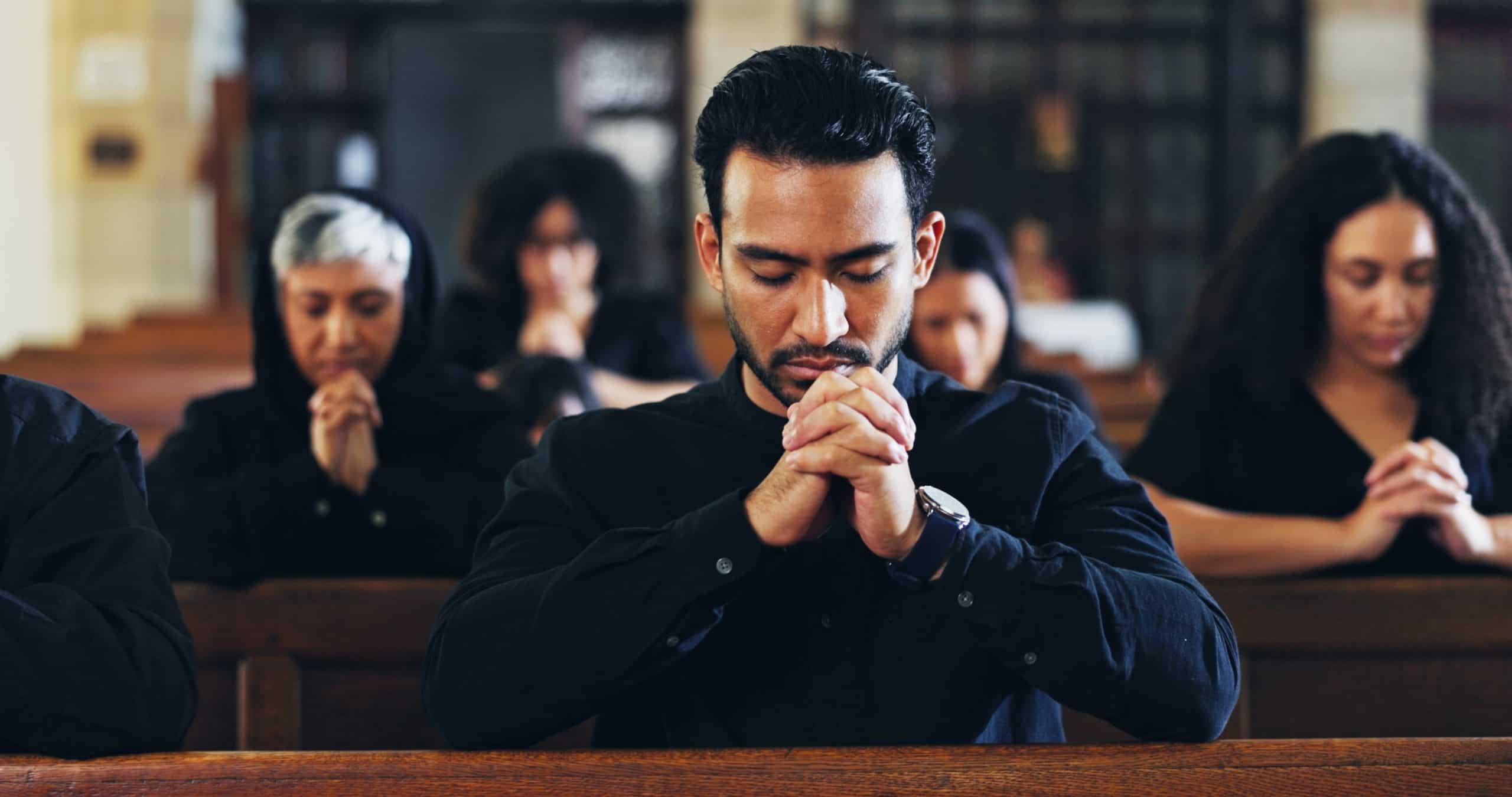
Jesus often criticized religious leaders who acted holy in public but behaved selfishly or dishonestly in their private lives. He also warned that not everyone who called him “Lord” would enter the kingdom of heaven (Matthew 7:21).
Of course, this raises questions about whether going to Church, praying and learning the Bible are sufficient to make us right with God. What if someone who seldom goes to Church, but lives an act of love towards others around them, is truly following Jesus more closely?
Can eternal punishment be fair?

Matthew 25: 46 shows Jesus speaking about eternal punishment for some and eternal life for others. Although many interpret this as Christ urging people to accept His sacrifice and escape such punishment, the precise nature of ‘eternal punishment’ remains a matter of debate.
One problem with this is the concept of fair justice. We only have a finite time on earth, and will inevitably sin during our lives. Can these sins warrant an eternity of punishment?
Like our content? Be sure to follow us.
Atheists want religious people to answer 14 important questions

Some questions about religion have been debated for thousands of years, yet believers and nonbelievers still disagree on the answers.
Atheists want religious people to answer 14 important questions