
Throughout history, people have turned to religion to explain various things in nature and their lives, but science is now challenging many of those explanations.
Creation and evolution
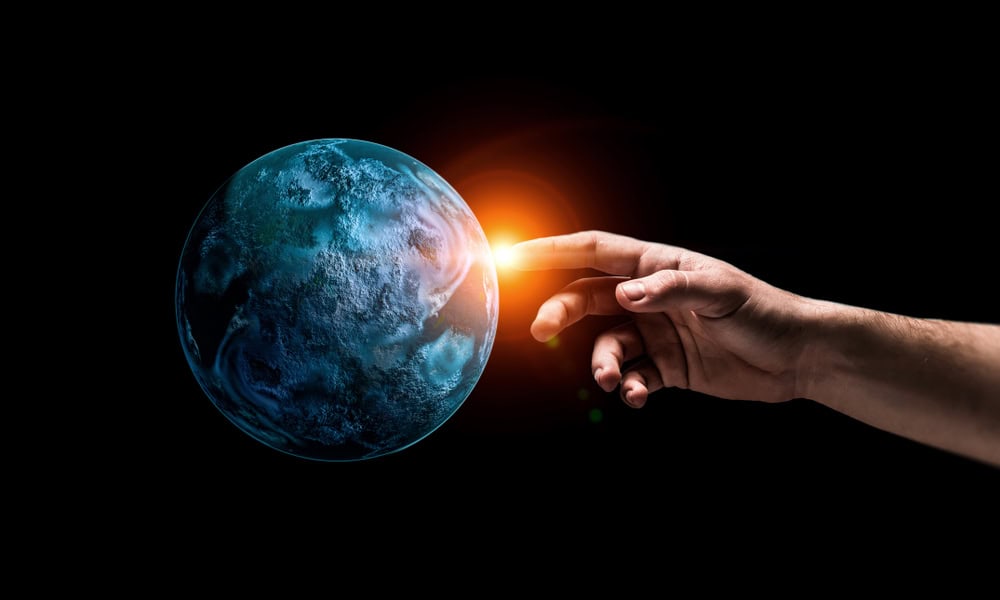
Some religions teach that each living species was created in its present form at one time in the past and has remained mostly unchanged since then. Literal interpretations of creation myths such as the Book of Genesis have traditionally supported that idea.
But fossils and scientific studies of living organisms’ anatomy, biochemistry and genetics show that evolution has occurred. Humans did not suddenly appear, fully formed; we share ancestors in common with other primates.
Literal global floods
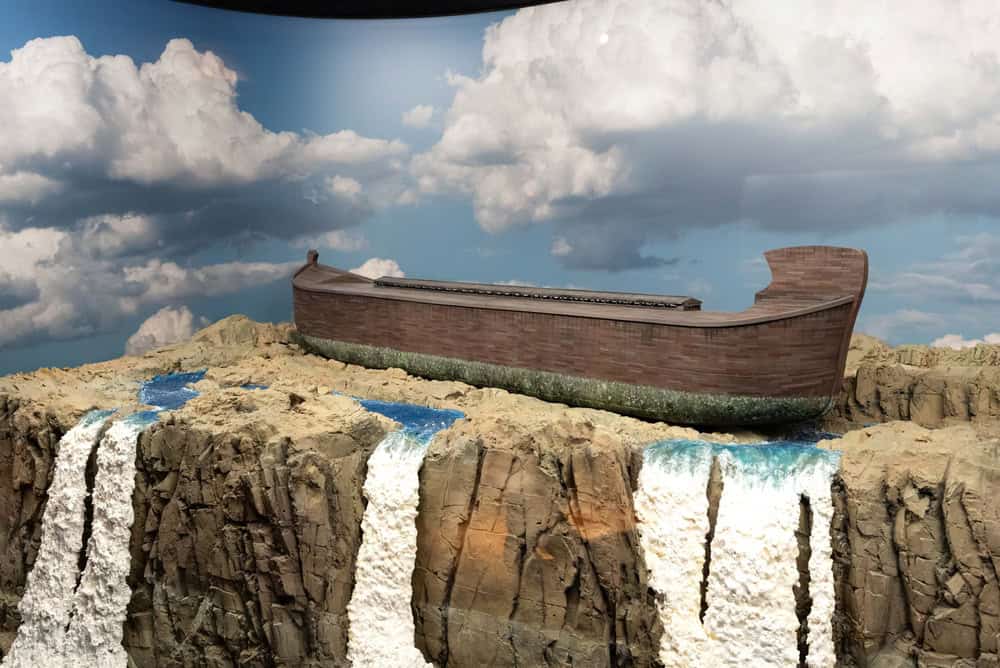
Many religions describe one worldwide flood that submerged all high ground on Earth and destroyed all terrestrial animals not on board the ark. Geological evidence, distribution of fossils, and hydrology prove that a global flood never happened at one time.
There is not enough water to cover every mountain top on Earth, and plant and animal fossils around the world have complete, uninterrupted timelines.
Divine weather control

Ancient polytheistic religions (Norse, Greek, Vedic, etc. ), and some orthodox sects within the larger monotheistic religions teach that rain, droughts, earthquakes, and lightning storms are caused by divine reward or punishment.
Meteorology and seismology show that rain and droughts are created by atmospheric pressure changes and global water distribution, while earthquakes are created by shifting tectonic plates. Weather happens because of heat from the sun and the movement of air and water, not because of human moral behaviour.
Flat earth cosmology

Some ancient religious texts described Earth as flat and covered by a solid disc-like dome or tent called a firmament. But satellite photos, space travel, physics, and circumnavigation prove that Earth is an oblate spheroid that orbits around the Sun.
Gravity makes matter assume a ball shape. That is why all large planets and stars are spheres, not flat pancakes.
Geocentric universe
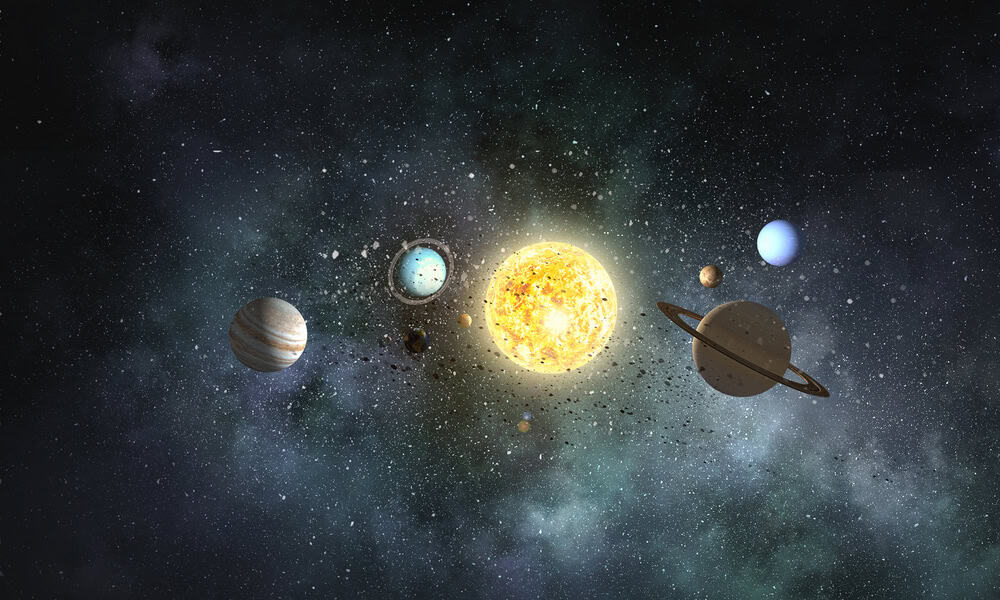
Traditional Christian theology and medieval Catholic doctrine (drawing heavily on ancient Greek astronomy) taught geocentrism. Earth is considered to be at the centre of the universe and all heavenly bodies like the sun and moon are orbiting around it.
We now know from modern astronomy that Earth is not the center of the universe, but merely one of countless planets in orbit around an average star in an expanding galaxy.
Disease as divine punishment

For centuries, diseases were considered by some to be punishments from God or other supernatural powers for sins committed by people. In times of plague and other epidemics, some religious leaders told people to pray or do penance in hopes of avoiding God’s wrath.
People who became ill were sometimes considered to deserve it for some imagined sin. We now know that things like bacteria and viruses cause infectious diseases.
Faith healing over modern medicine

Certain religions teach followers that prayer, rather than medicine or doctors, can heal serious illness. Years of public health evidence have demonstrated that deaths and unnecessary suffering occur when faith healing is used exclusively. Medicine treats the physical body through proven science and medicine.
Menstruation causes impurity

Menstruation is considered taboo by some traditional religions, as menstruating women are thought to be impure or spiritually unclean. In some religions, menstruating women may be prohibited from entering sacred buildings or their own kitchens or living rooms.
Contemporary science confirms menstruation is a healthy, normal biological function of the female reproductive system that occurs when an unfertilized egg and uterine lining are shed.
Literal tower of Babel

According to a popular myth among Jews and Christians, God caused every language to spring into existence overnight because humanity had offended him by building a tall tower. However, linguistics and archaeology both show that languages developed slowly and diversified over thousands of years from earlier language families.
Groups of people slowly migrated and settled throughout the world, and as time passed, their vocabulary and grammar changed.
Divinely ordained monarchy

For hundreds of years in Europe, kings claimed that God had personally chosen them to be king. They argued that a king is subject to no earthly authority, deriving his right to rule directly from God. As such, his subjects have no right to question his authority.
Many European rulers, including James I of England and Louis XIV of France, strongly endorsed this theory. Over time, democracy, constitutionalism and notions of rights caused this doctrine to lose most of its influence.
Literal parting of water
According to biblical stories, large bodies of water miraculously split in half, forming passageways for fleeing masses. However, fluid dynamics and oceanography explain that it is impossible for large bodies of water to act this way. Water always moves to fill voids and follow gravity and there can be no walls of water without walls.
Eclipses signal disaster
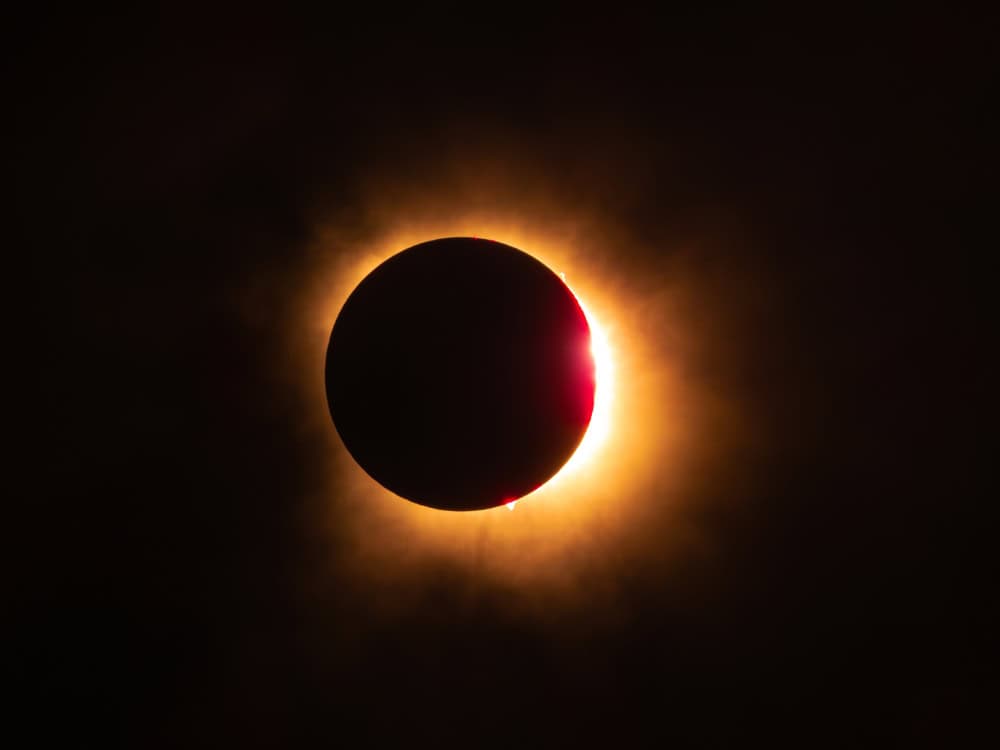
Some ancient religions thought of eclipses as omens of bad luck or signals of the gods’ wrath. Some believed that eclipses were announcements of the death of a royal figure, horrible war, natural disaster, or famine. To ward off disaster, some even performed ritual prayers or sacrifices.
However, scientists now know that eclipses occur when the Sun, Earth, and Moon align astronomically.
Women are inferior

Many old legal codes, customary patriarchal societies and fundamentalist religions have indoctrinated that women are inherently inferior intellectually, morally, or spiritually to men. Traditional Greek philosophies and early legal traditions considered women as property or as legal dependents that must be under the guidance of a man.
However, advances in sociology, anthropology, and evolutionary psychology indicate that mental faculties, leadership potential and intelligence are not gender-specific traits.
Magic and miracle cures

Greco-Roman mythology and biblical stories are full of references to people who walked on water, raised the dead, turned water into wine or parted seas.
Modern sciences like physics and chemistry show that laws of the universe are unchangeable, and no magical incantation can override them. Illusion and trickery can be used to mimic magic, but you can’t fool the laws of physics in our universe.
End of the world

Many religions throughout history have made predictions of the end times on exact dates. Sometimes the prophesied dates have passed without incident, leaving their followers upset and sometimes bankrupt. Belief in how or when the world will end belongs in the realm of religion, as there is no proven scientific way to predict a divine end to mankind.
Left-handedness is sinful

In some religions and cultures, using the left hand instead of the right was seen as unclean or unlucky. Some children were forced to use their right hand when writing or engaging in other activities, although they were born left-handed. But modern studies have proven left-handedness to be natural and have nothing to do with morality or spirituality in humans.
Like our content? Be sure to follow us.
11 radical teachings of Jesus that go against popular beliefs
Jesus’ teachings often challenged the social norms of His time, and many still challenge the way people think today.
11 radical teachings of Jesus that go against popular beliefs