
Religion has been influential in the development of civilizations for millennia, and today there are billions of people practicing many different religions worldwide.
Nearly one in three people

Christianity, with approximately 2.3 billion or 2.4 billion adherents, is the world’s largest religion. Originating in the 1st century AD, it centers on the life and teachings of Jesus of Nazareth. The faith spread throughout the Middle East and Europe before becoming a worldwide religion.
Today, Christianity is prominent in the Americas, Europe, sub- Saharan Africa, the Philippines, and many other areas around the globe. Christianity can be broken into various large traditions such as Roman Catholicism, Protestantism, and Eastern Orthodoxy, as well as smaller offshoots of these churches. Christians share belief in Jesus Christ and the Bible.
A faith spanning continents

Islam has around 2 billion followers and is the second-largest religion in the world, rapidly approaching Christianity demographically. It originated among the people of 7th-century Arabia through the teachings of Muhammad and the revelations of the Quran. Muslims strictly adhere to belief in only one God, referred to as Allah in Arabic, and practice prayer five times daily, fasting during Ramadan, almsgiving, and pilgrimage to Mecca (Hajj) if able.
Islam is often associated with the Middle East, but a majority of Muslims actually live outside of the Middle East. Indonesia has the largest Muslim population of any country in the world, and significant populations are also found in Pakistan, India, and Bangladesh.
An ancient tradition with enormous reach

With approximately 1.2 billion adherents, Hinduism is often said to be the third-largest religion. Unlike Christianity or Islam, Hinduism has no single founder, nor does it trace its origin to a single point in history. Hindu traditions trace their origins over many millennia in the Indian subcontinent.
Hindu philosophies differ greatly, but most agree on important concepts like karma, dharma, reincarnation, and escaping the cycle of rebirth. Hindus worship deities such as Vishnu, Shiva, and Devi. Schools of Hinduism may vary greatly in their concept of God. India is home to the majority of Hindus; Nepal also contains a significant population.
The path that began beneath a tree
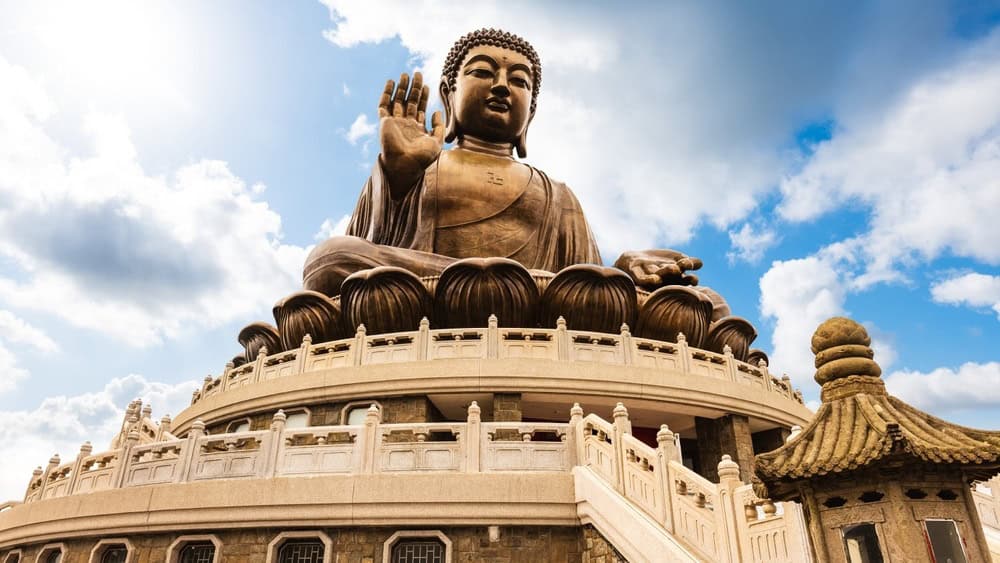
Buddhism originated with Siddhartha Gautama Buddha in ancient South Asia around 2,500 years ago. Buddhists believe that Siddhartha Gautama reached enlightenment after meditating under the Bodhi tree. He is said to have spent the remainder of his life preaching the path to liberation from suffering.
Estimates of the Buddhist population vary widely in contemporary times, but there are approximately 500 million Buddhists around the world. After originating in India, Buddhism spread across Asia, evolving into traditions such as Theravada, Mahayana, and Vajrayana. Buddhism has particularly high concentrations in China, Thailand, Japan, Myanmar, Sri Lanka, Vietnam, and Cambodia. However, beliefs and practices vary among Buddhist countries.
More difficult to count than it looks

Chinese folk or traditional religion (Chinese traditions and beliefs) covers a wide variety of traditions followed by hundreds of millions of people. However, an exact number is difficult to ascertain due to the nature of the traditions involved.
Chinese folk religion isn’t necessarily based around a set membership in one group or institution, or even a specific statement of faith. They may include worship of ancestors, local gods, temples, festivals, belief in divination, and Taoist, Buddhist, and Confucian ideas.
Someone can be involved in any number of these without considering themselves to fit into any one religious category. That is why you see such a broad range of estimates. Chinese traditional religion overall is nonetheless among the largest religious demographics, especially within China, Taiwan, and Chinese populations abroad.
A religion built around harmony

Taoism (also spelled Daoism) originated in China and is usually traced back to the sage Laozi and the ancient writing known as Tao Te Ching. Central to most Taoist schools of thought is the Tao, or “Way”, which can be roughly defined as the natural order of the universe.
Many Taoist schools teach concepts such as following nature, wu wei (a word which has been translated as both “effortless action” and “non-action”), simplicity, humility, and balance. Taoism inspired religious movements which featured temples, priests, rituals, and thousands of divine beings.
A young faith with a vast following

Sikhism emerged at the end of the 15th century CE with Guru Nanak in the Punjab region of South Asia. Nanak was succeeded by nine Sikh Gurus, after which Guru Granth Sahib became the eternal Guru of Sikhism.
Sikhs uphold the belief in one God. They follow teachings like living an honest life without fraud or exploitation, worshipping God, serving others, striving for equality of human beings, and remembering God always. Sikhism is known for its emphasis on helping others regardless of race, religion, or caste, and its outright rejection of caste distinctions.
Today, there are between 25 and 30 million Sikhs in the world. Sikhs today mostly live in India, especially Punjab, but have sizable populations in Canada, Britain and elsewhere.
One of the oldest still practiced

Judaism has approximately 15 million followers. For millennia, it has been one of the most influential religions in the development of civilization. Judaism is among the oldest monotheistic religions, with origins in the ancient Middle East that date back thousands of years. Jewish theology centres on the belief in the Hebrew God, adherence to the Hebrew Bible, especially the Torah, and Jewish religious law and tradition.
Judaism formed Christianity and influenced the religious context within which Islam arose. Israel and the United States have the largest Jewish communities today, though Jewish minorities live around the world.
A modern religion with global ambitions

The Baháʼí Faith originated in 19th-century Persia with the revelation of Baháʼu’lláh. Among its central teachings are the unity of all people and that religion is progressive, each of the major world religions being a part of an uninterrupted unfolding plan of progressive revelation from God. Baháʼís thus revere Abraham, Moses, Buddha, Jesus, and Muhammad but follow Baháʼu’lláh as the most recent messenger of God.
The Baháʼí Faith promotes unity of the human race, gender equality, education, and elimination of prejudices. Baháʼí population estimates vary, but it is generally accepted that there are several million adherents in over 200 countries and territories.
Small today, enormous in history
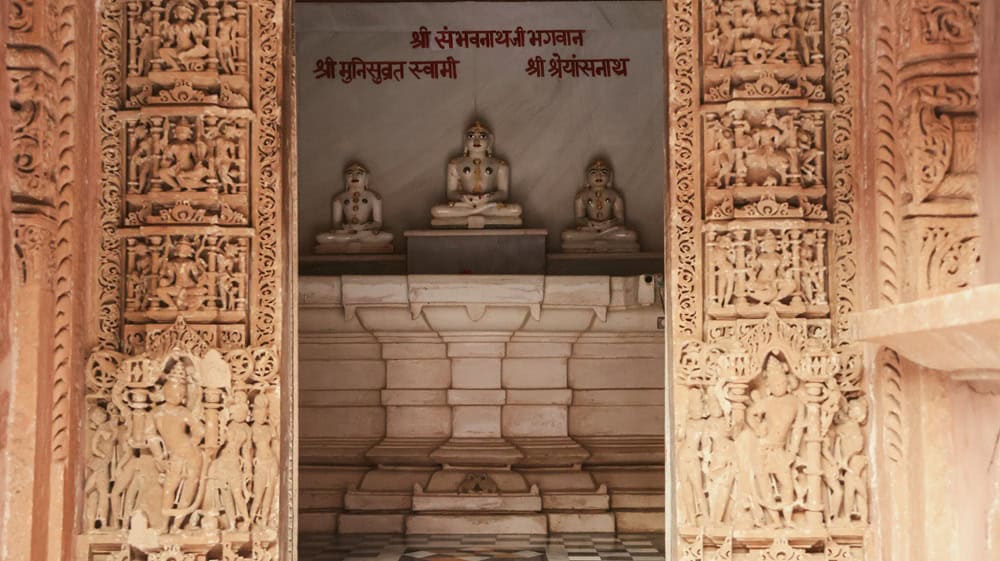
Jainism is an ancient Indian religion with several million adherents. Jains believe in ahimsa, which translates to non-violence against living things. Dietary restrictions and choice of occupation are often affected by this teaching, and many Jains are vegetarian. Jain followers also practice other precepts including telling the truth, self-control, and non-attachment.
Followers believe that past karma affects the transmigration of the soul. There are said to have been 24 Jain Tirthankaras (teachers), the most recent being Mahavira, who is the best-known Jain teacher.
Sources: Please see here for a complete listing of all sources that were consulted in the preparation of this article.
Like our content? Be sure to follow us.