
When you grow up with something, it can be easy to forget that it might seem strange or even extraordinary to others.
The evening keeps going

Canadian winters may leave us with annoyingly few hours of daylight, but summer makes up for it. Near midsummer, there is still plenty of light late into the evening for much of Canada. And the farther north you travel, the more dramatic this effect is.
Long summer evenings mean BBQs, walks, sports, and other outdoor activities can go late into the night without nightfall. Summer daylight can actually become surreal in northern Canada. The sun may stay above the horizon 24 hours a day for periods of time.
The other closet

A Canadian wardrobe might seem like it belongs to multiple people. Bulky jackets, insulated boots, gloves and scarves are housed next to shorts, sandals and bathing suits. Where you live might mean the weather drastically changes between January and July. And even spring and fall can be wildly unpredictable.
Canadians just adapt: we change our tires to winter ones, pull out our patio furniture, stash coats away until there’s suddenly a need for them again. It’s normal to have drastically different clothes, routines and hobbies depending on the season when you’ve grown accustomed to doing it your whole life.
By morning, it’s moving again

Canada’s cities can get dumped with metres of snow in one overnight blizzard. But expectations are often that things will return to normal (relatively) quickly. During the night while people are sleeping, salt/sanding trucks and snow plows hit the roads to clear major routes and highways.
Minor roads, sidewalks, parking lots, public transit and airports may also have sizable clearing efforts taking place. Of course, snowstorms can still mean delays and closures. Snow clearing resources also vary from community to community.
But Canadians have come to expect winter infrastructure to such a degree that the first reaction to seeing a snow-covered street will often be irritation that it hasn’t been cleared yet rather than wonder at how an entire city can essentially dig itself out and get going again.
Straight from the tap

In many parts of Canada, drinking a glass of water doesn’t take much effort. It can be as simple as walking to your kitchen sink and turning on the tap. Municipal drinking water is treated and tested, so millions of Canadians don’t think twice about it. That’s not something you can say everywhere in the world. Bottled, boiled, or filtered water is part of everyday life for many people.
Canada has notable exceptions, of course, including some First Nations and remote communities that have endured drinking-water advisories. But for much of Canada, reliable tap water is so commonplace it goes unnoticed.
Room to disappear
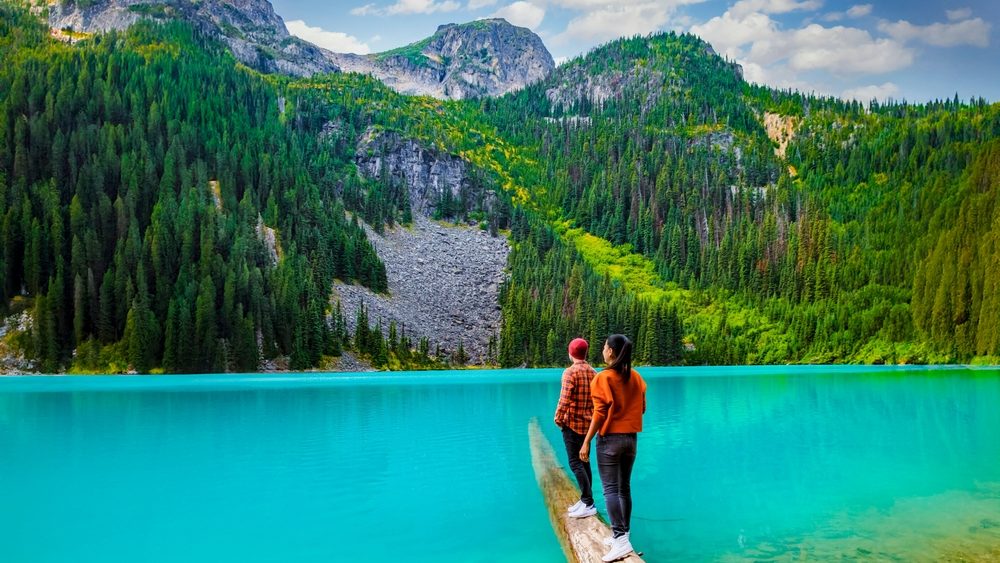
Canada’s abundance of open space is easy to take for granted until you visit a place that is far more crowded than Canada. Head out of most cities and suburbs, and you’ll soon find the buildings giving way to forests, lakes, farmland, or vast swaths of untouched land.
Canadians might not think twice about spending a weekend up at a secluded cabin, hiking in the middle of nowhere, or driving for hours through beautiful views that just never seem to end.
Keeping the outdoors outside
 Image Credit: Shutterstock.
Window screens are such a common fixture in Canada that many of us rarely even notice them. Slide open a window in your bedroom or kitchen on a balmy summer night, and the screen allows refreshing air to flow in while keeping mosquitoes, flies, and other bugs at bay.
Some Canadians will be surprised to learn screens aren’t as common as we think. In many parts of Europe, Latin America, and Asia, homes lack screens on most windows, meaning cracking open your window might leave you with no barrier at all between your room and whatever insects are floating around outside.
Laundry day works differently
 Image Credit: Shutterstock.
Large washing machines and tumble dryers are yet another luxury many Canadians grow up taking for granted. Homes will usually have their own laundry rooms with space to accommodate both separate machines. Many apartments will come equipped with in-unit appliances or shared laundry rooms in the basement.
Head to a different country for work or travel abroad and you might find smaller front-loading machines. Tumble dryers may not be as common, or even used at all, with air-drying clothes still being completely acceptable. Washer dryer combos may also have significantly longer run times than what Canadians are used to.
Warmth on demand

Canadians experience brutally cold winters, where temperatures can drop well below zero. When this happens, you can be guaranteed that the majority of Canadians’ homes, schools, offices, shops, and public buildings will stay warm. Insulation, central heating, and proper Canadian-winterized construction allow Canadians to walk in from -20 °C, take off their winter coats, and not think twice.
Houses in other countries that may not experience such harsh winters are not built to always stay as warm, so chilly house temperatures are normal. Canadians may moan about winter all the time, but not having to experience it once you step through your front door is something we forget is a privilege.
Look up tonight

Canada’s cities are by no means free from light pollution, but there are vast regions of the country where the population is low enough to create incredible views of the night sky. Venture outside of city limits and you will quickly notice an abundance of visible stars. Canada has several dark-sky preserves where light pollution is limited to preserve the night environment as well.
Travel to the correct places within Canada, and you might even see the northern lights without having to travel abroad. If you grew up near wild spaces or in small towns, a sky full of stars may seem normal to you.
The unexpected neighbour

Canada is home to abundant wildlife that lives startlingly close to people. Venture into the country, or even just out to your backyard, and you might spot raccoons, deer, coyotes, foxes, bears, moose, or monstrous schools of Canada geese without ever leaving civilization. Sure, some wildlife sightings are unusual and even threatening.
But many have become part of day-to-day life around Canadian neighbourhoods. In fact, Canadians can grow so used to our wild co-inhabitants that the wildlife that visitors stop to photograph are often merely glanced at by locals.
Like our content? Be sure to follow us.