
Walking into a Canadian grocery store and seeing some sections might stop Americans in their tracks.
Different laws about food, eating habits, and taste preferences mean Canadians stock items you don’t normally see in American supermarkets, or they place them in sections you’d never expect.
So here are 10 Canadian grocery store sections Americans might never see back home.
The bagged milk crate
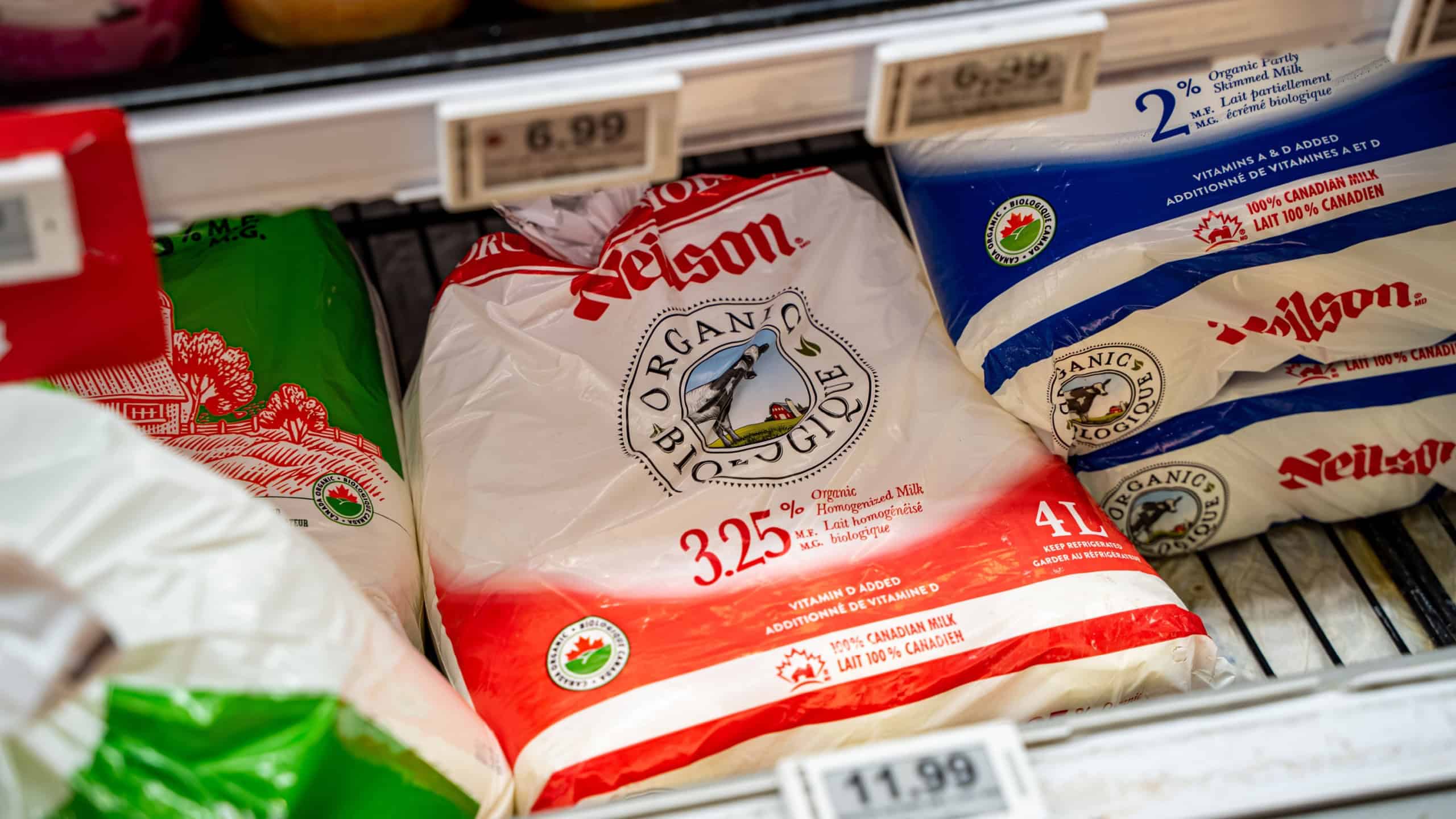
Walk into any grocery store in Ontario, Quebec, or the Maritimes and you’ll notice there is no “wall of plastic jugs” like in American grocery stores. Instead, they sell milk in bags.
Each large outer bag contains 3 small bags filled with 1.3 liters of milk inside. This stemmed from Canada adopting the metric system in the 1970s.
It was easier and cheaper for dairy companies to resize milk bags to metric measurements than it was to resize glass bottles and plastic jugs.
The “British” / UK imports section
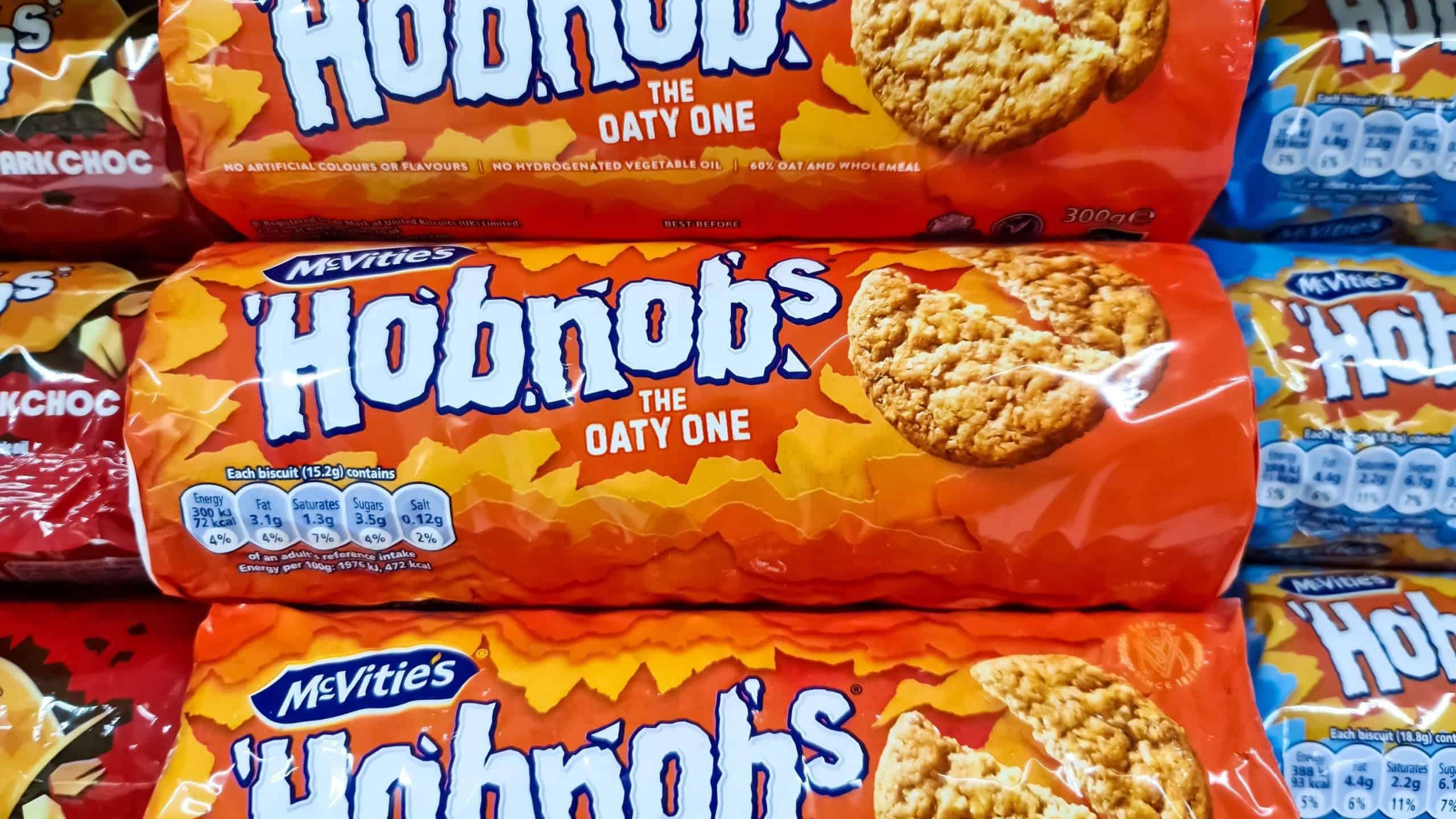
Canada’s history with the United Kingdom means nearly every grocery store will have a section full of British comfort foods.
Instead of an “International” shelf in the corner, expect full shelves of Heinz Beans (The British recipe), Aero bars, Wine Gums, Bisto gravy, Marmite, Branston Pickle, Digestives or Hobnob cookies, and many other British snacks.
This section exists to serve Canada’s large population of British expats. Many Canadian families grew up eating these exact snacks too.
The poutine essentials endcap
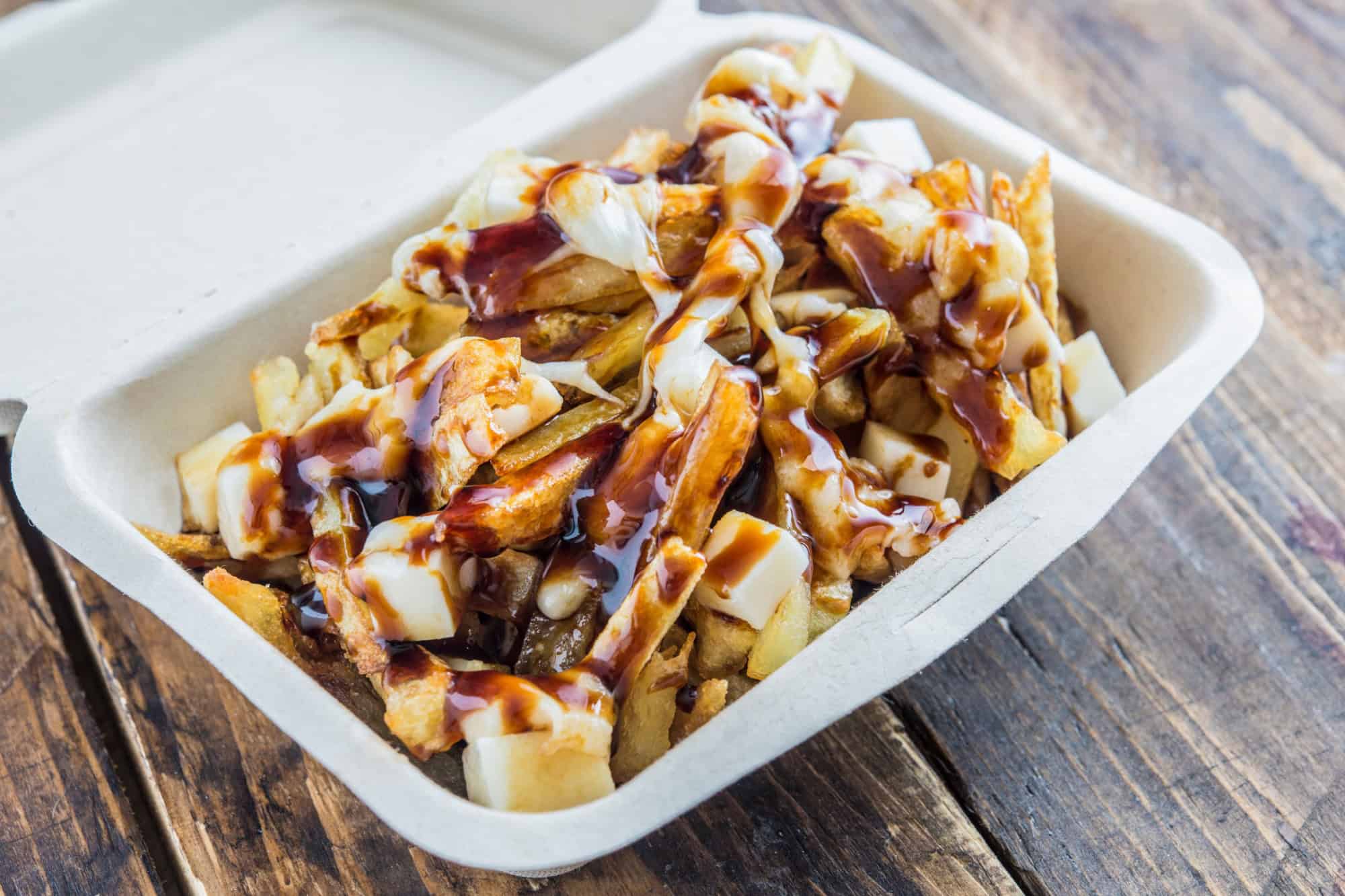
Walk into any grocery store in Quebec and you’ll quickly learn that poutine is indeed Canada’s unofficial national dish. Many stores have entire sections dedicated to helping you make poutine at home. The crown jewel of this section is the imported cheese curds.
Americans can find curds in the refrigerated cheese aisle of their grocery stores, but Canadian stores often keep them on display at room temperature (especially in Quebec and Eastern Ontario).
These stores also stock a distinctly Canadian product called “Poutine Gravy.” This is a light blend of chicken stock and beef stock that is saltier and thinner than most American brown gravy equivalents.
The “No Name” yellow wall

At Loblaws company-owned stores (brands like No Frills or Real Canadian Superstore), you will find an entire wall of yellow products called the “No Name” wall.
They sell household products that range from flour to dish soap, packaged identically in bright neon yellow boxes with austere black Helvetica lettering.
The U.S. has great generic brands (Great Value, Kirkland, etc.), but “No Name” branding has become a Canadian icon by embracing minimalist, intentionally “non-descript” packaging.
The President’s Choice “insider’s” section

President’s Choice, or PC, is Canada’s premium “store brand.”
PC is so beloved that many Canadians prefer it to major national brands. Entire sections of certain grocery stores are dedicated to President’s Choice items, especially during the release of the “Insider’s Report,” a seasonal magazine that introduces new, experimental foods.
You’ll see everything from The Decadent Chocolate Chip Cookie (which actually has more chocolate chips than any other national brand) to specialty ice cream flavors like “Black Diamond.”
The Montreal smoked meat counter

Unlike Americans, Canadians don’t ask for pastrami at the deli. They get Montreal Smoked Meat.
Its cut and look are identical to American pastrami, but it is dry cured with a unique spice blend of peppercorns, coriander, and garlic. It’s also usually made with the fattier “brisket” cut of beef.
Pre-packaged slices come in vacuum sealed bags from the grocery store freezer, or you can order it sliced from the deli counter. Meat slicers will always ask if you want your smoked meat “lean,” “medium,” or “fatty” cut.
The ketchup & all-dressed chips
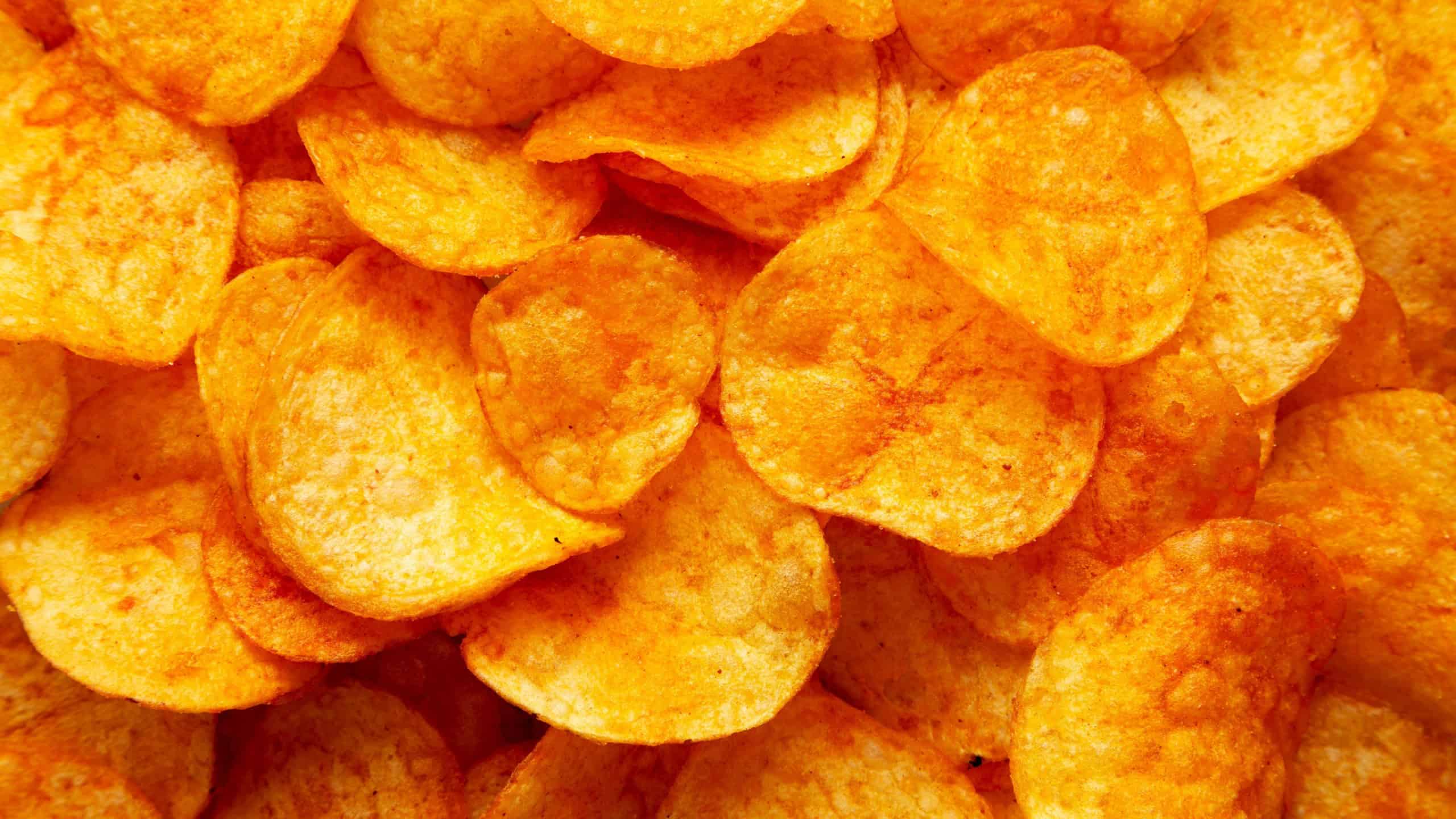
Walk into any Canadian snack aisle and you’ll find yourself drowning in a sea of red and purple chip bags. Canadians love two things: Ketchup chips and All-Dressed chips.
You may find a seasonal “limited edition” ketchup chip at your local American grocery store, but in Canada, they are permanent shelf-staples and top sellers at every store, from corner gas stations to warehouse supermarkets.
You’ll also find All-Dressed chips, which is a unique flavor that mixes barbecue, sour cream and onion, and salt and vinegar all onto one chip.
Canadians also love Hickory Sticks, little toothpick-sized potato sticks with a hickory flavor that Americans just can’t get enough of.
The butter tart display
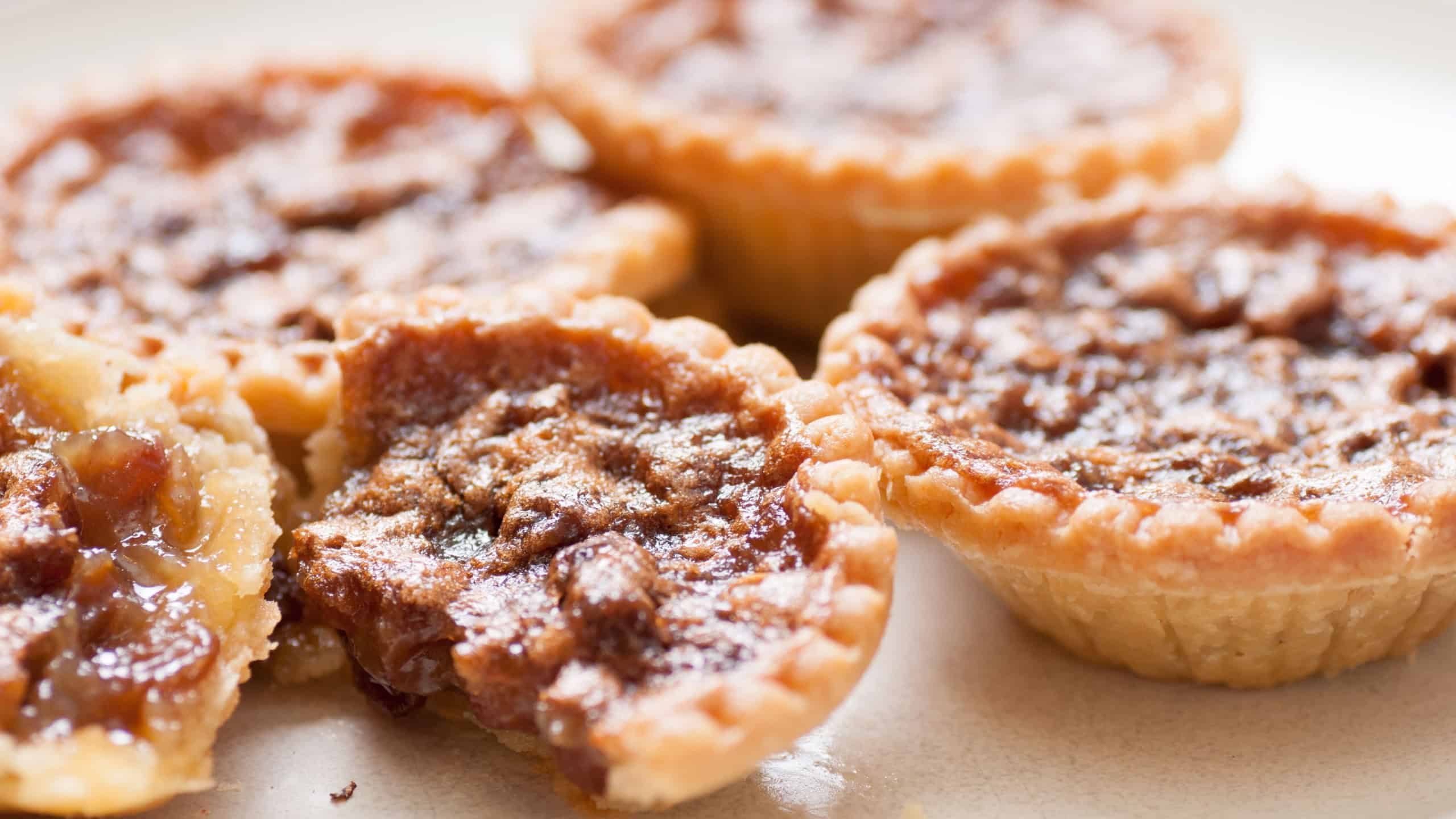
Enter any Canadian grocery store bakery and you’ll see row upon row of Butter Tarts. These are small pastry shells filled with a gooey mixture of butter, sugar, syrup, and egg.
They are to Canadians what fruit pies or brownies are to Americans. Ask any Canadian family what belongs in a butter tart and you will incite a battle royale.
Some will argue you need to include raisins, while others argue that raisins defeat the purpose of the tart’s gooey texture. There will also be “pecan” versions.
The Donair sauce section

If you find yourself wandering the grocery stores in Canada’s Atlantic provinces (New Brunswick, Nova Scotia, PEI, Newfoundland), you will find entire sections devoted to Donair Sauce.
This sweet, creamy, ultra-garlicky sauce is made with sweetened condensed milk, vinegar, and garlic powder. It is the required condiment for anyone ordering a “Halifax Donair” which is essentially a spicy beef wrap.
Americans may be used to putting white sauces like Tzatziki on their gyro wraps, but sweetened milk as a meat sauce is nearly 100% unique to Canada. They come in bottles, jars, and even in the freezer section as part of “Donair Pizza” kits.
The Vachon snack cake aisle

Americans have Little Debbie; Canadians have Vachon. This Quebec-based snack cake company is practically Canada’s ultra-nationalist response to American snack foods.
Lines like the Jos Louis (a red velvet-esque cake filled with cream and dipped in chocolate), the Passion Flakie (a puff pastry crunch wrapped around apple-raspberry jam and cream), and Ah Caramel! will fill an entire section with childhood nostalgia.
Canadian snack cakes tend to have different recipes and textures than American snack cakes, often tasting more like “pastries” than plain sponge cakes.
Sources: Please see here for a complete listing of all sources that were consulted in the preparation of this article.
Like our content? Be sure to follow us.