
Canadians & Americans talk to each other very often. Yet it doesn’t take long before the differences in how they use language become clear, although it’s more than simply accents or slang.
Here are twelve subtle language differences most Canadians notice immediately when they’re in the United States. Have you recognized any of these yourself before?
Washroom vs restroom
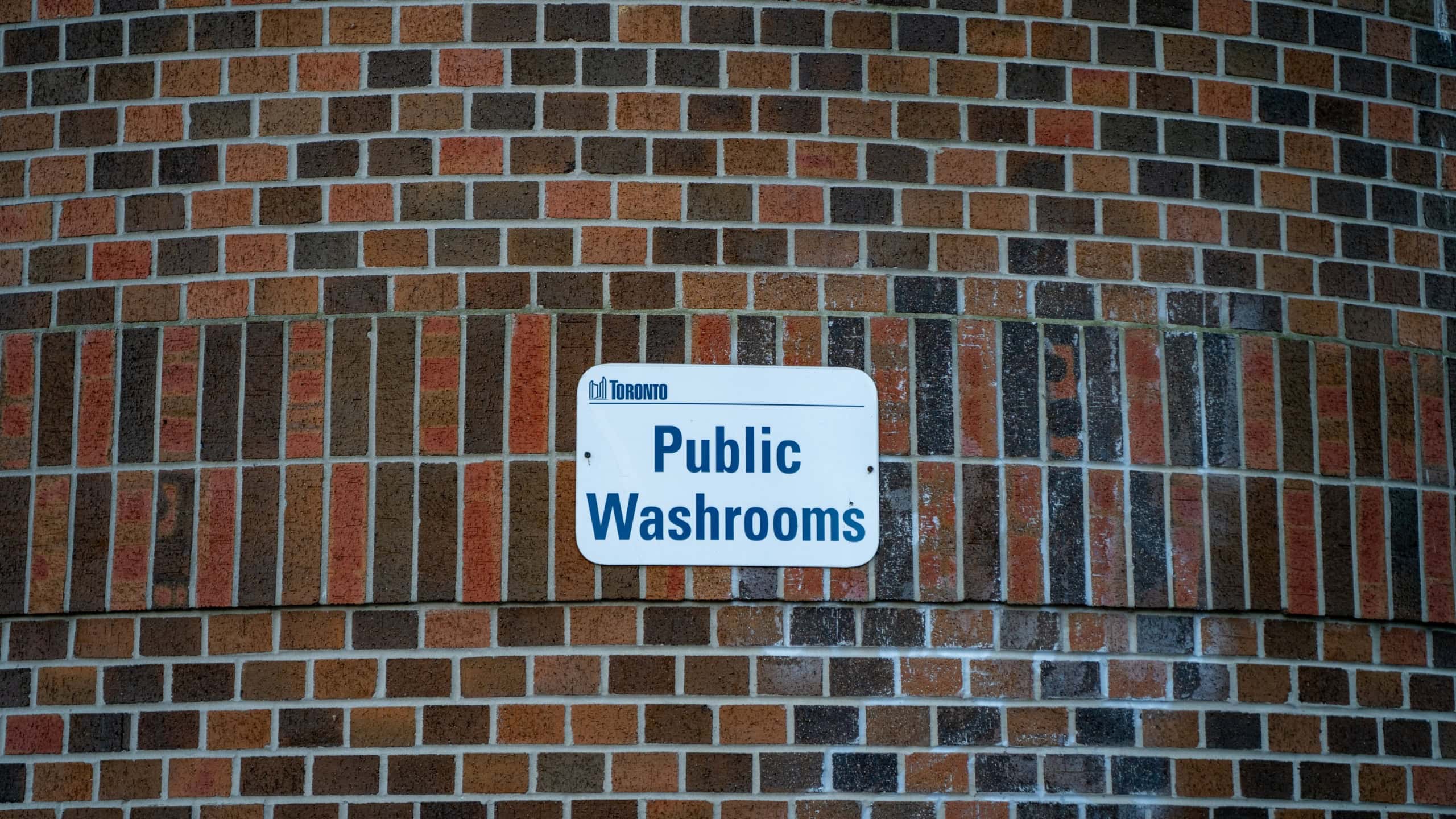
People in Canada ask for washrooms, and there’s no issue with it. But try doing that in the United States, and you might get a confused look because they’re used to hearing “restroom” instead.
It’s a difference that’s clear in both signage & customer-facing spaces. They’re the same place, only with a four-letter difference in the word.
Grade 1 vs 1st grade

We Canadians tend to label early years at school by using the terms “Grade 1,” “Grade 2,” and so on. It’s the same vocabulary right through high school.
But it’s slightly different in the United States. Students over there move through “1st grade” and “2nd grade.” The structure across both sides of the border is relatively similar, though.
Licence and practise as noun/verb pairs

The spelling of a word changes in Canada, depending on the job the word itself has. “License” & “practise” are the noun forms, and “licence” & “practice” are the verb forms. But these differences don’t exist down south.
Americans use the “s” form of the word for both the noun and the verb. Such a difference may seem small, yet it’s something that many Canadians will notice when they go across the border.
Catalogue and dialogue

Canadians keep the “-gue” ending in words like “catalogue” & “dialogue.” It’s the same for “monologue,” and they’ll use the spelling in formal settings as well as in casual places.
The “-gue” versions are occasionally used in America. But it only tends to ever be in formal writing, and they’ll stick to “catalog” & “dialog” in general writing.
Province abbreviations with periods
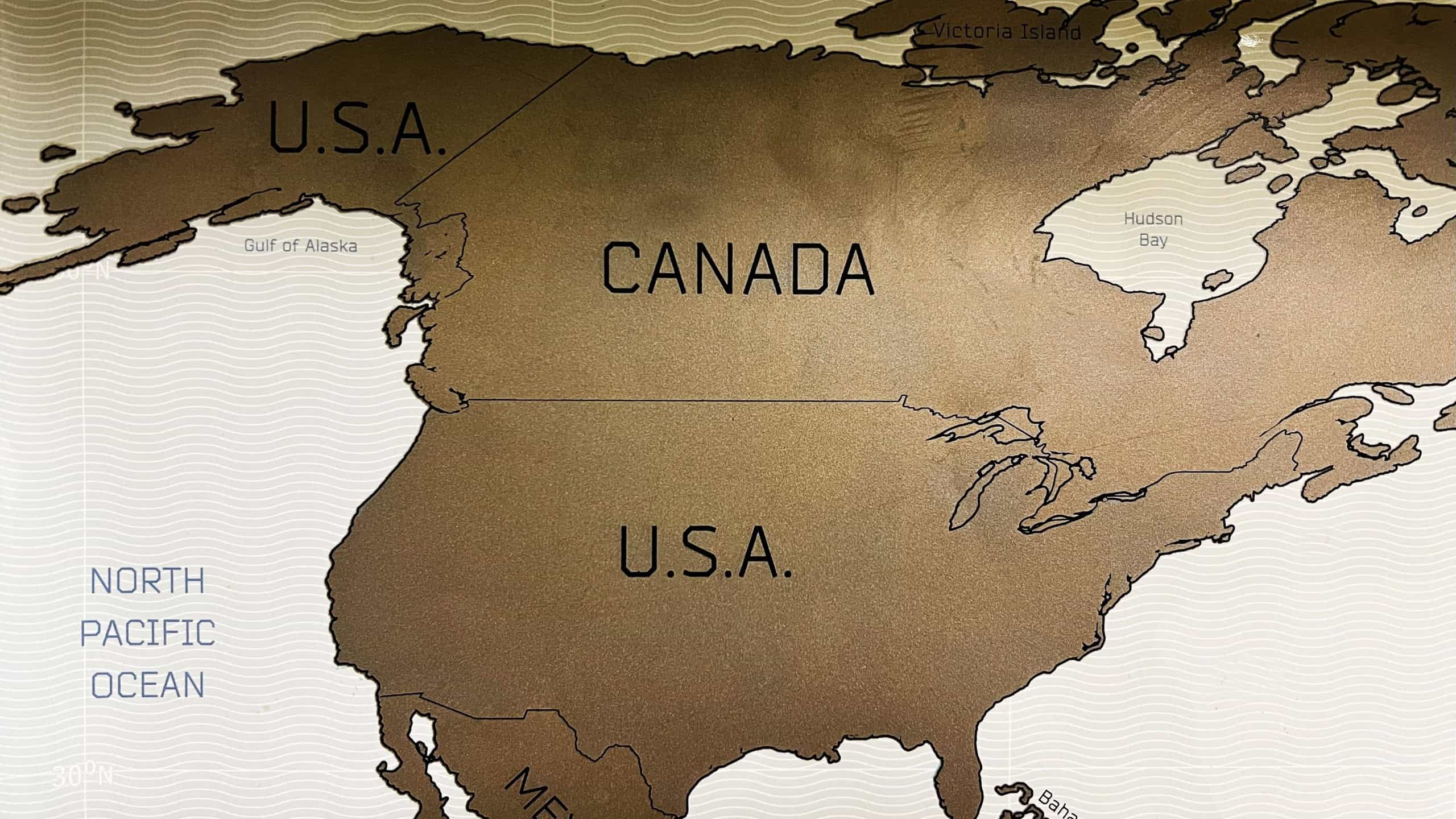
Most people know that Canadians use the word “province,” but Americans use “state.” Yet there’s another big difference. Abbreviations like “B.C.” and “P.E.I.” tend to use periods in government writing & academic material alike.
Americans drop the periods. They’ll stick to two-letter forms of states such as “CA” or “NY,” and that can look rather abrupt to Canadian readers.
Canadian raising in words like “about”

The way that Canadians speak is also different from those down south. Vowel sounds in Canadian speech tend to change slightly before certain consonants, and it’s something that linguists refer to as “Canadian raising.”
You’ll hear it in words like “life” & “price.” It’s common enough that a few Canadians feel a little strange when they hear Americans pronounce these words without the raised tone.
The cot–caught vowel merge

Another pronunciation difference is with the words “cot” & “caught.” Canadians pronounce the vowels in these words the same way, and it’s something you’ll find across almost all regions of the country.
Yet many Americans keep the vowels separate. They’ll pronounce the words in a way that makes it clear that “cot” & “caught” don’t have the same sound.
Defence/offence spelling

One of the strangest differences in language is with “defence” & “offence.” Canadians always spell them with a “-ce” ending, despite the fact that words related to these, like “defensive,” include an “-s.”
Our neighbours south of the border generally stick with “defense” & “offense” in almost all contexts. It sometimes looks incorrect on paper to Canadians.
Sentence-initial “As well”
Both Americans and Canadians use the phrase “as well,” although its location in the sentence is different for each country. Americans place the phrase at the end of the sentence. But Canadians put it at the start.
It doesn’t matter whether it’s conversational or practical text because it’s all the same. The Canadian placement of “as well” at the start of a sentence can stand out compared to America.
Positive anymore

Some Americans, especially in the South and Midwest regions, use the phrase “anymore” in a positive tense when they’re talking about something in the present day. They’ll say things such as “Gas is expensive anymore” or “People work from home anymore.”
Such a structure doesn’t really appear in the Canadian language, so it sounds a little unfamiliar to them when they go south. But it follows regional patterns in America.
“Needs washed” and similar verb patterns

Another quirk of a few American dialects is how they’ll say things like “needs washed” or “needs fixed.” It sounds wrong to Canadian speakers, yet it’s completely valid in parts of America.
Its use is actually so common in parts of America that researchers like the Yale Grammatical Diversity Project have mapped out the areas where it’s common.
Stress patterns in words like “process” and “research”

There’s a big difference in how Canadians stress the first syllable in “process” and “research.” But only in their noun forms. We say it like “PRO-cess” and “RE-search.”
It’s not the case in the United States because they tend to put stress on the second syllable more often. Who knew a small pronunciation change could make such a big difference?
Sources: Please see here for a complete listing of all sources that were consulted in the preparation of this article.
Like our content? Be sure to follow us.