
Canada doesn’t often get credit for these things, but many of our daily systems, habits and regulations make life simpler for us without us even noticing.
Food Standards

It’s surprisingly common for companies around the world to try to trick consumers with misleading food labels, but Canada’s federal inspection agency has enforced a clear, legal definition of “Product of Canada”.
In order to bear this label, 98% of a food item’s cumulative direct costs must be from Canada. Those costs include ingredients, processing, and labour, meaning they all must be done completely in Canada. This allows grocery shoppers to easily know where their food is coming from.
Beet de-icing

To avoid damaging roadside ecosystems and vehicles’ undercarriages with corrosive chemicals, municipalities across Canada first started using wetted agricultural beet juice to supplement rock salt.
Beet juice contains naturally occurring sugars, which depress the freezing point of water significantly lower than salt by itself. Beet juice allows the salt to adhere to icy roads even in conditions too cold for regular salt to work.
Smart highways

Ontario and Alberta highways are often buried in snow, and during blizzards, drivers can’t see any horizon lines. To remedy that, snow-filled provinces in Canada have dotted their tarmac with a particular geometric pattern designed to be easily visible when you’re stuck in snowstorms.
They may look like typical lane markings, but they’re actually special reflective chevrons and block patterns calculated to help drivers determine stopping distances when blowing snow obscures their vision.
Direct support

When you need help with a passport, tax form, or labour law, you don’t get stuck in an automated menu. You call 1-800-O Canada.
It’s an utterly distinctive civic amenity: one central national phone number that routes you to a real, actual human being in Ottawa who hears your problem, immediately knows what you need, and personally directs you to the right agent or form.
Pure maple

Other countries tap maple trees. However, Canada is the only country that treats its maple like top-secret military business. The Global Strategic Maple Syrup Reserve in Quebec stores approximately 100 million pounds of syrup in gigantic, fortress-like warehouses.
It operates just like an oil reserve, tapping barrels to keep global breakfast prices steady when harvests are poor, and buying up surplus during good years to prevent family farms from collapsing.
Indoor cities

Cold countries may have pedestrian tunnels, but Canada developed the largest fully enclosed subterranean and above-ground city networks. Toronto’s PATH features over 30 kilometers of underground shopping, transit hubs, and links to 75 office towers.
Calgary’s Plus 15 is the largest network of pedestrian skywalks in the world at 15 feet above street level. You can live, work, and travel all winter indoors without a coat.
Tap water

Canada has some of the highest-quality tap water. Canadian cities often have direct access to some of the cleanest sources of freshwater on the planet, like the Great Lakes or mountain glaciers.
But before that pristine glacier water makes it to your tap, it goes through rigorous treatment facilities, which typically sanitize water with special ultraviolet lights and filter it through fine pores, which remove any unseen contaminants.
Urban groceries

Mixed-use zoning is almost nonexistent throughout North America, so people need cars to get groceries from suburban strip malls.
Canada took the bold step of legislating that every major condo developer who builds in a downtown core must include full-service, high-end grocers on the ground floor of their high-rises. That way, even the most densely populated urban areas are 100% walkable.
Airport rails

Many international airports are served by train lines, but few focus on transit equity like Canada.
Vancouver’s Canada Line and Toronto’s UP Express literally catapult passengers from the airport to the heart of their city’s subway and commuter rail systems, all in less than 25 minutes; while costing about the same as your average daily transit fare, not some outrageous tourist fee.
Modern libraries

Canadian public libraries are renowned worldwide for evolving from book repositories into advanced digital public equity hubs.
Canadian libraries invested in free public access to green-screen recording studios, makerspaces, and fab labs with 3D printing capabilities, tool libraries, and onboard full-time social workers to assist at-risk citizens long before the rest of the world.
Custom crosswalks

In Canada, school zones are enforced with an extremely precise, legally defined crosswalk system using specialized 3D optical illusion crosswalk paint and brightly coloured Rectangular Rapid-Flashing Beacons (RRFBs).
The strobing light sequence is specifically designed to penetrate a driver’s vision through blinding snow or thick fog well before reaching the pedestrian space.
Merit immigration

Whereas most countries have settled for quotas or family sponsorship as their immigration drivers, Canada exclusively invented the Points System (Express Entry) way back in 1967.
Removing bias towards country of origin and objectively ranking candidates solely on education, language ability and targeted economic factors, Canada has discreetly engineered the most educated immigrant workforce in the world.
Seamless connections

When clearing international customs at Canadian airports, you’ll notice international-to-international connections transfer passengers via a system known as One-Stop Security.
Due to bilateral agreements and airport design, international connecting passengers never clear domestic customs, claim their baggage, or go through a second security check like many other airports around the world.
Metric hybridization

Canada has its own wholly unique and unofficial cultural measurement code. Canada is technically metric, but its citizens compromise with America like no other country.
Canadians think of outdoor temperature in Celsius, but pools and baking in Fahrenheit. They count their height in feet, but mass in pounds, yet drive in km/h and purchase gas by the liter. It’s an entirely specific set of linguistic quirks that every Canadian just knows.
Cross-country trails
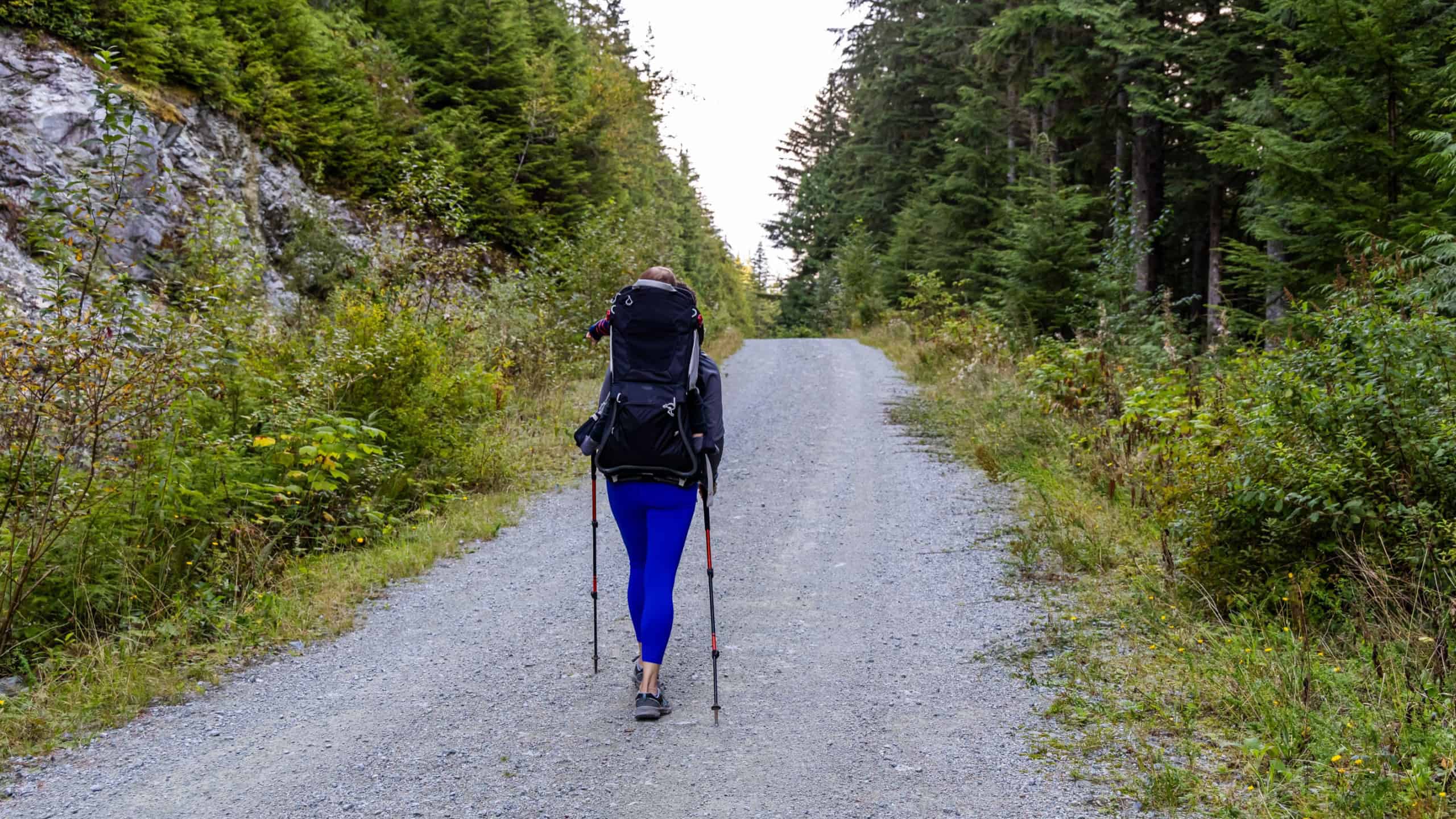
Canada has one of the largest recreational trail networks on the planet. The Trans Canada Trail is tens of thousands of kilometres of paths that span from coast to coast and north into the Arctic.
Walking trails, cycling routes, paddling routes and even snowmobile trails crisscross the country, providing opportunities for Canadians to explore their country, rain or shine. You might be surprised to learn that much of it is free to use and maintained by local community groups partnering with volunteers and governments.
Sources: Please see here for a complete listing of all sources that were consulted in the preparation of this article.