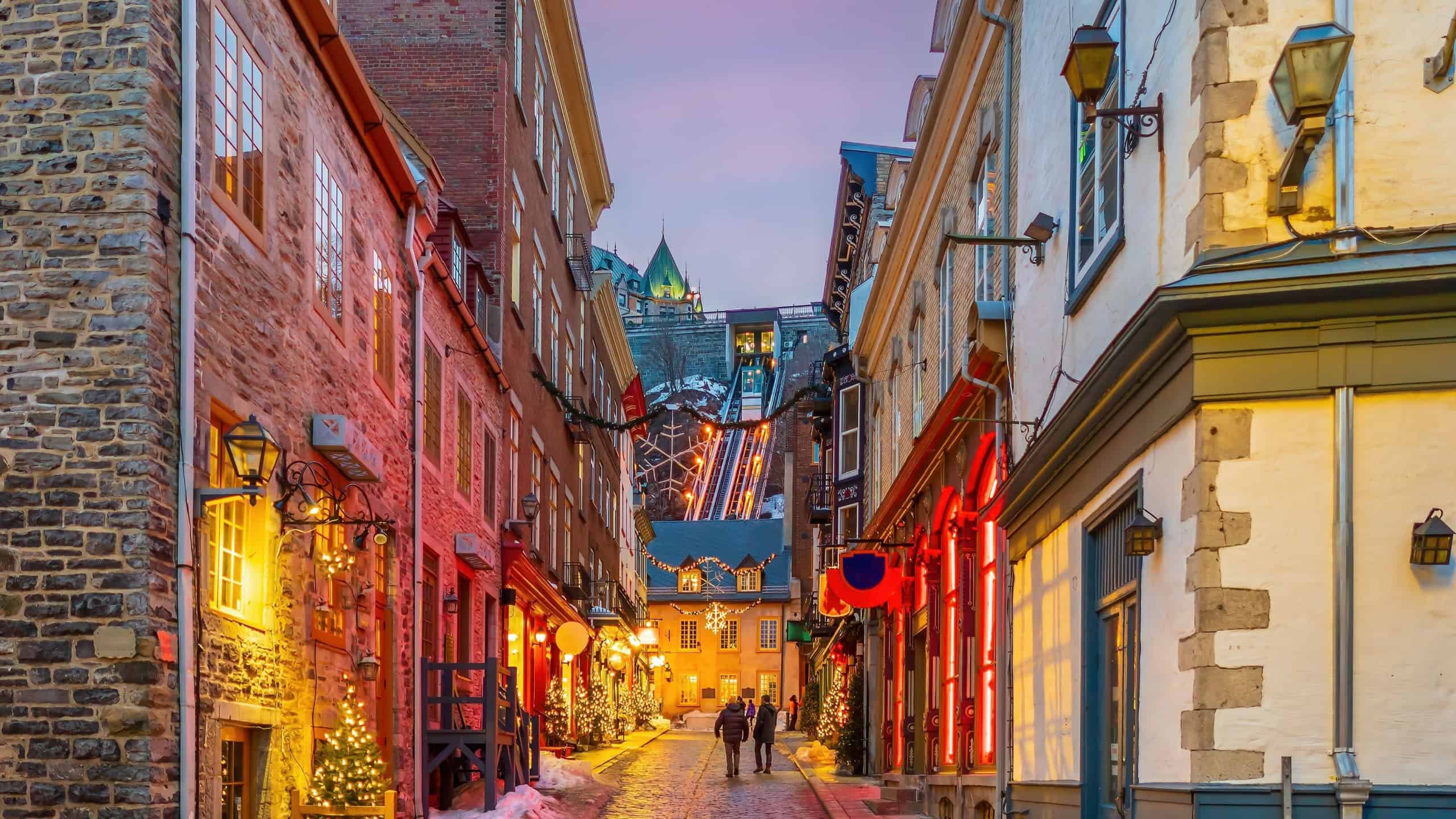
The culture, food, sights and sounds of certain towns and cities in Canada will make you feel like you’ve arrived in Europe without ever boarding a plane.
Old Quebec, Quebec
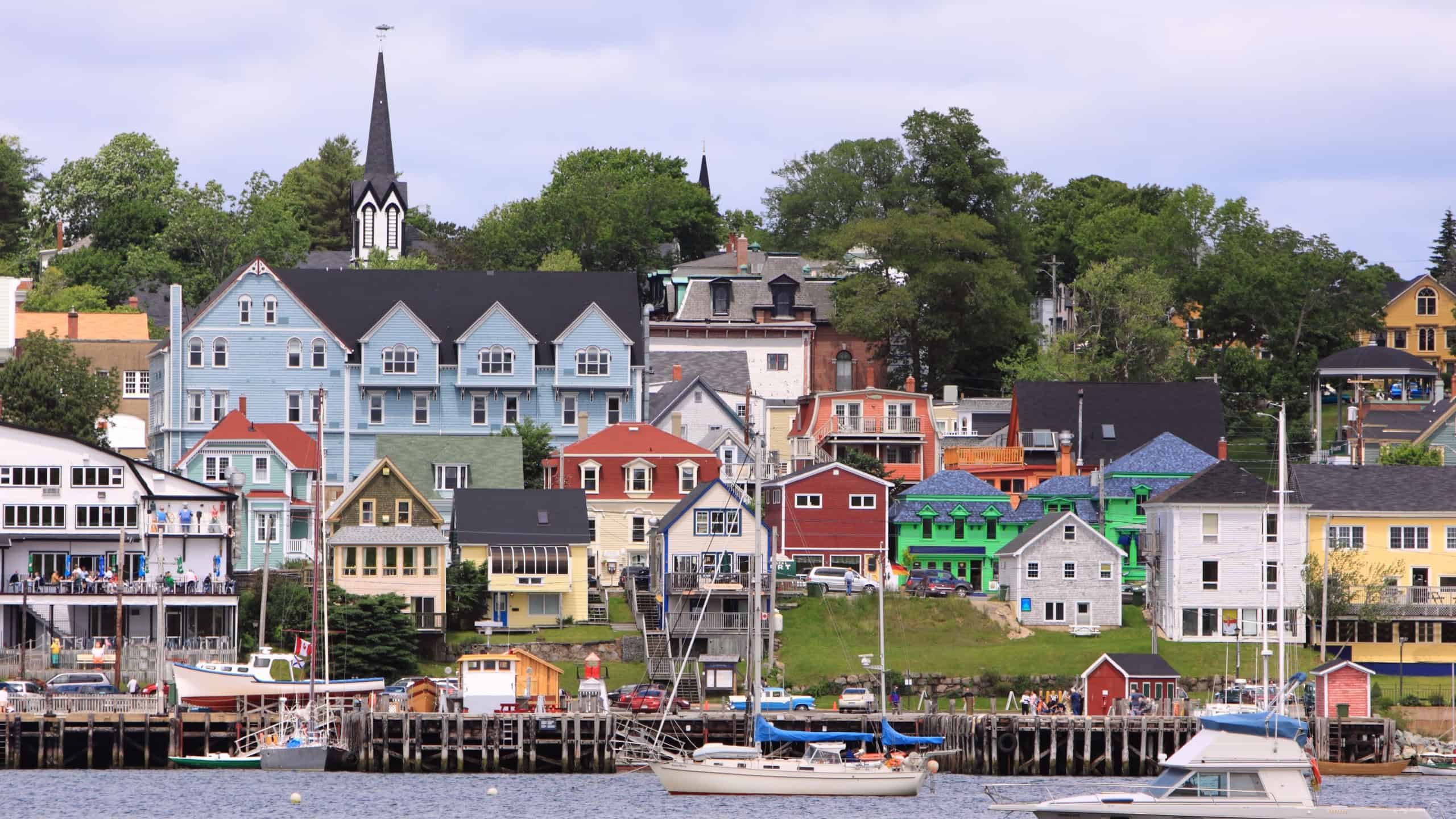
Visit Old Quebec if you’re looking to stroll through centuries-old atmospheric France. This 400-year-old historic district will transport you back in time better than any modern European city.
Home to the last remaining fortified city walls north of Mexico, Old Quebec is full of quaint, winding cobblestone streets, stone bistros, and outdoor artist markets. Towering above the St. Lawrence River, Château Frontenac’s turrets could have easily been borrowed from palaces in the Loire Valley.
Victoria, British Columbia
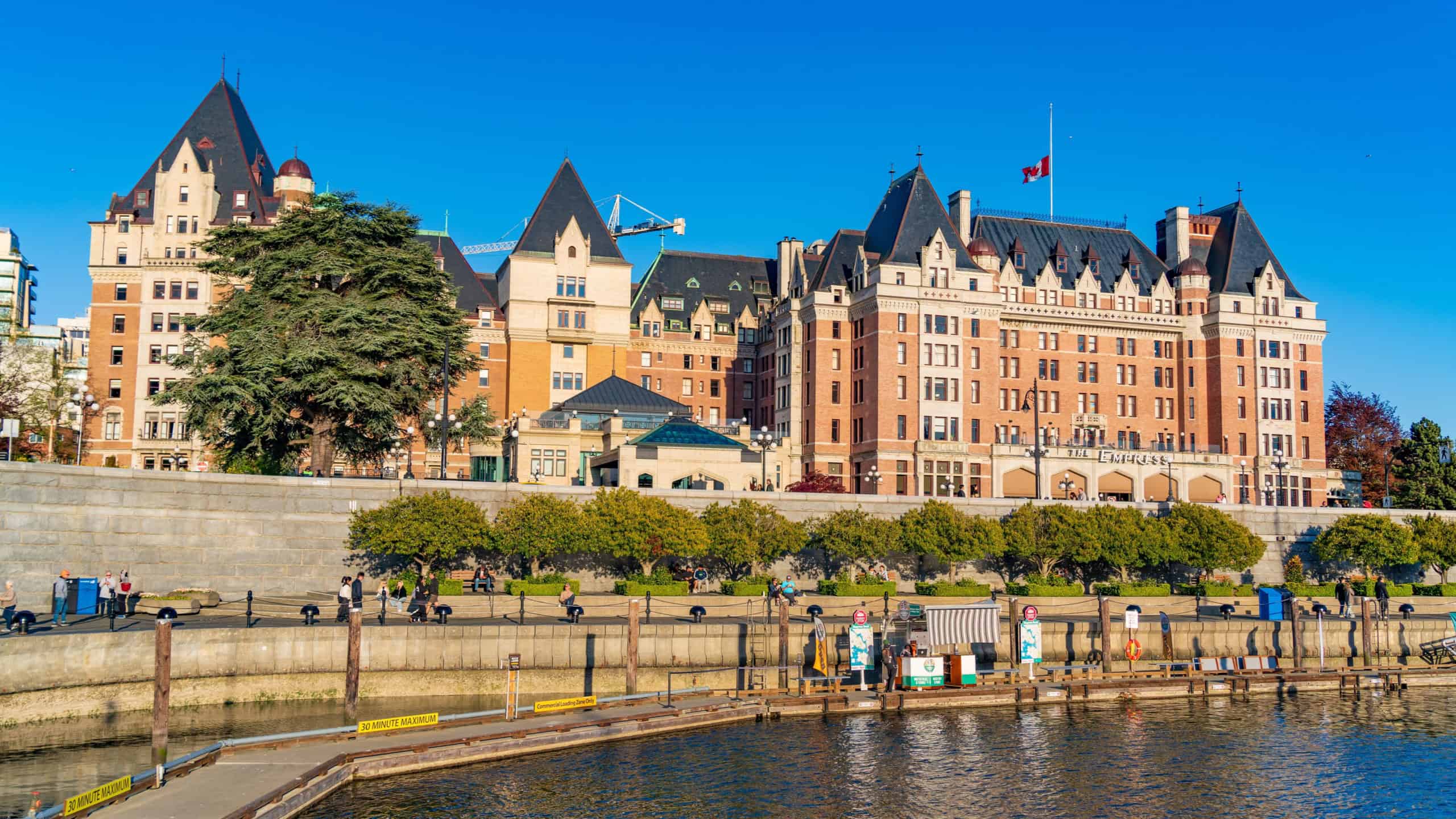
British Columbia’s capital city wears its Victorian heritage proudly. Victoria has the charm and atmosphere of a refined British estate town.
Red double-decker buses navigate past manicured floral displays, neo-Gothic parliamentary buildings, and Victoria’s inner harbour. To really get a taste of this old-world city, stop into the Fairmont Empress Hotel to enjoy a proper high tea.
Lunenburg, Nova Scotia
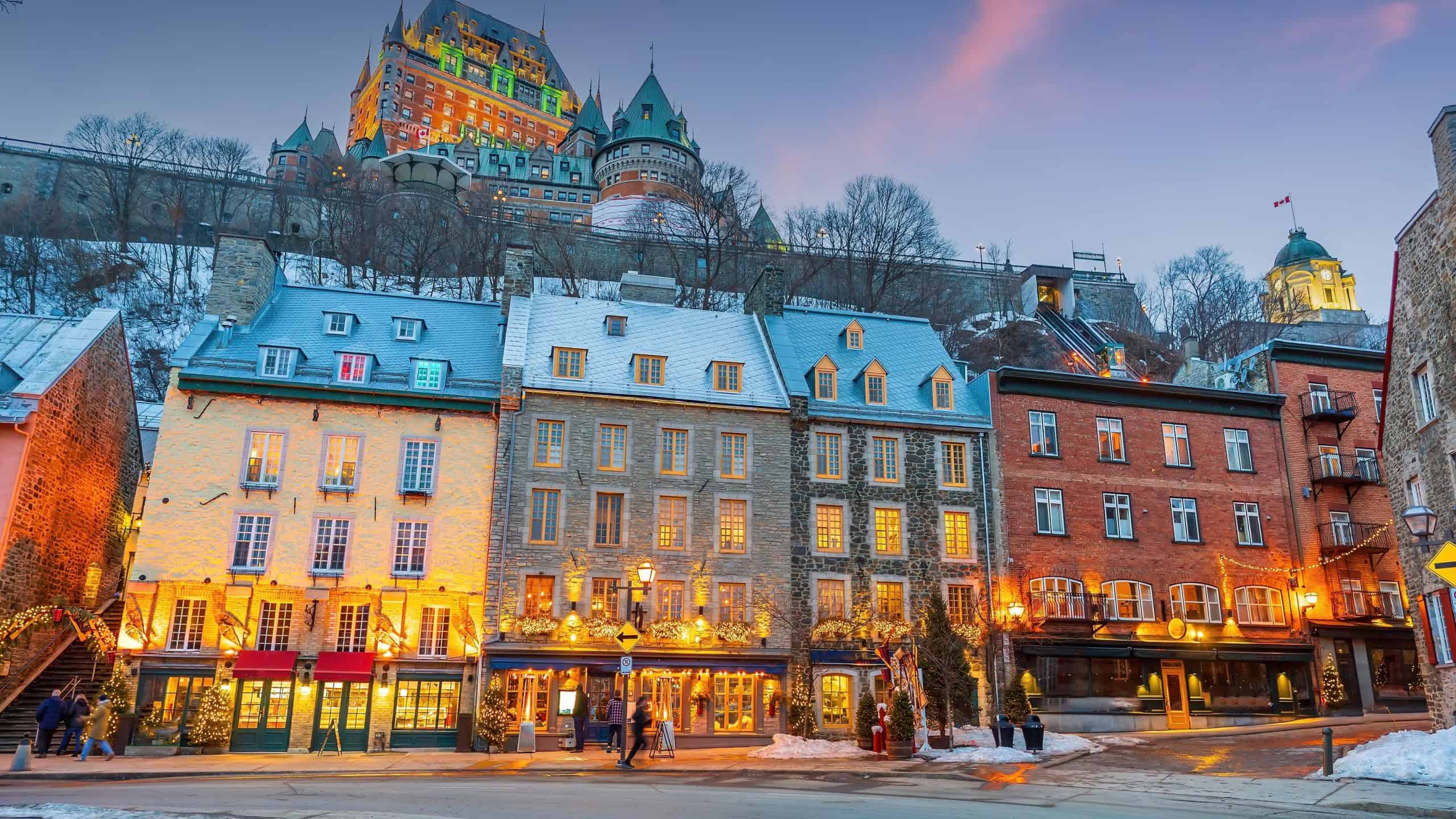
Strolling the colorful timber buildings of this UNESCO World Heritage village feels like visiting a Northern German coastal trade port. German, Swiss and French colonists founded Lunenburg in 1753 and set the streets in a strict British grid.
You’ll find the town still maintains its seafaring soul, with tall ships docked and craftsmen working on the water’s edge.
Mont-Tremblant, Quebec
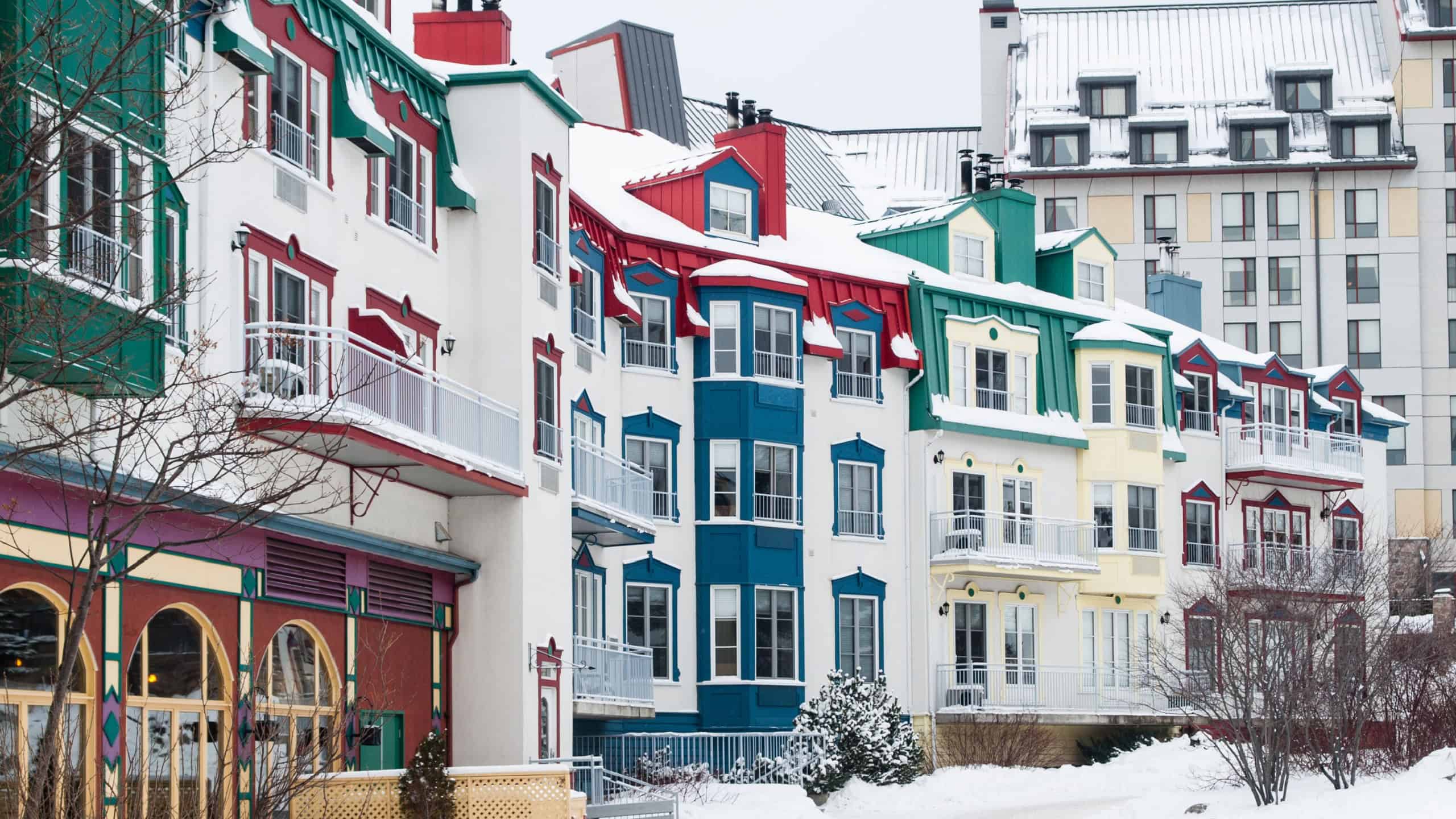
Located deep in the heart of the Laurentian Mountains, this pedestrian-only resort village looks like you’ve stumbled upon a bright, sun-soaked ski town hiding in the Swiss Alps.
Brightly painted chalets line the streets, complete with steep-roof angles to help melt heavy snowfall and outdoor fireside patios. There’s even a scenic open-air gondola that runs right above the cobblestone pathways.
St. John’s, Newfoundland
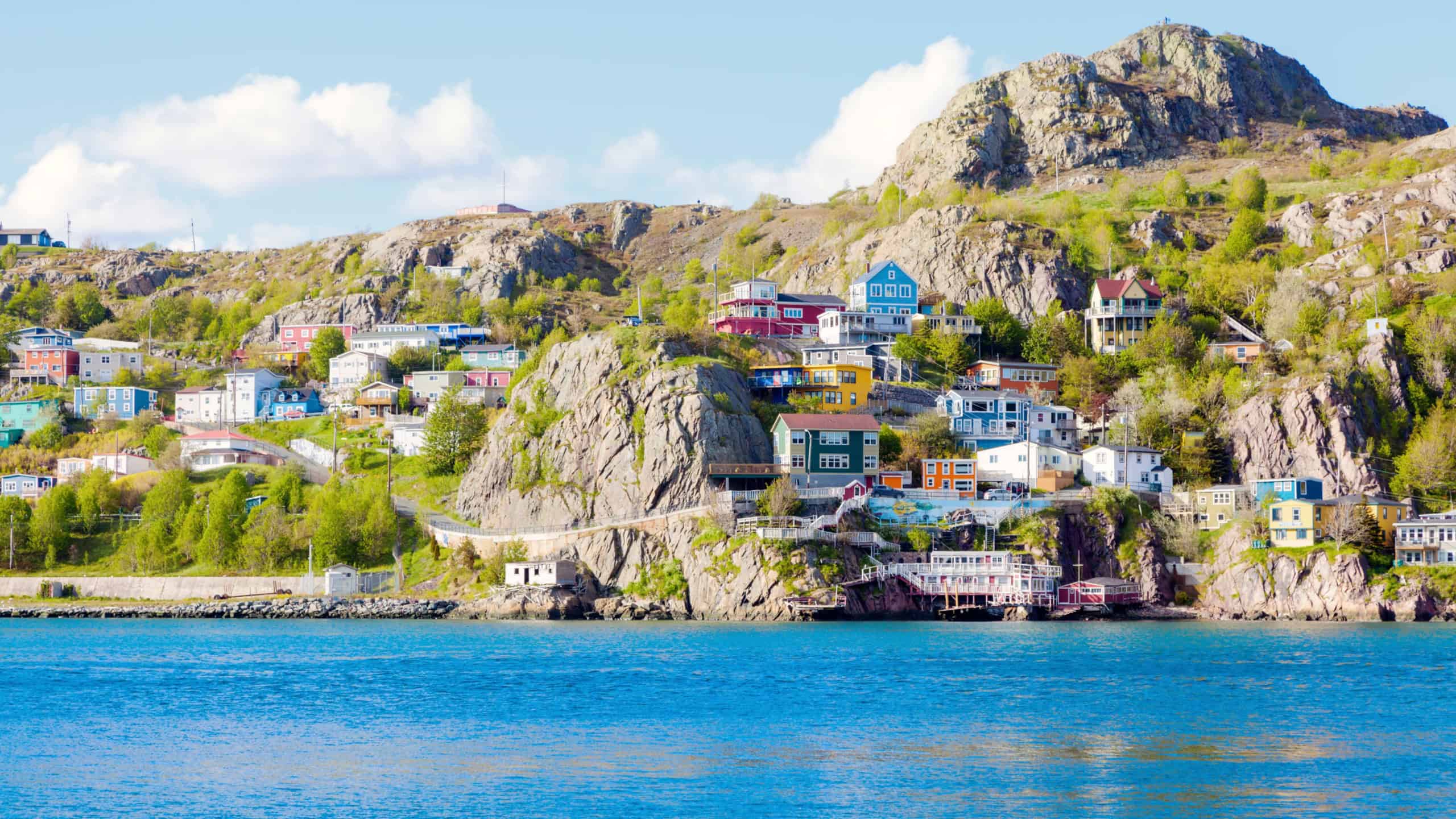
Built on the craggy cliffs of the Atlantic frontier, St. John’s looks and feels like a spirited Irish port town that somehow sailed halfway across the world to get there.
Famous for its “Jellybean Row,” a kaleidoscope of brightly painted wooden houses perched steeply against the grey harbour skies, St. John’s reminds visitors of the quaint painted streets of Cork or Cobh.
When the thick North Atlantic mist rolls into the harbor, the warm pubs, live fiddle music, and hospitality confirm why this is considered the most Irish place outside of Ireland.
Niagara-on-the-Lake, Ontario
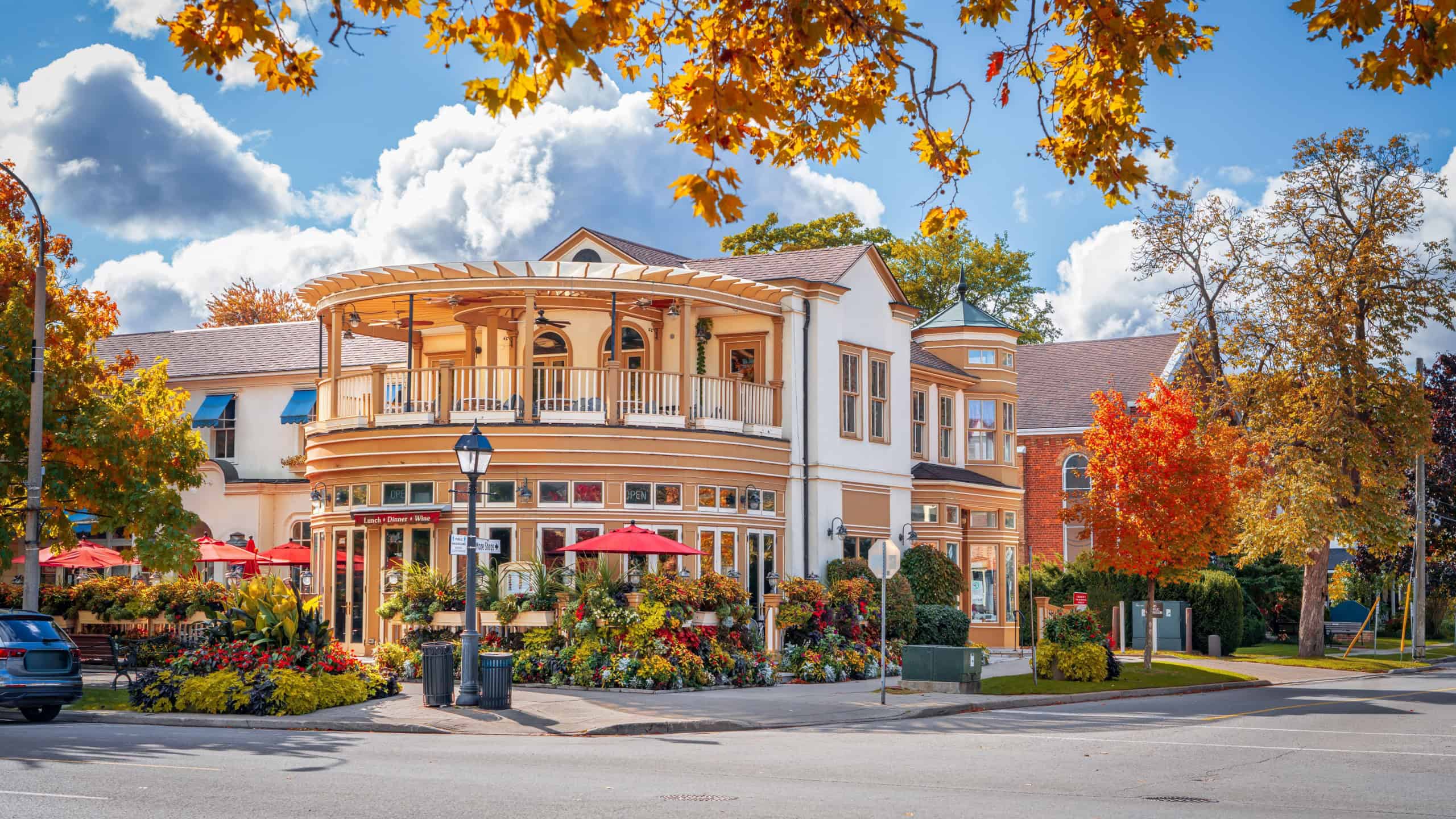
Escape to the tranquil English Cotswolds without ever leaving southern Ontario. Everything about this immaculately maintained 19th-century village screams Jane Austen.
On the main street, you’ll find Georgian buildings, bright public flower boxes and horse-drawn carriages. Estate wineries dot the surrounding countryside. Even their festival theatres showcasing British playwrights couldn’t feel more Stratford-upon-Avon.
Banff, Alberta
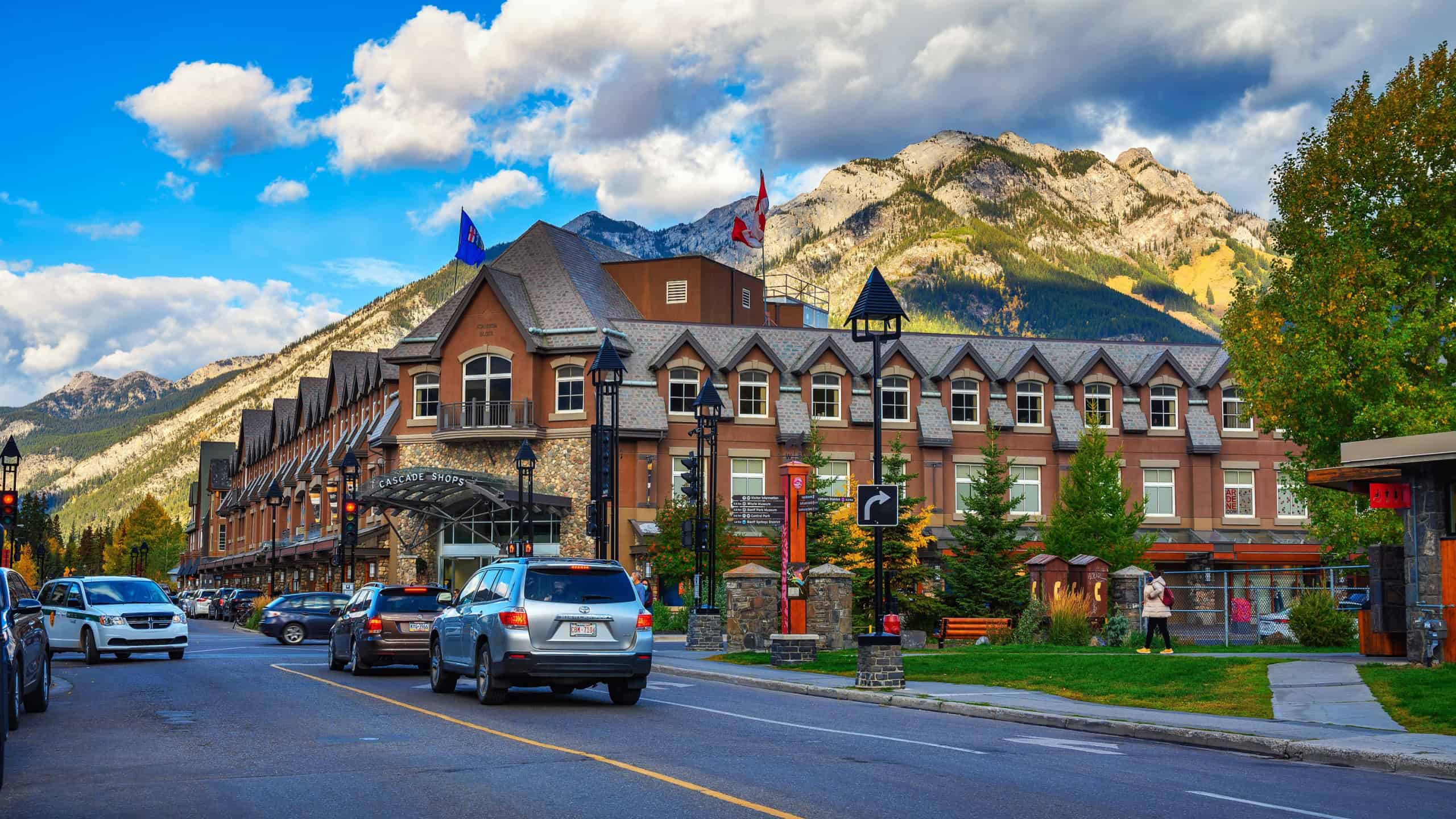
Nestled among the high, sharp peaks of the Canadian Rockies, Banff has the Old World glamour of Zermatt or Chamonix written all over it.
The town’s main street was constructed to give visitors a straight shot to Cascade Mountain, placing a dramatic mountain backdrop behind charming wood- and stone-sided buildings, chocolate fondue restaurants and gear shops.
Baie-Saint-Paul, Quebec
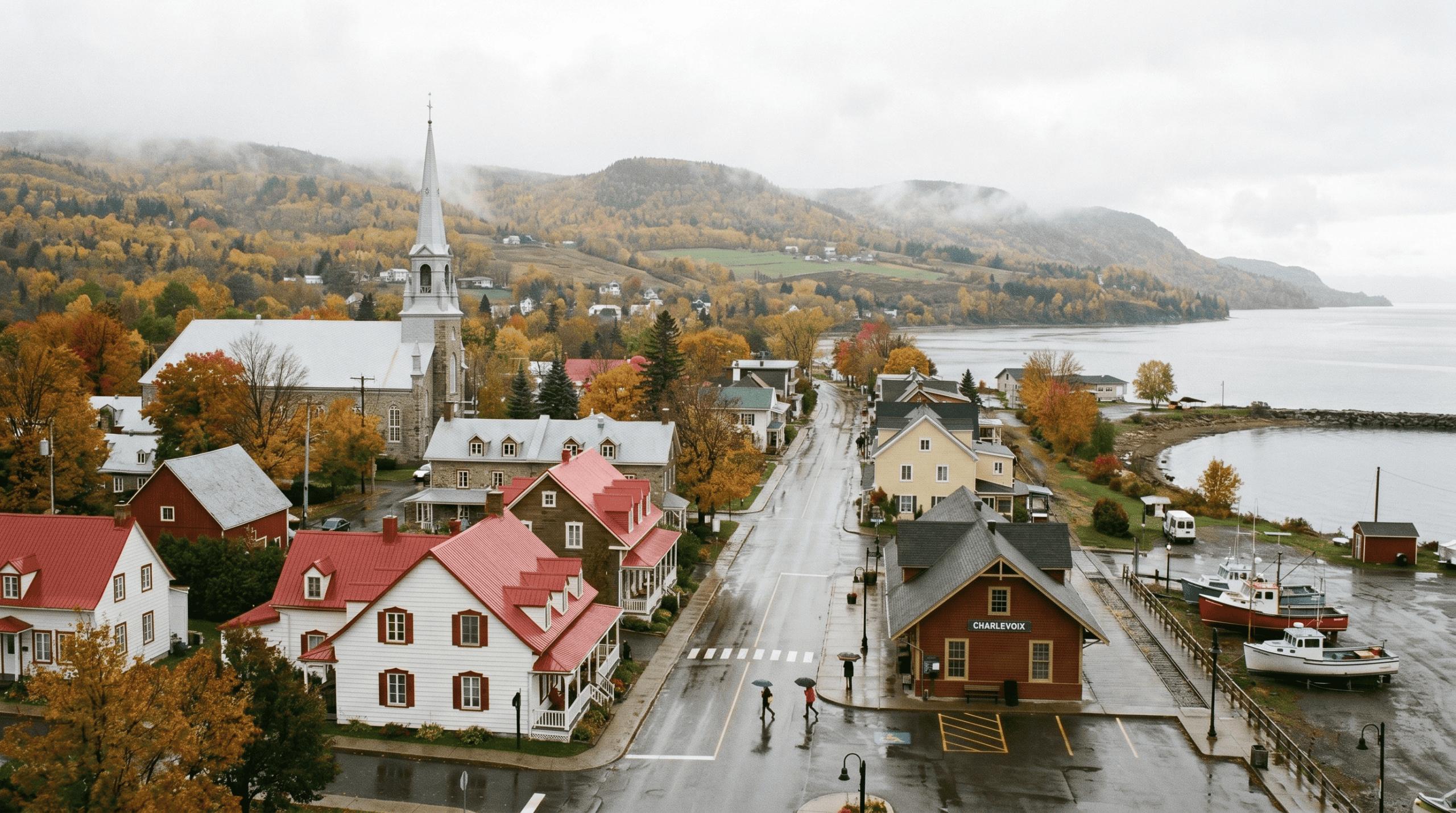
Wedged into a massive volcanic crater on the shores of Charlevoix, this scenic village is Canada’s version of French Provence.
Its streets are flanked by stone ancestral homes, slim-roofed churches and rows upon rows of independent art galleries and artisans’ boutiques. Rolling hills, working dairy farms and artisanal cheesemakers make you forget you’re in North America.
Fergus, Ontario
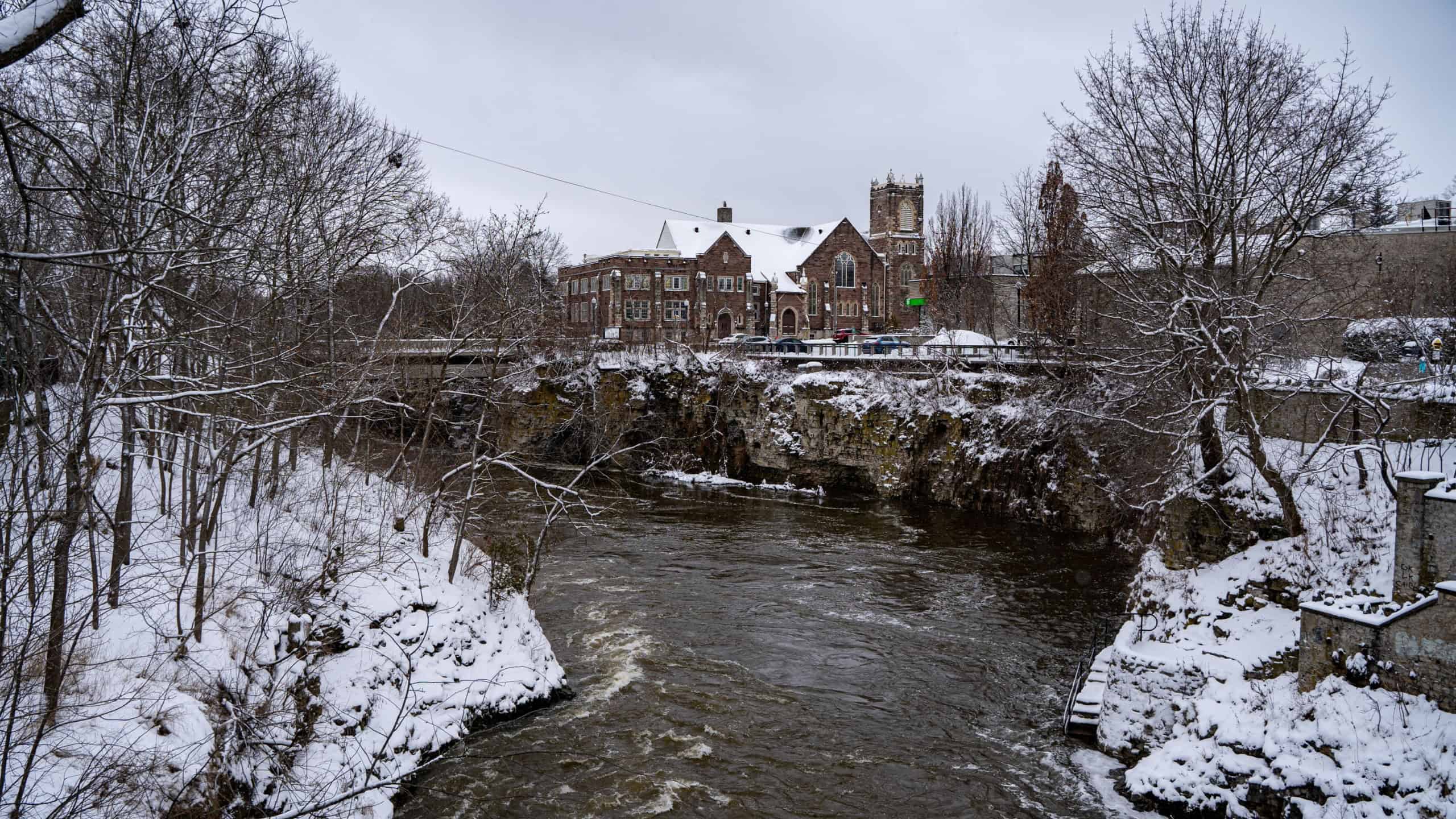
Built on the cliffs overlooking Elora Gorge, Fergus is a 19th century stone town that is pure Scottish Highlands.
Established by Scottish entrepreneurs in 1833, complete with limestone cottages, traditional pubs and a riverside stroll through rural Scotland, Fergus plays host to one of North America’s largest Scottish Festivals and Highland Games every August; attracting pipers and clan members from around the world.
St. Andrews by-the-Sea, New Brunswick
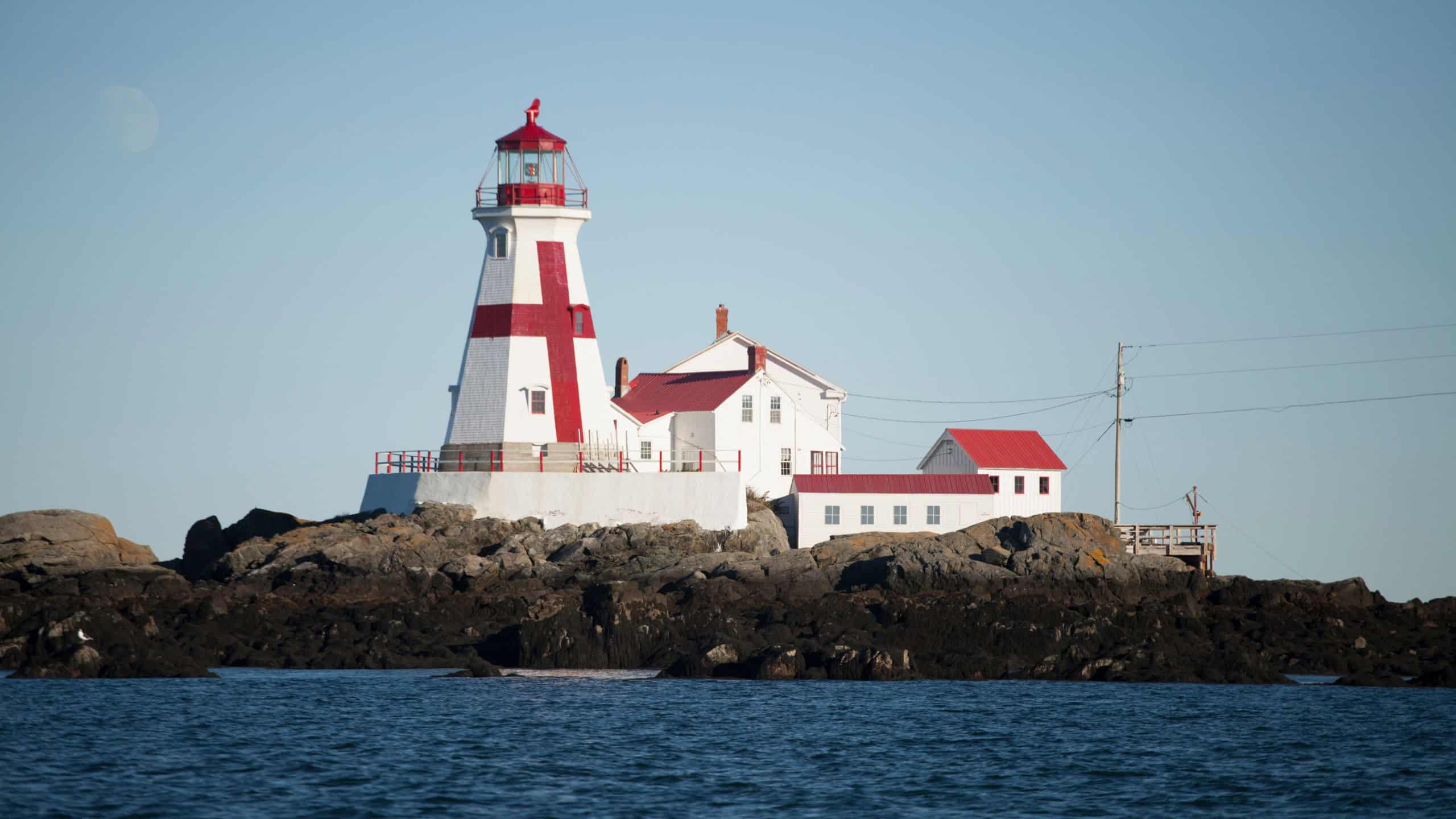
Built by British Loyalists in 1783, this coastal town has an uncanny resemblance to a posh Victorian-era seaside resort town in Wales or the South of England.
It’s a historic downtown area that comprises over 140 immaculately maintained historic buildings, traditional English-style estate gardens and a palatial Tudor-Revival style resort hotel.
Guests stroll past seaside clothing shops, whale-watching boats launch from the town wharf, and you can even drive your car across the ocean floor to Ministers Island during low tide.
Cambridge, Ontario
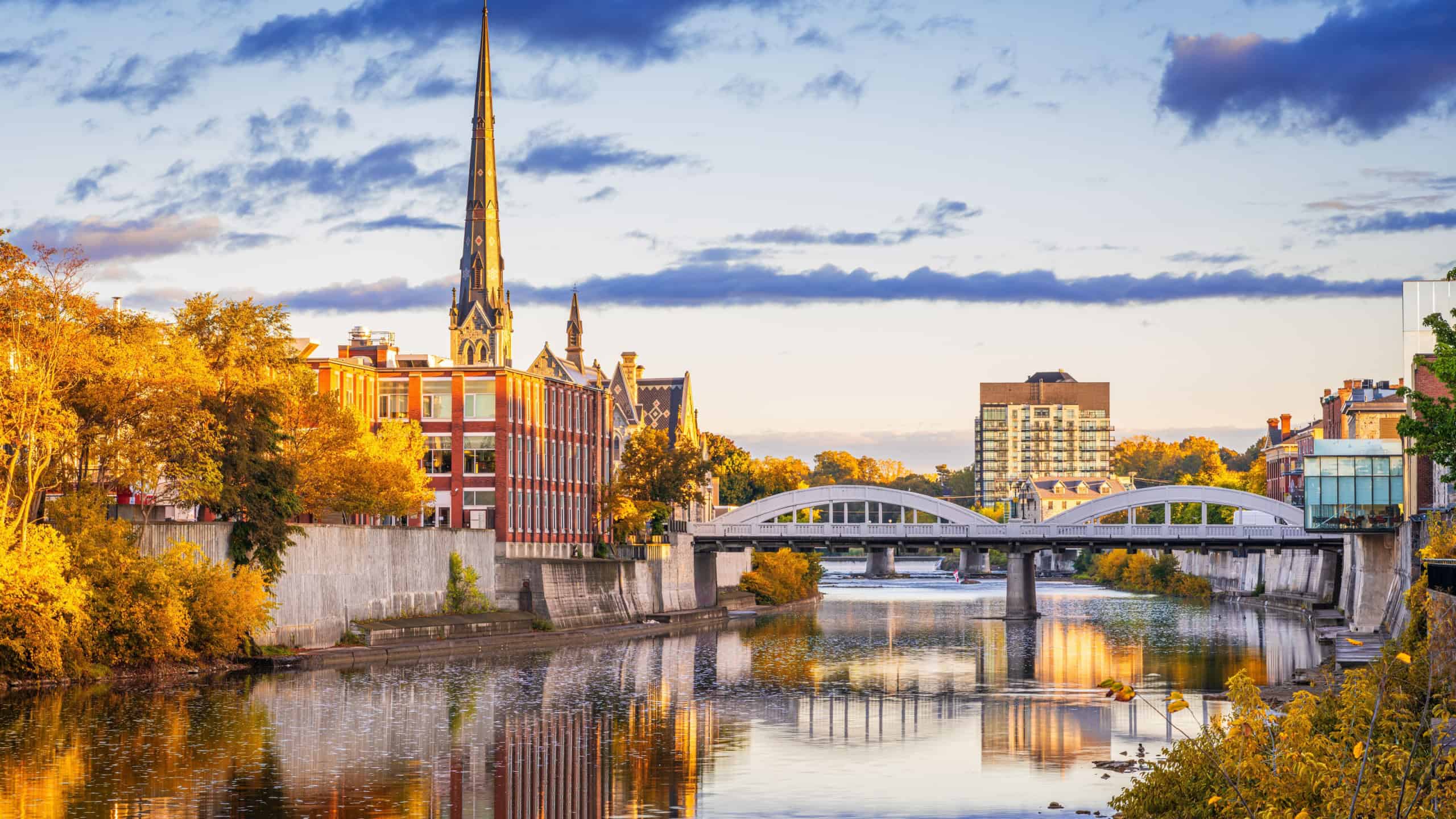
Situated on the banks of the Grand River is Cambridge, Ontario’s historic district of Galt. A literal twin of an old English university town nestled along the river, Galt’s streets are lined with limestone structures constructed from stone quarried nearby during the 1800s by Scottish stonemasons.
stone churches, mills and European bridges crossing the river make it a popular backdrop for period pieces.
Percé, Quebec
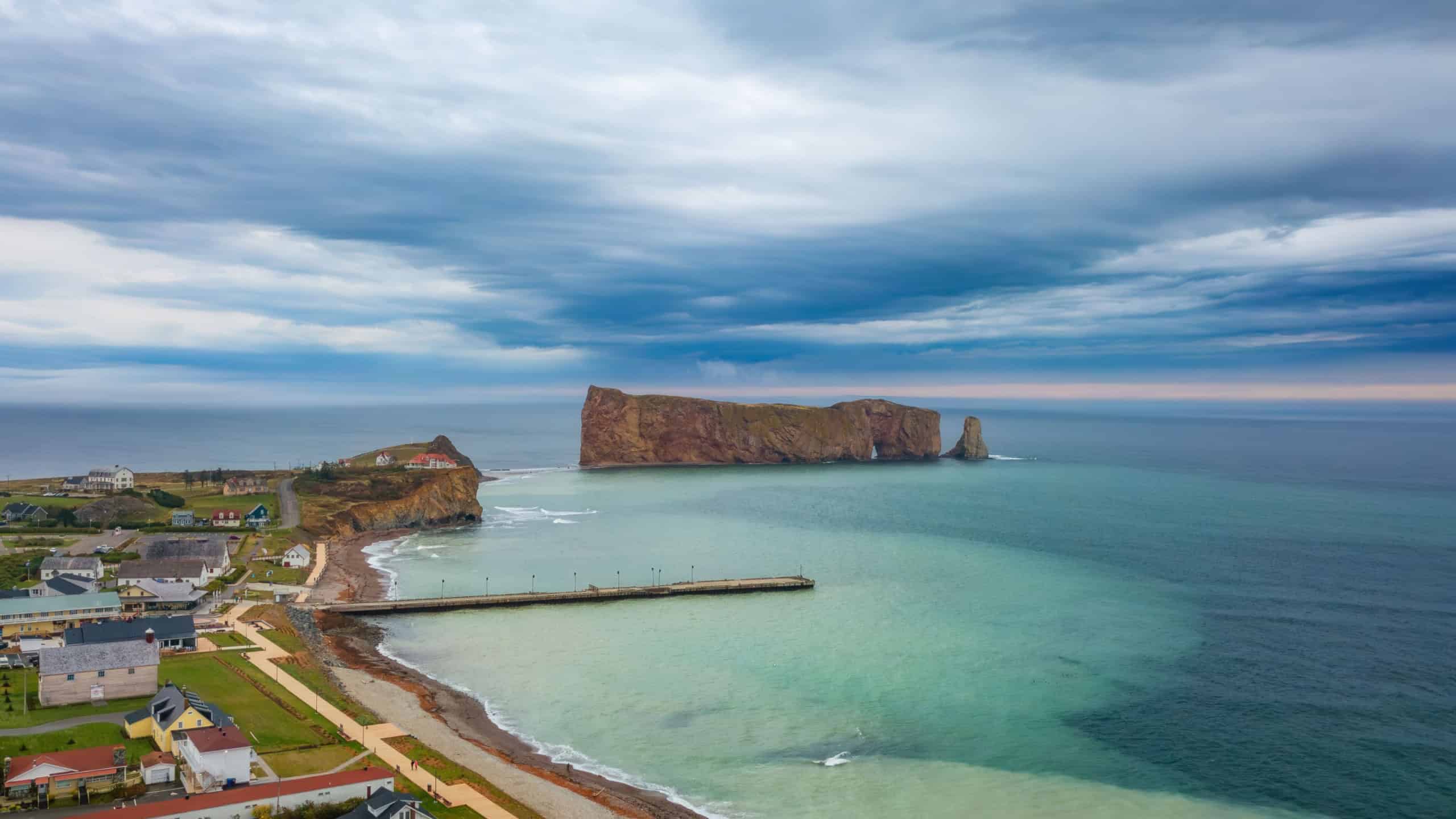
Perched atop sheer cliffs overlooking sea caves and featuring a weathered oceanfront village, Percé resembles a seaside town along the coast of Brittany.
Percé Rock dominates the village over the Gulf of St. Lawrence and is reminiscent of the natural limestone formations found along the coast of Etretat, France.
Goderich, Ontario
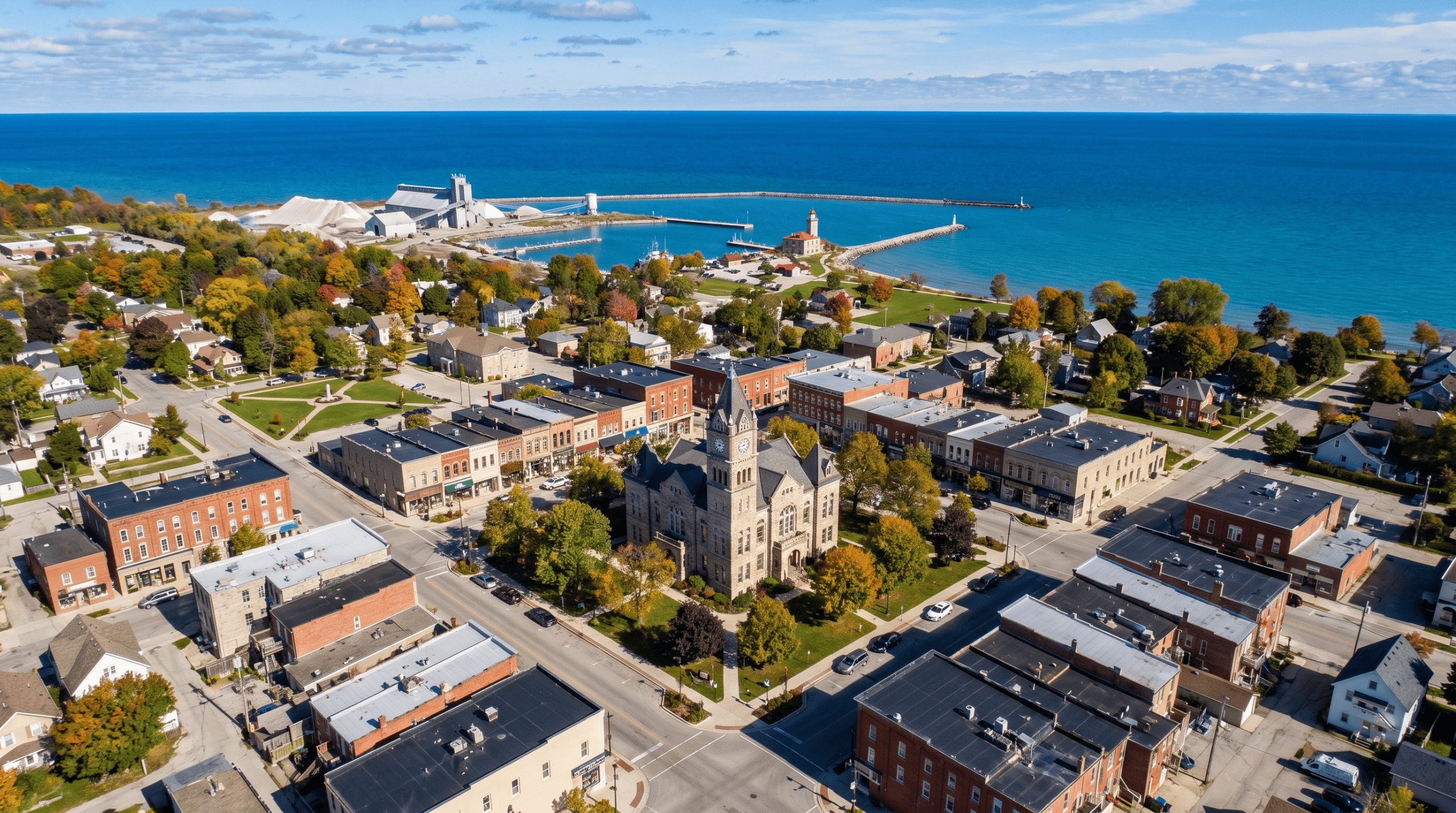
Famous as Canada’s prettiest town, Goderich is unusual in that its design was modeled after a European ideal.
Goderich’s whole downtown area circles around a huge, eight-sided green plaza. This style reflects Goderich’s similarity to radial piazzas and expansive octagonal plazas in Italian cities built in the Renaissance era.