
Getting a good night’s sleep isn’t always easy and if you’ve tried all the usual tips, it may be time to consider these 13 proven approaches from sleep specialists.
Explore Acupressure Techniques

Acupressure involves applying gentle pressure to specific points on your body to encourage your body to relax but it doesn’t have to be difficult.
Simple techniques like pressing on the space between your eyebrows or massaging your earlobes will help release tension and this will make it far easier for you to eventually drift off.
You could also use acupressure mats or wristbands that are designed to help prepare your body for rest.
Incorporate Clary Sage Aromatherapy

Clary sage essential oil is known for its calming effects and adding a few drops to a diffuser in your bedroom could ease the tension, making it easier to drift off to sleep.
If you don’t have a diffuser, placing a drop on your pillow or mixing it with a carrier oil for a gentle massage before bed works, too. The earthy aroma works wonders for relaxing your mind & body.
Practice Progressive Muscle Relaxation

Progressive muscle relaxation involves tensing and then relaxing different muscle groups in your body, starting at your toes and working up to your head.
In doing so, you release physical tension you might not realize you’re holding onto, which will prepare you for a restful night’s sleep. It’s relatively simple to do and doesn’t require any special equipment; just a few quiet minutes before bed.
Use a Weighted Blanket

Weighted blankets put some gentle pressure across your body and this may reduce anxiety & encourage you to relax by triggering your body’s release of serotonin.
You should choose a blanket that’s about 10% of your body weight because this is usually the safest amount that your body will be able to handle. A weighted blanket helps you stay asleep for longer while also helping you fall asleep faster.
Try a Warm Foot Bath Before Bed

Most people don’t realize how relaxing it is to soak your feet in warm water before bedtime, as the warmth improves circulation & signals to your body that it’s time to wind down.
Try adding Epsom salts or a few drops of essential oils for an even more relaxing effect that’ll ease your stress. It’ll make your whole body feel calmer and that’s great when you’re trying to fall asleep.
Adjust Your Sleep Position for Better Breathing

The way you sleep affects your breathing during the night. If you usually sleep on your back, you might snore or struggle to breathe at night. Instead, try different sleep positions (like sleeping on your side) to improve airflow & reduce disturbances that keep you up during the night.
You should also use pillows to support your position and help you find the best way to get a good night’s sleep. Better yet, speak to a sleep therapist or your doctor, as they’ll be able to tell you the best position for your body.
Listen to Binaural Beats

Binaural beats are sound frequencies that influence brainwave patterns. When you listen to them through headphones, they’ll encourage your body to relax and put you in a meditative state.
There are many apps & online videos designed to give you the right frequency to fall asleep. As such, you should spend a few minutes listening before bed to unwind and prepare your mind for sleep.
Use White Noise or Pink Noise Machines

If beats aren’t your thing, try listening to background sounds like white noise or pink noise because these will mask any irritating sounds from around you. These steady sounds help your brain relax and maintain sleep throughout the night.
You could buy a white noise machine or simply use an app. Either way, experiment with different types of noise to find what works best for you.
Install Blackout Curtains

Light from outside sources like streetlights & early morning sun also interferes with your sleep cycle, even if you don’t realize it. To avoid this, try installing blackout curtains to block out external light and create a darker environment that’ll help you sleep.
Doing so will help you regulate your body’s internal clock so it’s easier to fall asleep and stay asleep.
Try a Weighted Eye Mask

Similarly, you could also try wearing a weighted eye mask as this combines the benefits of blocking out light with gentle pressure on the eyes.
Putting light pressure on your eyes encourages you to relax, as long as the weight is distributed evenly across your eyes. Best of all, it’s a lot cheaper than buying a new set of curtains.
Keep a Sleep Journal

You should write down your thoughts before bed because this will clear your mind of worries and lingering to-do lists, allowing you to process any big emotions before bed.
This way, they’re not weighing on you and you reduce your nighttime anxiety. A sleep journal could make it easier for you to relax & drift off since you won’t have intrusive thoughts keeping you awake.
Wear Socks to Bed
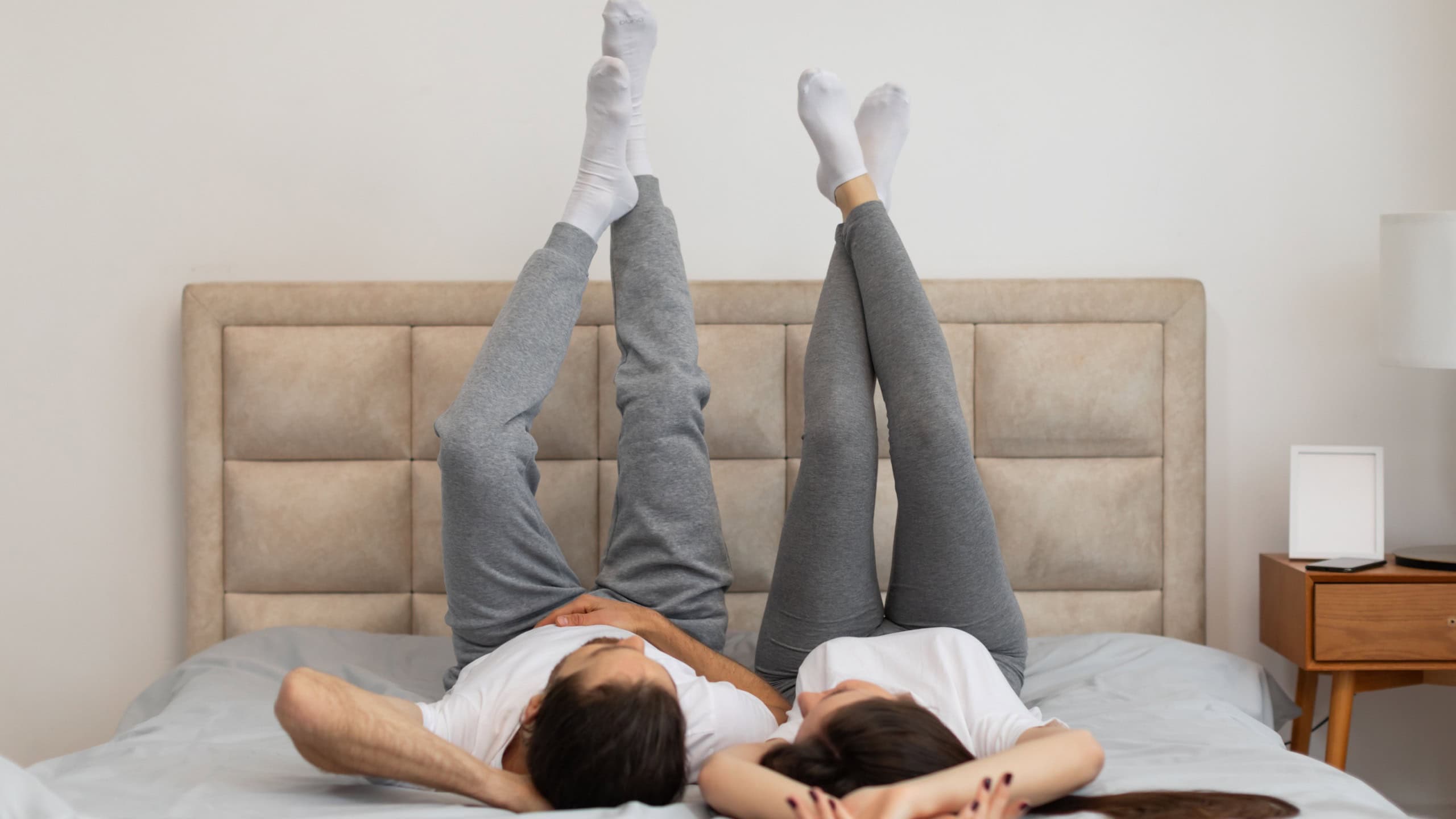
While wearing socks to bed might sound simple, warming your feet actually helps you fall asleep faster, as warm feet cause blood vessels to dilate. This tells your brain that it’s time to sleep so you’ll find it a lot easier to start drifting off.
Plus, if your feet are cold, you’ll probably have trouble falling asleep & may wake up during the night, meaning that putting on a cozy pair of socks will make a difference.
Create a Pre-Sleep Ritual

Whatever you decide to do, creating a consistent routine before bed is the most important thing of all since it tells your body that it’s time to sleep. Your routine could include activities like reading a book or doing gentle stretches.
Whatever you decide, you need to follow the same steps each night. It’ll train your body to know it’s time to rest and this will make it easier to transition from a busy day to a peaceful night’s sleep.