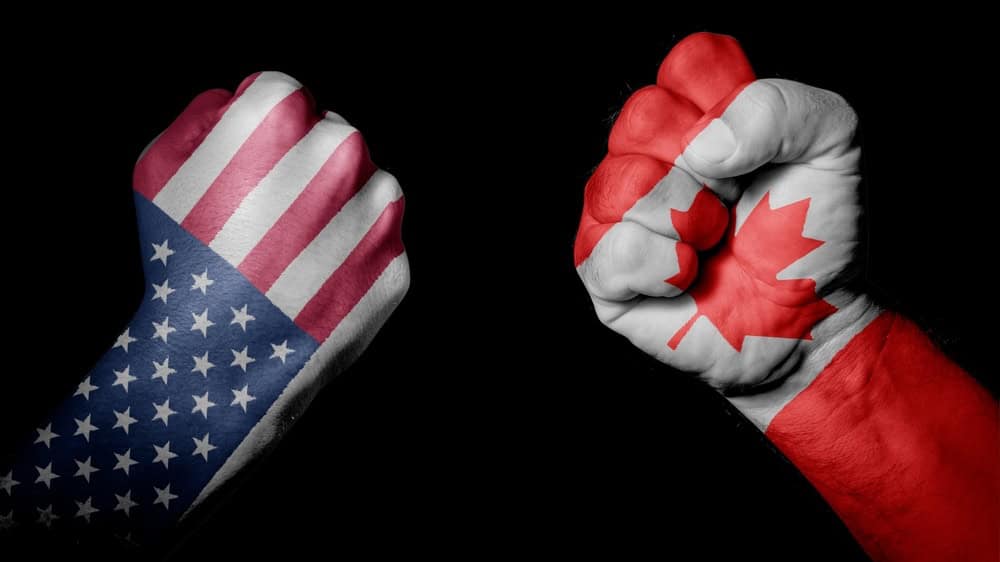
Canadians are often seen as the polite neighbors and Americans as the loud ones, but everyday interactions can sometimes tell a different story.
The invitation that never comes

A Canadian colleague may chat amiably for months before ever asking to meet outside of work. Social circles can be tightly formed, and it can be very difficult to enter into them as a newcomer. Americans may feel more comfortable telling someone, “Come over sometime,” grabbing a new colleague for a drink, or just extending an invitation to someone they’ve only just met. Casual as the invitation may be, it means a lot to a newcomer.
Hidden behind the hint

Canadians are often not very direct when we communicate. If someone annoys us, instead of plainly stating what is wrong, we might start talking less than usual, give short responses, or say something craftily worded and expect you to pick up on it.
Americans are stereotypically very blunt when communicating, which can come across as rude, but at least you know where you stand. Speaking exactly what is bothering you can be nicer than letting someone figure it out.
Sorry doesn’t always mean sorry

Canada’s famous “sorry” can become a reflexive social habit. You might hear it when you bump into someone, elbow them passing through a crowd, talk over them, or even if they’re the ones stepping in your way. Sure, that allows for polite day-to-day life, but it can also devalue the word reflexively.
Someone from the US who doesn’t apologize quite as freely might use the word more sparingly, but mean it more sincerely when something is legitimately their fault.
Strangers get more conversation

Americans like to strike up conversations with strangers pretty much anywhere: elevators, checkout lanes, airports, cafés and waiting rooms. To Canadians, this can feel frivolous, or even invasive. Visitors will feel differently when they’re lost or otherwise stranded alone.
The stranger who talks to you, helps you find somewhere to eat, or just makes you laugh can make an unfamiliar place feel friendly.
The compliment gap

Over-the-top praise doesn’t always play well in more reserved cultures. Canadians might understate a compliment, whereas Americans don’t blink at telling someone they’ve just met that they love their jacket, gushing over a coworker’s success, or praising a person’s work outright.
It’s not that Americans are necessarily more genuine and Canadians rude; sometimes it just is how they communicate. However, when someone is taking the time to lavish praise on you, it sure feels good.
The complaints come later

A Canadian might grin and bear an annoyance because it’s rude to tell someone off, and then proceed to complain about them to everyone else. Americans can be too direct, but directness can also be more fair.
When you say “That bothered me,” you allow the other person an opportunity to explain themselves or change their ways. Passive-aggressive resentment is politely spoken sweetness topped with a heap of bitterness.
Too polite to help

Privacy can sometimes become excessive distance. If someone looks upset or is fumbling with bags, directions, or some other little issue, a Canadian might avoid getting involved because we don’t want to intrude.
Americans will often be startlingly forward with “Are you okay?” or “Need a hand?” Often, intruding on someone else’s space for thirty seconds is just the kindness they require.
Like our content? Be sure to follow us.