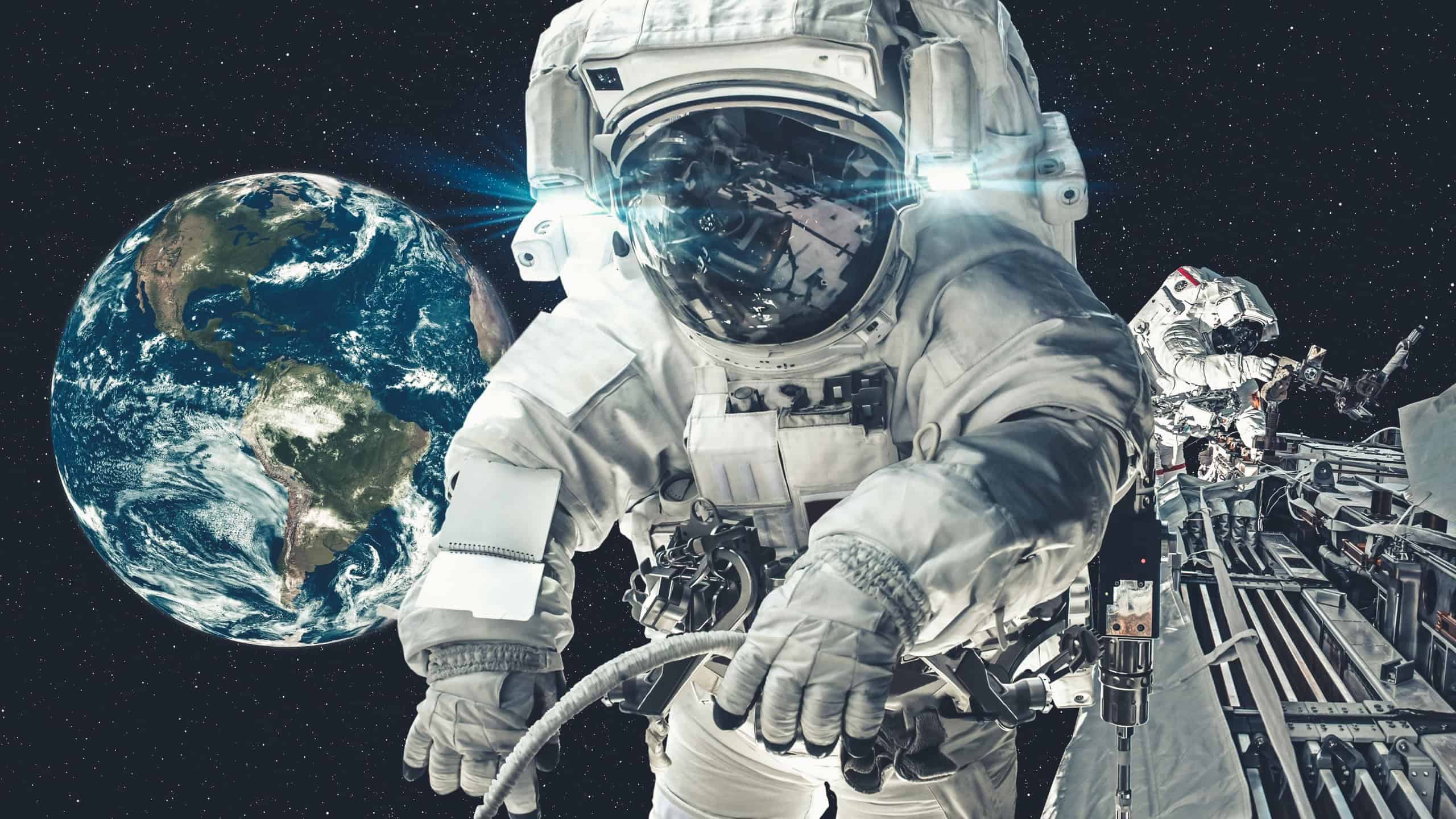
Our little corner of the cosmos is always full of surprises, each illuminating a new aspect of how wrong we have been about its peculiarities. Even just in our own cosmic backyard, from the mysterious lurking of icy moons around distant planets to fresh data on what’s happening with a few closer neighbors, scientists are tumbling down a rabbit hole into new levels of understanding.
Here, we share with you 12 unbelievable things we learned about the solar system in just the last decade.
Water on the Moon
In 2020, NASA confirmed finding water molecules on the sunlit surface of the Moon for the first time. And this is huge, because it shows just how much more water could be on the Moon than we previously knew.
Water is crucial for long-term lunar missions, including offering a way to keep astronauts alive so that they can live and work on the Moon.
Planet Nine Hypothesis
Over the last few years, more and more clues have emerged that there could be a ninth planet located way out past Neptune, often referred to as “Planet Nine.”
The suspected planet is believed to be huge, which could explain why it seems capable of influencing the orbits of smaller objects on its side of the Kuiper Belt.
Mercury’s Magnetic Field
In 2020, research found the magnetic field of Mercury is far more complex than currently accepted. Those fluctuations, discovered on some boulders they studied with their magnetometer, in turn, could shed light on the planet’s core and its geologic past.
Insight into this could provide clues on how Mercury originated and evolved.
Mars’ Ancient River Systems
NASA’s MRO Orbiters have taken some amazing photos of the planet, Mars, which show giant rivers.
The only conclusion is that the planet was previously much wetter and had a climate similar to our own, where liquid water could exist on its surface.
Asteroid Bennu’s Surface
The OSIRIS-REx mission arrived at the near-Earth asteroid in 2018, surveying a rocky surface speckled with boulders and particles smaller than an inch.
The study of Bennu is important because it will help scientists learn about the early solar system and possibly more information on the origins of water on Earth. Scientists are also collecting samples to take back for more research.
Pluto’s Atmosphere
In 2015, scientists discovered that Pluto has a complex atmosphere which varies with altitude and changes over time.
This indicates that the surface conditions on Pluto, including temperature and pressure, can fluctuate dramatically, a bit of a surprise for such a far far away object in our solar system.
Rings of Neptune
In 2020, scientists observed that the rings of Neptune are less old than we believed.
They think the rings may be composed of dust and other debris from nearby moons, evidence that there are ongoing processes in the outer solar system. This finding provides better insight into how ring systems work.
Triton’s Geysers
The images from Voyager 2 show nitrogen geysers erupting on Neptune’s large Moon, Triton. This important finding implies that Neptune’s largest Moon must be one of very few moons in the outer Solar System to have large quantities of volatile materials flowing on its frigid surface.
That begs some intriguing questions about what is going on below that icy surface.
Planetary Formation
New observations with the Atacama Large Millimeter/submillimeter Array (ALMA) provide an unprecedented major step in the right direction, showing a young protostar surrounded by two thin rings, where planets are obviously forming.
Astronomers have also been studying dust and gas disks around young stars to help learn more about the processes that yield planets. It helps us understand better how our solar system could have been born.
Diamond Rain on Jupiter and Saturn
We know from recent studies that it may be raining diamonds on Jupiter and Saturn, an occurrence caused by the extreme pressure in their atmospheres.
Carbon is squeezed so hard that it turns into diamonds. This quirky tidbit just makes these huge planets even more fascinating and helps us learn all about their atmosphere.
Discovery of Saturn’s New Moons
In 2021, astronomers found Saturn has a whopping 82 moons (20 new ones discovered).
The find suggests that we still have so much to learn about Saturn and its forking system of moons, with the planet now leading our solar system in terms of designated moon count.
The Parker Solar Probe
Launched in 2018, the Parker Solar Probe is the only spacecraft to fly into the Sun’s outer atmosphere, its corona. It’s built to withstand blazing temperatures reaching 2,500 degrees Fahrenheit while hurtling through space at 430,000 miles per hour.
The hope is the solar probe will provide more information on how and why space weather occurs, which could potentially improve predictions of such phenomena here on Earth.
Like our content? Be sure to follow us.