
Patriotism exists in every country on the planet. However, the way that people show their love for their country doesn’t look the same, with national symbols being part of daily routines in the United States in a different way from in Canada.
Our sense of patriotism comes more from shared events and official moments instead. Some of the differences are quite obvious, like the flags on front lawns, while other differences in patriotism are part of things like government legislation that most people never read.
We’re going to take a look at how patriotism appears differently in both Canada and the U.S. Which country do you think gets it right?
Freedom vs people

The Pew Research Center conducted a study in 2025 that focused on what aspects people felt most proud of about their country.
For Americans, it was their sense of freedom that made most people proud of their country, although it wasn’t a perfect split. 32% of Republicans were most proud of their country’s freedom, compared to 15% of Democrats.
But 28% of Canadians said the people made them feel most proud. Their responses focused on everyday interactions and how Canadians treat each other, rather than a founding document.
Being independent from the U.S.

Similarly, when asked why they felt proud, some of the Canadians in the same survey mentioned that it was the nation’s independence from the United States that made them feel proud. Yes, really. They said the fact that they were not American was why they felt patriotic.
It’s a phrase that appeared so often in response that the researchers made a note of it. It appears to suggest that Canadians feel a sense of patriotism that is particularly centered on maintaining a distinct national identity from the United States.
Age gaps

The age gap between people’s sense of patriotism in each nation is quite telling. Gallup data from the United States found that 41% of Gen Z adults felt extremely or very proud to be American. 83% of the Silent Generation felt the same way.
69% of Canadians aged 25-34 said they were proud of their nation, with older generations scoring higher. Older groups in both countries appear to be more patriotic than younger generations. But it seems younger Canadians may have more national pride than younger Americans do.
Provincial and state identity
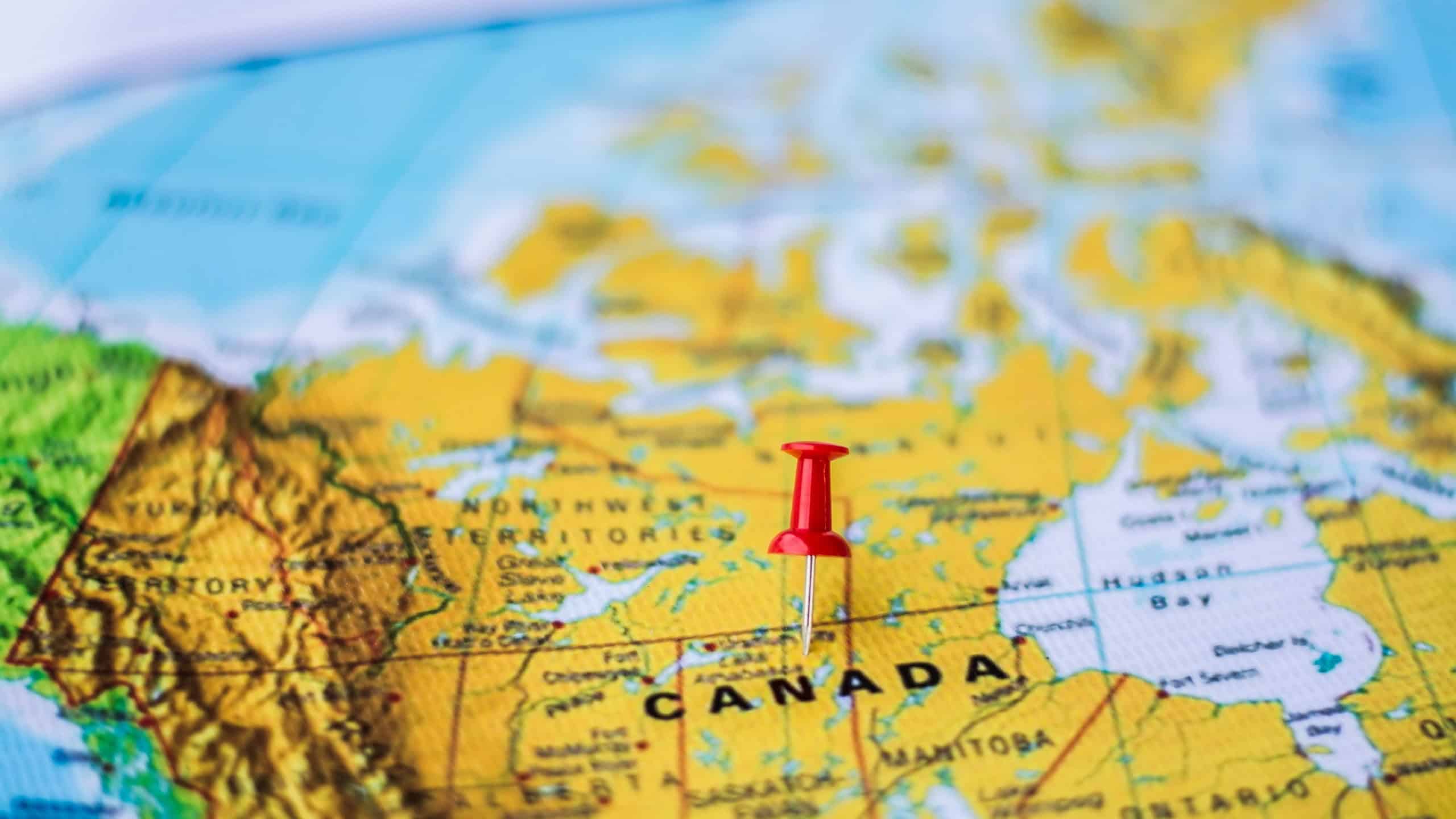
Pride goes beyond the national level, too. A 2025 report found that 79% of Canadians feel attached to both the nation and their province, although rates were slightly different when you look specifically at Quebec. 66% of people felt the same way in Quebec, while the rest of the country averaged at 82%.
Americans do feel a strong connection to where they live, but the pattern doesn’t work the same way. 64% of Americans felt more pride in their city or town than in their country, with 58% feeling more pride in their state. Only 47% felt more pride in their country overall.
Flags in everyday spaces

Flag display customs are a part of federal law in the United States, and these rules include guidance on how and when people may show the flag. These fall under Title 4 of the U.S. Code.
It’s due to these rules that you can see American flags practically everywhere over there, including on homes and storefronts, all year-round.
As Canadians, we’re not ashamed of showing off our flag, as we celebrate the National Flag of Canada Day every February 15th. But the way that we display our flag is more of a result of convention than legislation because there’s no law governing flag use.
Different flag origin timelines
Speaking of flags, our maple leaf flag only became official in 1965, so the majority of us grew up learning about that specific change only. You might also be taught about the parliamentary debates around it at the time.
But Americans learn flag history that goes beyond the stars-and-stripes, as they’re also taught about the earlier flag milestones. They learn about how the flag’s design evolved over centuries. Rather than a single moment, Americans are taught about the entire history of their country’s flag.
Citizenship oaths

Those taking the citizenship oath in Canada quite literally have to swear their true allegiance to the King, so the language of patriotism for them is directly connected to the King. It’s not the same in America, for obvious reasons.
Their naturalization oath focuses on defending the American Constitution and renouncing any past loyalties a person may have had. As such, rather than being about a person, American patriotism is centered on the country itself.
Military pride

Another interesting aspect of the naturalization oath is about military and national service. In the American oath, there’s wording that includes expressing commitment to doing both, making it part of a new American’s sense of patriotism.
The Canadian oath doesn’t include the same sort of obligation. Instead, the Canadian naturalization oath is aimed more at loyalty itself without specific requirements for military pride or duty.
Multiculturalism as an identity statement

A major difference in patriotism is in terms of how multiculturalism is part of federal law in Canada through the Canadian Multiculturalism Act. It officially makes cultural traditions and Canadian identity a part of the national identity.
Of course, multiculturalism is very much a regular part of life in the United States, but there’s no single federal act that defines it in the same way as in Canada. Such a difference likely affects people’s sense of belonging and national pride in their daily lives.
Sources: Please see here for a complete listing of all sources that were consulted in the preparation of this article.
10 things Americans often brag about that many Canadians question

Some things Americans proudly boast about often leave Canadians quietly raising an eyebrow. From size and speed to habits and traditions, the reactions aren’t always what you’d expect. It’s less about judgment and more about different values. What sounds impressive in the U.S. can feel confusing, unnecessary, or oddly exaggerated to many Canadians listening politely.
10 things Americans often brag about that many Canadians question