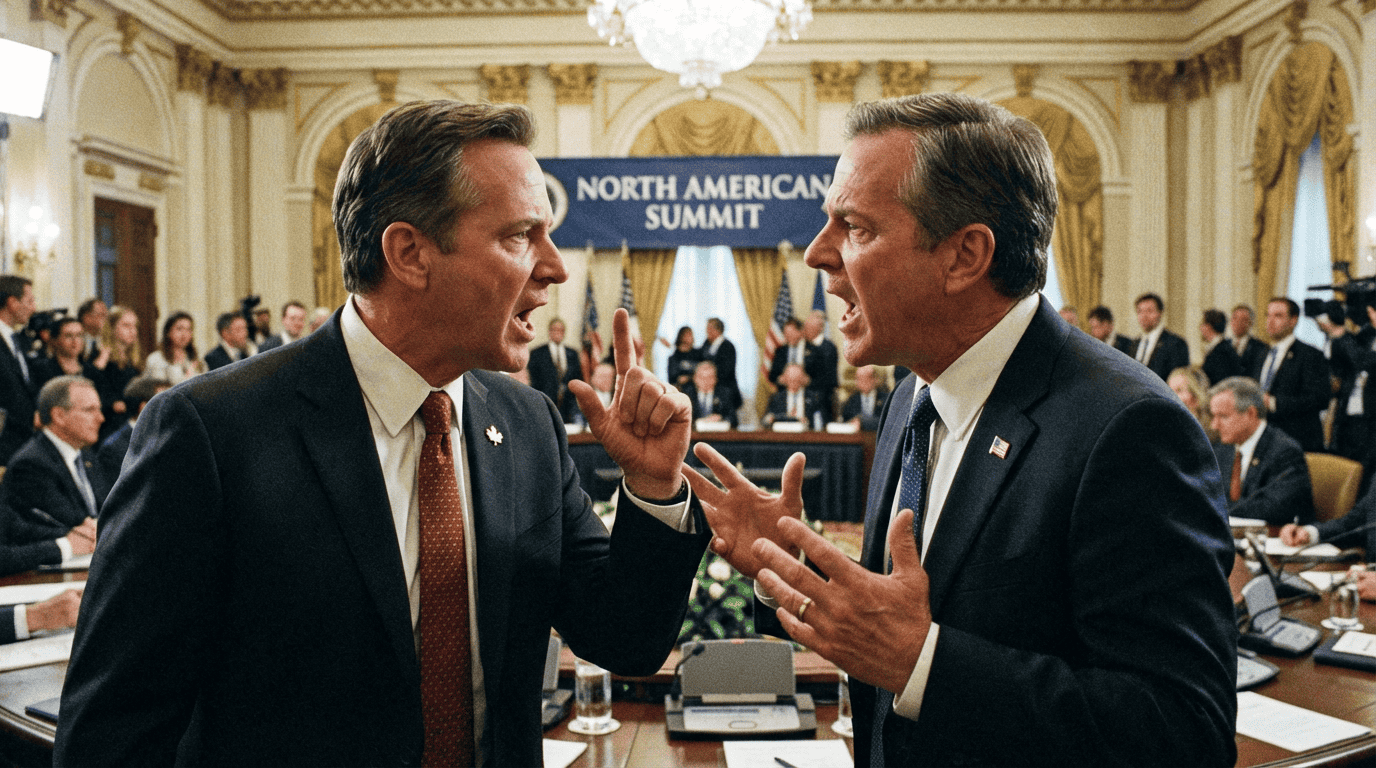
Canadian politics and media have dozens of phrases that sound familiar to Americans but mean completely different things.
Some describe political systems Americans don’t have. Others reference Canada’s connection to the Crown or its parliamentary system of government.
Phrases like these sound bizarre or vaguely ominous to American audiences despite hearing them daily on Canadian news channels. Check out these 12 Canadian political or media phrases that won’t translate to the United States.
Riding
Americans live in districts, or precincts, whereas Canadians live in what is called a riding. Technically, this is simply the geographic area that their elected official represents.
If someone says they’re running in the riding of Papineau, they are not talking about riding horses somewhere. That is the name of the specific neighborhood they are campaigning in to get elected.
The Scrum
Americans call them “press briefings” or “pressers.” Canadians call them scrums.
Deriving from rugby, scrum refers to the informal, chaotic, and totally unscripted period when journalists cluster around a politician in a hallway (usually right after question period) and yell questions at them. It’s much more informal and aggressive than a White House briefing.
Backbencher
Congressional representatives all have basically the same title/status. In Canada, if an MP doesn’t hold a high position as a Minister, then they’re known as a backbencher, literally. They sit on the benches at the back of the room, far from power on the “front bench” where the Prime Minister and Cabinet members sit.
Question period
This is the daily 45-minute televised “main event” in the House of Commons. Unlike the U.S. system, where the President rarely faces direct questioning from the opposition in a public forum, the Prime Minister must show up for Question Period to be grilled by other parties.
It is often described by viewers as a mix of high-stakes debate and schoolyard bickering.
Riding the pine
When applied to politics or media, riding the pine usually refers to a politician taking a seat on the sidelines. It’s another sports metaphor (literally sitting on the bench), but Canadians use it to describe an MP who has been stripped of their “Cabinet” position or not getting listened to by their own party leader.
Americans would understand if you said someone was sidelined or stripped of their committee assignments.
The notwithstanding clause
This is a uniquely Canadian “escape hatch” in the Constitution. It allows a province to pass a law that technically violates certain parts of the Charter of Rights and Freedoms for a five-year period.
There is no American equivalent; if a U.S. law is unconstitutional, it’s simply gone. In Canada, a Premier can say, “Notwithstanding the Charter, we are doing this anyway.”
Crossing the floor
If a Republican turned Democrat in the U.S. Congress, heads would roll and it would make major news. But in Canada, it’s called “crossing the floor.”
The room is set up so that every party sits on opposite sides. If a politician decides to switch parties, they literally have to walk across the “floor” of the House of Commons to take a seat with their enemies.
Official opposition
If a party doesn’t form the government in America, they’re simply “the minority.” In Canada, the second-largest party in Parliament is known as the Official Opposition.
They hold a very important, legally defined position that comes with its own budget to run “shadow cabinets,” and their leader is even given his own home (Stornoway) just like the Prime Minister.
Premier vs. Prime Minister
Americans call every state governor a “Governor.” Aside from having a Governor General who represents the Monarch, Canada has provincial leaders who are actually called Premiers. If you call the leader of Ontario “Governor,” then everyone will know you’re American.
First ministers’ meeting
Whenever a U.S. governor meets with the President, it’s generally informal or done under the guise of a “National Governors Association” meeting.
A First Ministers’ Meeting, however, is a formal, high-pressure summit in Canada where the Prime Minister meets with provincial and territorial Premiers to discuss national deals. Provinces have way more power over healthcare and natural resources than U.S. states do, so FMMs can get very contentious.
The Crown
If you ask Americans what “The Crown” is, they’ll likely say a Netflix show or the royal family in England. But to Canadians, the Crown refers to the Canadian government in its legal form.
When someone gets charged with a crime in Canada, they aren’t prosecuted by “The People” or “The State of [Insert Province]” like in America. They get prosecuted by The Crown.
And if you hear about a Crown Prosecutor punishing criminals, or hear someone referring to Crown Land, it doesn’t mean King Charles personally owns it. It means it belongs to all Canadians.
Minority government
When Americans hear that a party has lost its majority in the House or Senate, they’ll say that the government is “divided.” In Canada, we call it a minority government.
A minority government happens when the party with the most seats fails to secure over 50% of the vote. Essentially, this means that they can be kicked out of power whenever the other parties decide to work together and vote against them on a crucial bill.
Sources: Please see here for a complete listing of all sources that were consulted in the preparation of this article.
Like our content? Be sure to follow us.