School life can feel pretty similar whether you’re on the American or Canadian side of the border. Hallways, lockers, pep teams, and classrooms can all start to feel familiar, no matter which country you learn in.
But dig a little deeper into the day-to-day operations and traditions of schools south of the border, and you’ll find some American school traditions would feel decidedly weird to Canadians.
From national pride to desk-drawing policies, here are some ways American student life is weirdly different (according to a recent poll of Canadians).
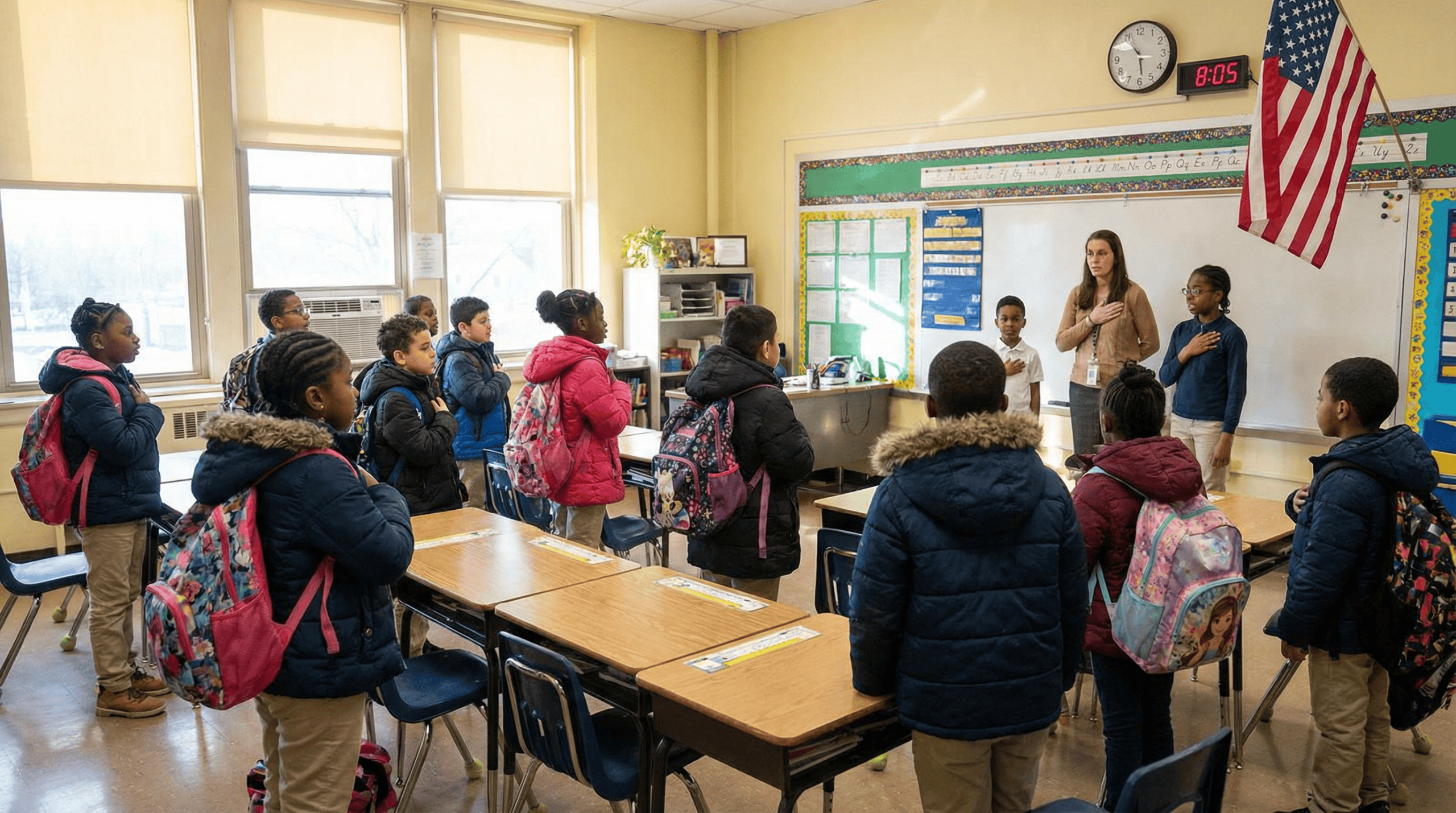
The Pledge of Allegiance every morning

American classrooms usually start every morning by having students stand, face the flag, and recite a formal oath to the country. Canadian students might hear their national anthem blown through a speaker, but they don’t pledge themselves daily to the country, flag, or God in a formal manner.
This forced and vocal display of patriotism inside the classroom just seems extremely intense to Canadians.
School sports being bigger than academics

In many areas of the United States, the high school football or basketball team is the biggest thing in town.
Schools spend massive budgets on stadiums and equipment/travel and treat athletes like heroes. Canadians love sports too but schools don’t usually revolve around a team’s Win/Loss record.
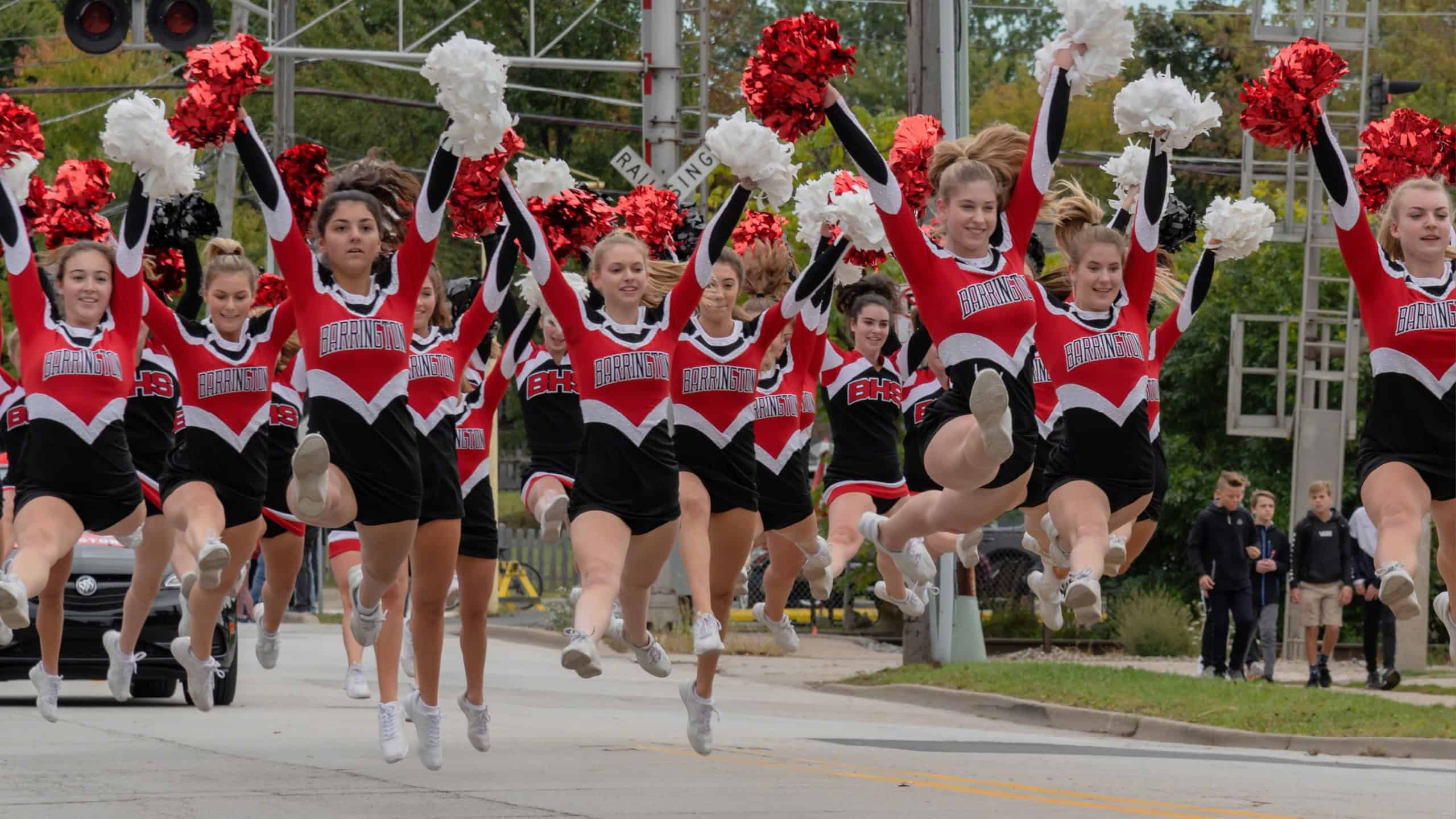
Cheerleaders at regular school games

If you’ve ever been to an American high school, you know they have an entire team of uniformed cheerleaders doing specific dance routines at every single game.
In Canada, cheerleading isn’t typically school-sponsored. Instead, it’s seen as its own club you pay to attend or a competitive sport done in a gym.
Canadians watching a full squad “cheering” at a regular-season game feel like they’re in Hollywood.
Homecoming week
American schools go all out for Homecoming, complete with spirit weeks, parades, and King & Queen selections.
Sure, Canadian schools might have a “Welcome Back” dance, but the huge process and school-wide community celebration? That’s mostly an American concept Canadians only see on TV.
Grade Level Names (Freshman, Sophomore, etc.)

Americans have formal names for each grade they’re in: Freshman (Grade 9), Sophomore (Grade 10), Junior (Grade 11), and Senior (Grade 12).
Canadians typically just reference their grade as a number. When asked what grade they’re in, a Canadian teen will say something like “I’m in Grade 10.” Try that in an American high school and you’ll get laughed out of the hallway.
SATs and ACTs

Most American students spend months studying for and taking a nationally standardized test to get into college.
SAT / ACT tests are expensive and high-pressure testing days can make students almost sick with anxiety. There is no standardized test that all Canadians must take to get into university.
College simply looks at your Grade 11 and 12 marks.
Hall passes

Why would someone need official permission to go to the bathroom? In Canada, if you have to use the washroom, your teacher will give you a quick look of permission and send you on your way.
Students in America can’t just walk away from their desks. They need a physical piece of paper or a lanyard at all times.
Teachers literally patrol the hallways to make sure students aren’t escaping without their “pass.” This feels extremely controlling to Canadians.
School mascots everywhere

American schools really embrace their mascot. Whether it’s a Tiger, Mountain Hawk, or Spartan, students proudly identify as their school’s animal and you’ll see it plastered everywhere: on the walls, the gym floor, the stationery, etc.
Canadian schools have mascots too, but they rarely paint their gym floor with them or mention them during daily announcements.
Yearbooks being a major industry

Yearbooks in the U.S. are BIG business. They often cost hundreds of dollars and are thicker than most textbooks. There will usually even be an assigned class period dedicated to creating them.
Canadian students have yearbooks too but they usually aren’t stressed about buying them months in advance and they don’t have jaw-dropping price tags.
Fundraisers tied to constant selling

It’s common for schools in the U.S. to send their students door to door or to have them make phone calls selling candy bars, wrapping paper, or coupon books. All of the money typically goes towards class trips.
While Canadian schools do fundraisers, they are not as common or “normalized” as they are in the United States. In Canada, students aren’t used to being utilized as the school’s grocery store clerks.
Senior “wall” or parking spot painting

Many American schools allow seniors to “claim” their own parking spot in the school lot and paint it with their names, artwork, or say cheers. Schools often even have their own “Senior Wall” that seniors paint over every year.
Most Canadian schools don’t allow students to personalize property and would likely suspend anyone who painted the pavement.
Graduation caps and gowns for everything

It’s normal in American schools to celebrate the completion of Kindergarten, Middle School, and High School with a full graduation including caps and gowns.
However, most Canadian schools reserve “cap and gown” moments for High School and University graduation. To some Canadians, Kindergarten “Graduation” is just too much.
Like our content? Be sure to follow us.