
Traveling to Canada from the United States seems like it shouldn’t pose much of a culture shock. Most public signage looks familiar and identical to what Americans are used to. They use the same words but often mean something subtly different. Or they follow rules that American drivers or citizens aren’t accustomed to.
As a result, certain public signs in Canada will catch visitors completely off guard. So here are 10 examples of Canadian public signs that could confuse Americans.
Speed Limit 100
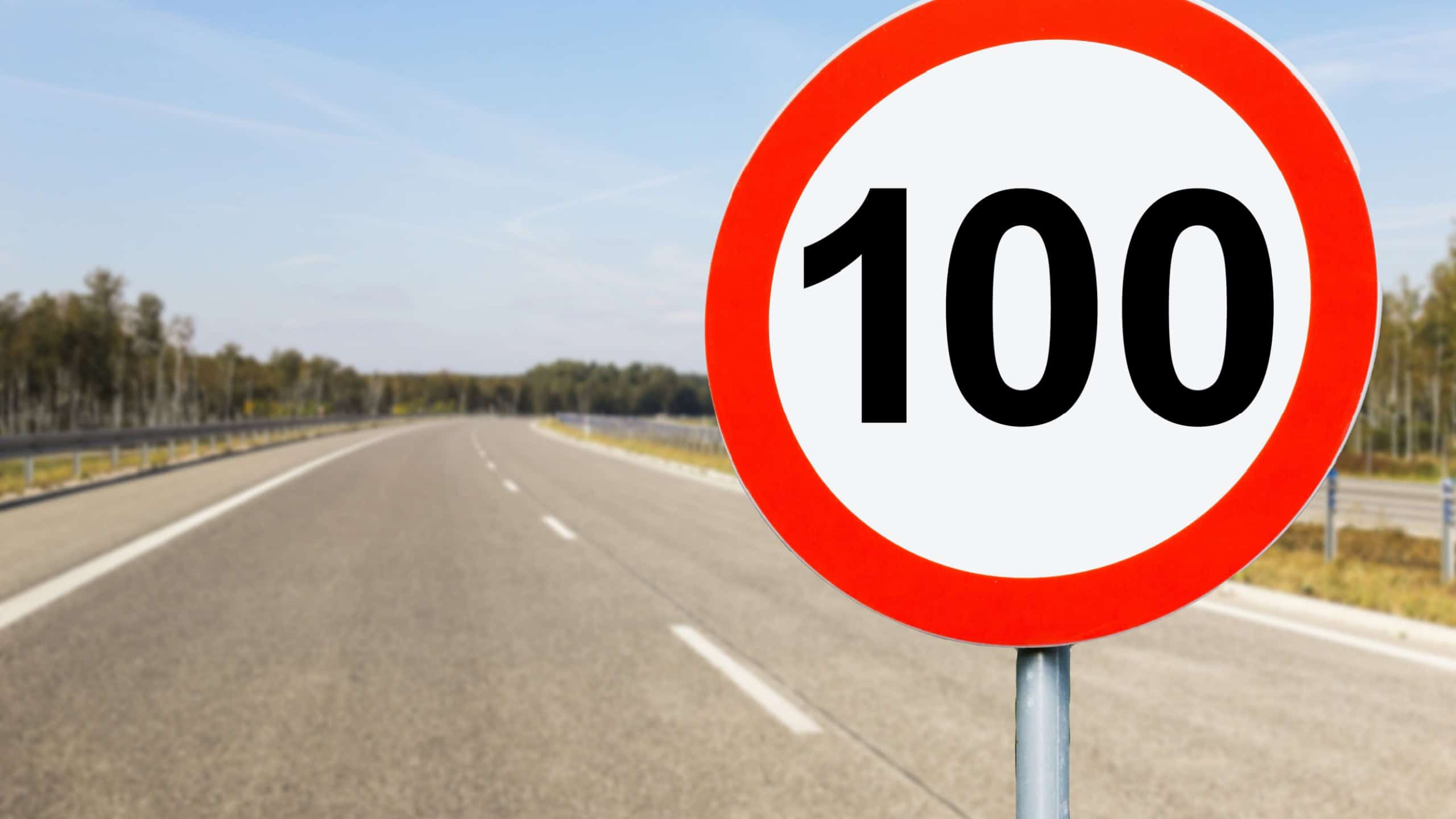
For a moment, your heart might skip a beat as you realize you’ve finally stumbled across the real-world Track Days, a place where speeds of 100 mph are acceptable and encouraged on public streets.
Canada switched to the metric system in the 1970s, so that little “100” means kilometers-per-hour, which is about 62 mph. Trying to reach 100 mph will quickly lead to a very expensive encounter with the police.
The Green Circle
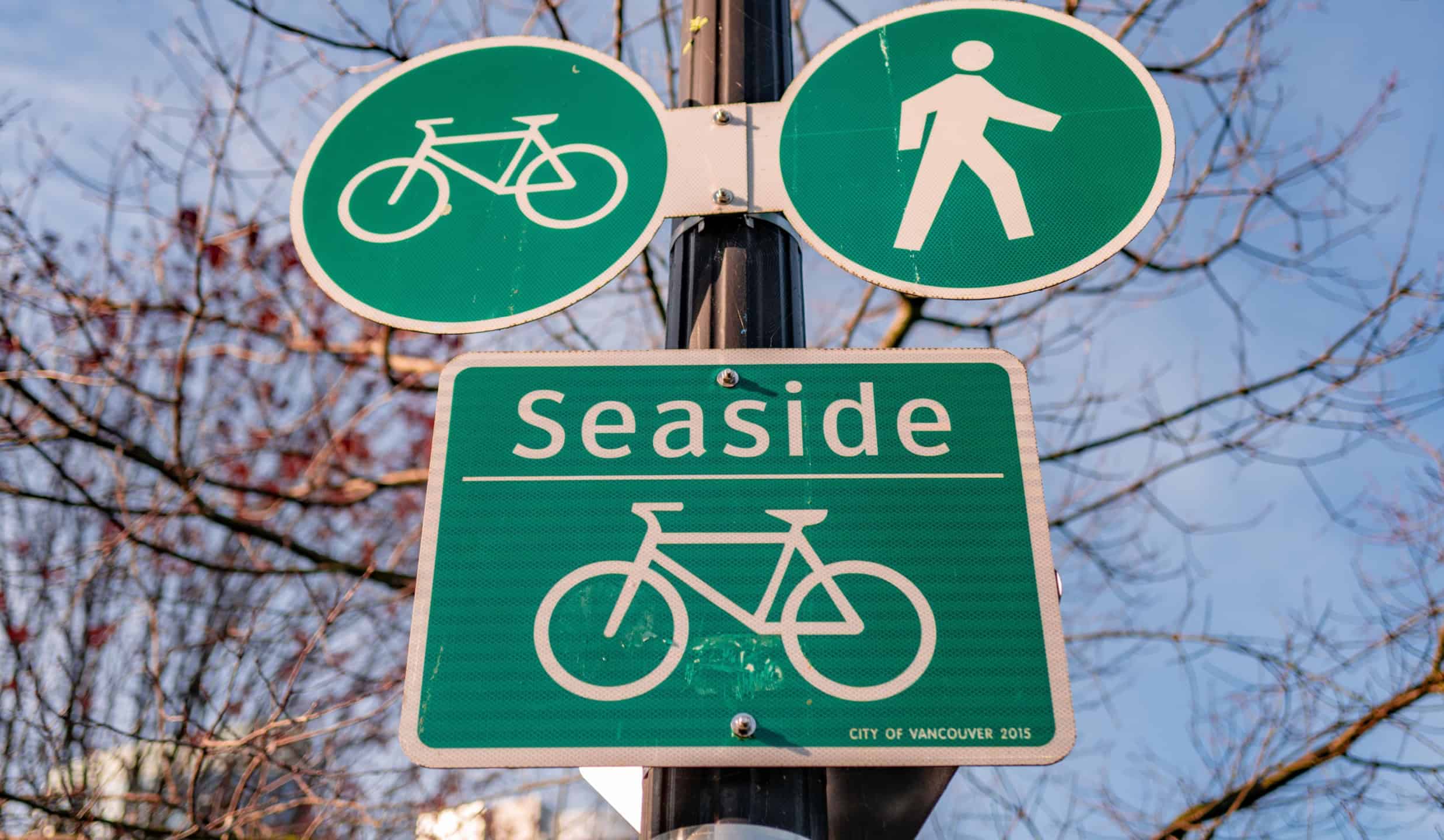
Americans see red circles with slashing lines all day, every day that tell them what they can’t do. But in Canada, those big friendly green circles containing an image like a truck, a cyclist, or U-turn lanes are everywhere. This is called a “permissive” sign and means that the action of the image is allowed (and sometimes required) in that lane.
The green circle is a positive way of directing traffic. Instead of telling people, “Don’t park here,” it shows where they can park.
Arret
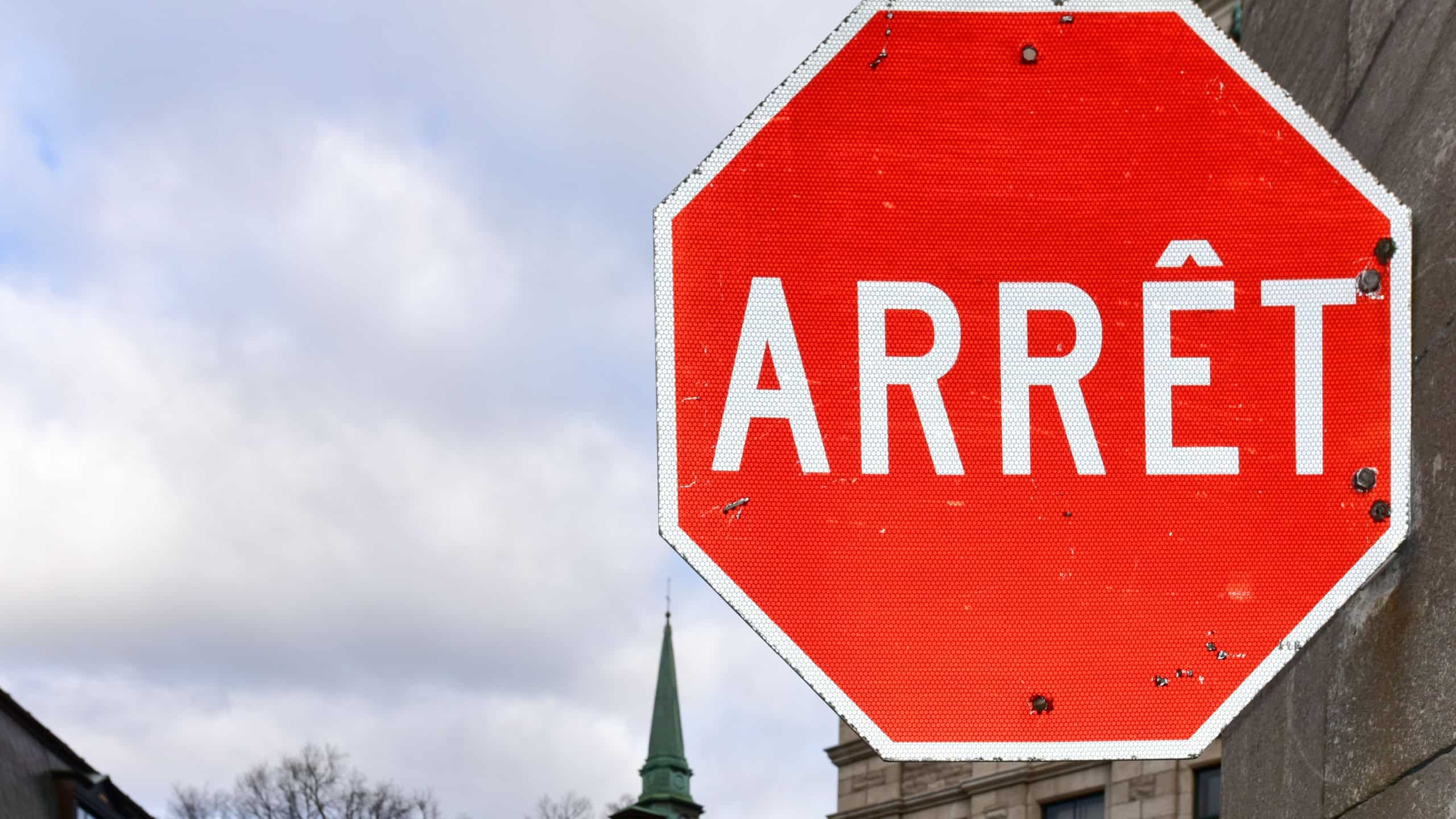
Driving through Quebec, or any federal government building in Canada, you’ll see the classic red octagon at every intersection. But there won’t be any “STOP” signs.
Instead of telling you to stop in friendly American English, Canada tells you “ARRÊT”. As easily recognizable as the Stop sign is to any driver, for civilians, it’s the first clue that you’ve entered French Country. Ironically, if you visit France, you’ll see the English word STOP on nearly every sign.
Homo Milk
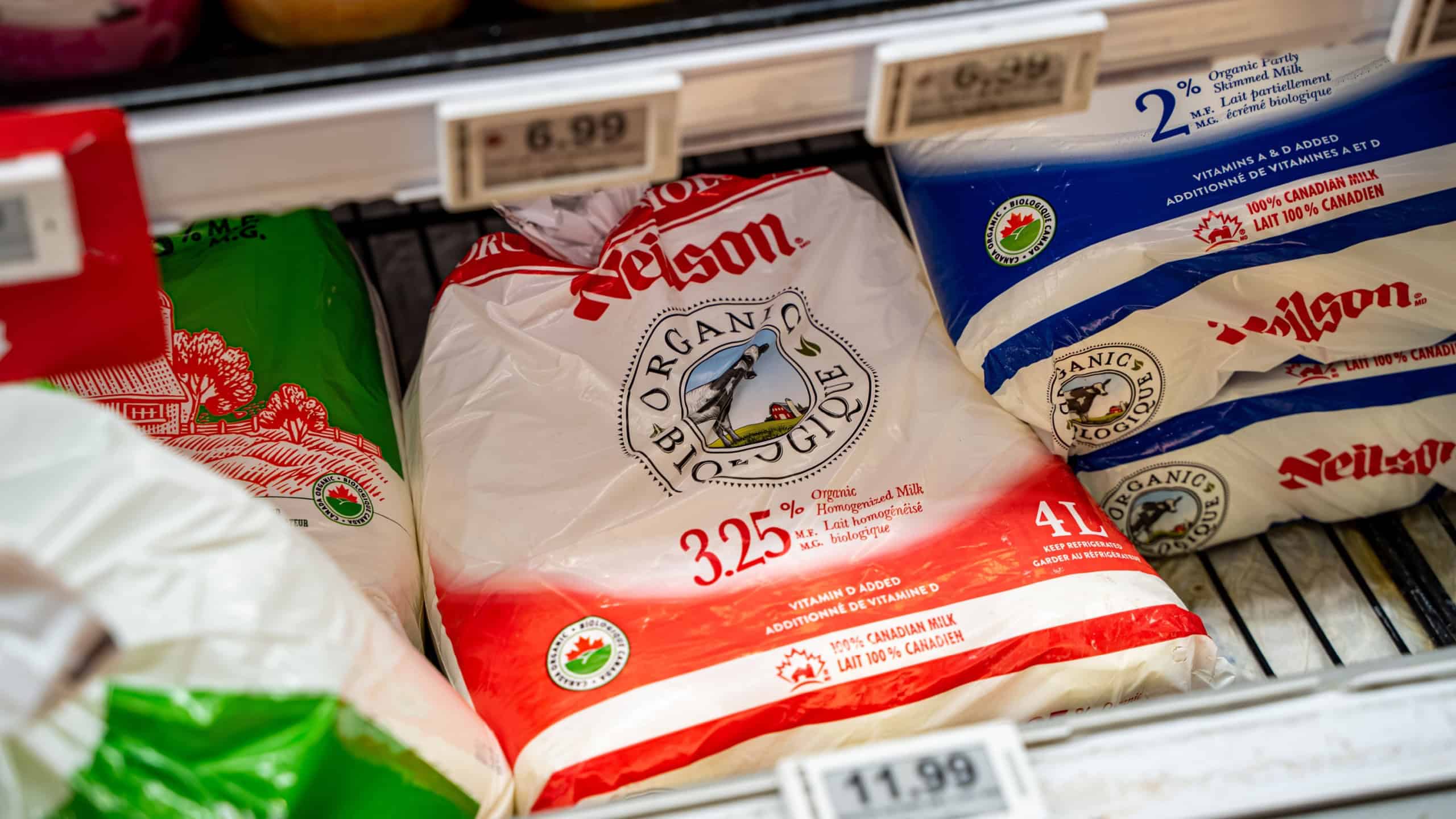
Stepping into your local Canadian grocery store for the first time can be an eye-opening experience. Because you will be shocked to see signs and milk cartons boldly labeled Homo Milk?
This certainly sounds like a slang term for specialized milk, but it’s Canadian shorthand for “Homogenized.” This is whole milk that is 3.25% fat.
ABM

Run low on cash? Need to withdraw some dollars? Start looking for the closest sign that says “ATM” and you’ll be left disappointed. While strolling through public malls or large airports in Canada, every public directory and establishment will point you toward an ABM – Automated Banking Machine.
They function exactly like ATMs do in America. But the “T” has officially been replaced with a “B” for “Banking” at every Canadian bank, province-wide.
Parkade
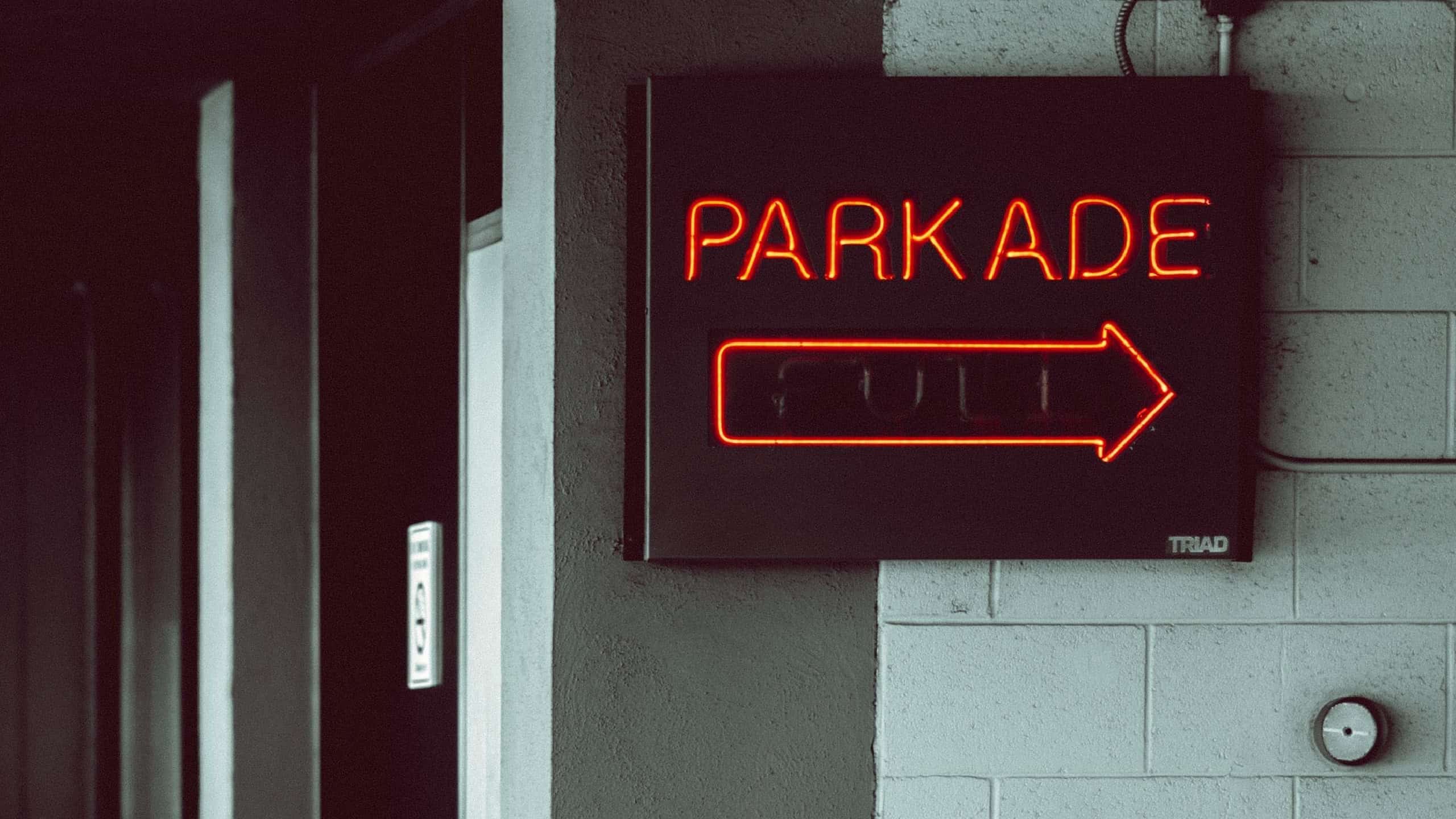
Need somewhere to park in a big city like Vancouver, Edmonton, or Calgary? Start looking for signs that indicate a “Parkade.”
Americans use words like “parking garage,” “parking deck,” or “multi-story”. Canadians have created their own snappy, one-word description for these multi-level structures.
So when you see a parking structure with a giant glowing neon sign above it proudly declaring “Wellington Parkade,” it does not mean you’ve found an outdoor public park with camping areas and hiking trails. It just means you can park your car there.
Speed limit enforced by Aircraft

As you are driving down long stretches of highway with few cars on empty roads in large provinces like Ontario or Alberta, you start to see signs pop up that have a small plane icon on them that read “Speed Limit Enforced by Aircraft.”
It creeps the average traveler out because it sounds like something straight out of a James Bond film. Though some American states employ this technique, it is extremely common in Canada to see these signs posted on secluded roads where there is no place to hide an enforcement vehicle.
Planes fly above with someone in them, timing how long it takes your car to pass between two lines on the highway, then radioing in to a person on the ground to pull you over.
Poutine and “Chip Wagon” Signs

Hand painted or professionally made signs for “Chip Wagons” are common on Canadian roadsides, particularly in Ontario and the Maritimes. These are food trucks, specifically selling “chips.”
Chips are thick-cut, deep fried potatoes. Most include the word “Poutine” spray-painted in extra-large letters for all to see. So abundant are these “Poutine Coming Soon” signs that it can feel like a religious requirement to stop and eat some by the time you reach your destination.
Winter Maintenance: “Snow Route”
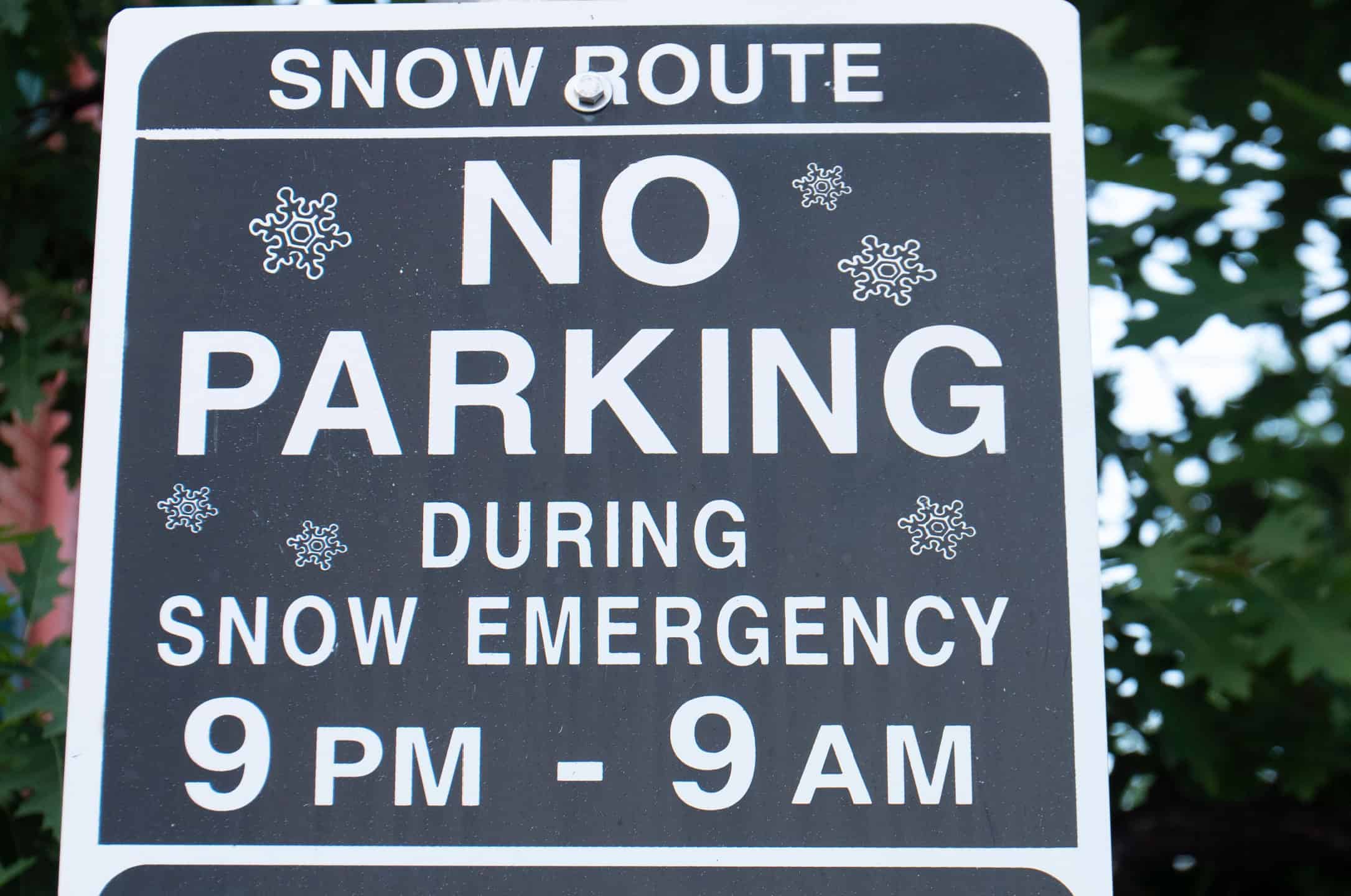
Driving through Canadian cities, you’ll often see permanent signs designated with a blue snowflake icon or spell out the words “Snow Route” directly on the street. Many of these are actually emergency express lanes that should remain open for plows and salt trucks to get through during a major snowstorm.
If you were to visit Canada and see one of these signs, you may think it’s suggesting where to find the best local sledding hills or snow festivals. But Canadian cities will tow any car that dares to park on a snow route when it starts snowing.
RCMP Detachment
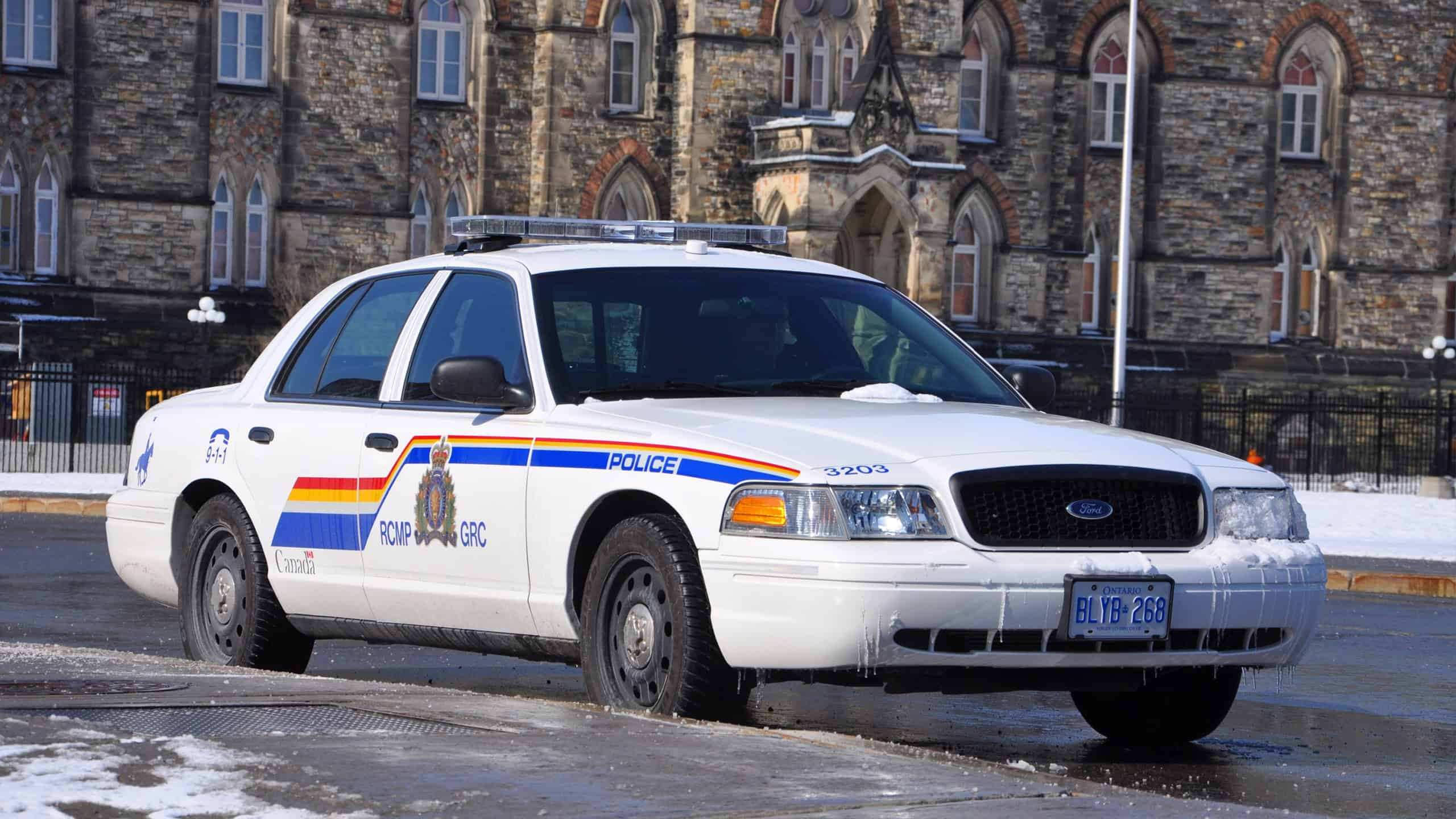
Americans know that when they need police assistance, they head straight for the nearest “Police Station” or the “Sheriff’s Office.” Canadians will often point you toward an RCMP Detachment. The Royal Canadian Mounted Police, or Mounties, act as the localized police force for smaller towns and provinces all over Canada.
It’s called that because the national police force used to be paramilitary and would “detach” groups of riders to patrol the wilderness.
Sources: Please see here for a complete listing of all sources that were consulted in the preparation of this article.
Like our content? Be sure to follow us.